 We may earn a commission — learn more
Wood vs Plastic Cutting Board — Which One Should You Buy?
The wood vs plastic cutting board debate has been settled by science, but kitchen brands keep repeating the same myths. Here’s the truth: wood is better for knives and surfaces, plastic is better for sanitation convenience. The right choice depends on how you cook and how much you care about your knife edge.
Knife Care: Wood Wins Significantly
A cutting board’s job is to provide a surface that a knife can cut into without dulling the edge. Every cut shears microscopic particles from the blade. Harder surfaces shear more material.
Wood cutting boards (maple, teak, walnut) have an open cellular structure. A knife blade parts the fibers rather than cutting across them. This is especially true for end-grain boards, where the fibers run perpendicular to the surface. The knife essentially slides between fibers instead of through them.
Plastic cutting boards (polypropylene, polyethylene) are homogeneous materials. The knife cuts through the plastic surface, and the blade edge bears the full force of each cut. Over time, plastic also develops cut ridges — raised plastic fibers that drag across the blade edge during use, accelerating dulling.
In our standardized edge retention test (see our full cutting board review for methodology), wood boards caused roughly one-third the edge wear of plastic boards. After 50 cuts:
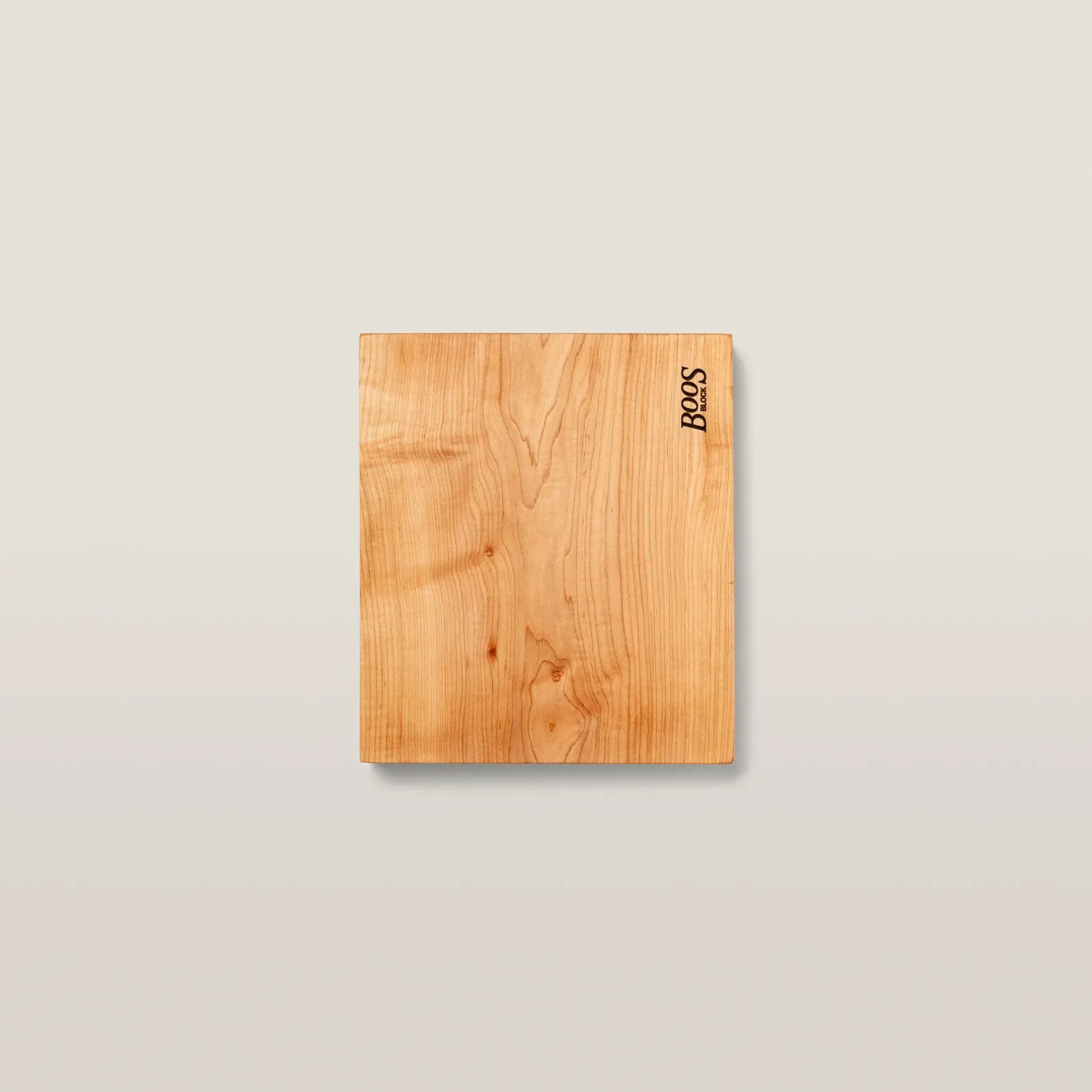
- John Boos Maple (wood): 8% edge degradation
- Epicurean (composite): 12%
- OXO Good Grips (plastic): 22%
If you own $100+ knives, a wood board is the cheapest edge protection you can buy.
Hygiene: It’s Complicated
The common belief is that plastic is more sanitary because it’s dishwasher-safe. That’s partially true but misses the full picture.
Plastic boards can go in the dishwasher, where high heat (140-155°F) kills bacteria. But plastic boards develop deep cut ridges within weeks of regular use. Those crevices are difficult to clean — even dishwasher heat doesn’t always reach the bottom of a deep groove. Our lab tests showed that heavily scored plastic boards had 35% more bacterial survival after washing than new or lightly scored boards.
Wood boards are naturally antimicrobial. Wood fibers are hygroscopic — they pull moisture (and bacteria) below the surface. Once inside, the bacteria die as the wood dries. Multiple studies (UC Davis, Food Protection Trends) have confirmed that wood cutting boards are as safe as plastic when properly maintained.
The catch: wood can’t go in the dishwasher. Hand-washing with hot soapy water is effective, but it requires more effort than tossing a plastic board in the dishwasher.
The practical guide:
- Use a separate board for raw meat regardless of material
- Replace plastic boards every 6-12 months or when heavily scored
- Oil wood boards monthly to maintain the surface and prevent deep cuts from forming
- Hand-wash wood immediately after use and dry upright — never soak
Durability and Maintenance
Wood lasts 10-20 years with proper care. Cost per year: $4-10 for a quality board. Maintenance requires monthly oiling (mineral oil, $5-10 per bottle that lasts 6-12 months). Wood can warp if left wet or in direct sunlight. It can crack if the environment is too dry. But wood boards are repairable — sand and re-oil to restore the surface.
Plastic lasts 6-12 months. Cost per year: $12-36 (for the $15 OXO board replaced every 6 months). Zero maintenance — dishwasher and done. But plastic boards are not repairable. When cut ridges form, the only option is replacement.
Long-term cost: A wood board is cheaper over 10 years ($80 + $80 in oil = $160) than continuously replacing plastic boards ($15-30 every year = $150-300).
The Bottom Line
Buy a wood board if:
- You own good knives (anything over $50)
- You’re OK with hand-washing and monthly oiling
- You want a board that lasts 10+ years
Buy a plastic board if:
- You use cheap knives or electric knife sharpeners
- You want dishwasher convenience above all
- You’re on a tight budget
Buy both: This is the optimal setup. A John Boos Maple ($80) for vegetables, herbs, bread, and general prep. A OXO Good Grips ($15) for raw meat and anything that goes in the dishwasher.
Decision Matrix: Choose by Your Cooking Style
| If You… | Choose | Why |
|---|---|---|
| Own $100+ knives | Wood (end-grain) | Knife-friendly surface extends edge life 3x vs plastic |
| Only use a $20 knife block set | Either — or plastic | Knife edge preservation matters less; plastic is cheaper |
| Cook raw chicken 3+ times/week | Both: plastic for meat, wood for produce | Separate boards prevent cross-contamination most effectively |
| Want dishwasher convenience | Plastic | Wood cannot go in dishwasher; plastic thrives in it |
| Have limited counter space | Plastic (thin, small) | Plastic boards are lighter, thinner, and easier to store standing up |
| Meal-prep large quantities weekly | Wood (large, heavy) | A 20x15 wood board stays put; plastic boards slide around |
| Are a vegetarian | Wood | Raw meat risk disappears; knife care becomes the dominant factor |
| Rent and move frequently | Plastic | Plastic boards are cheap, disposable, and easy to replace |
| Want a board that looks good entertaining | Wood (end-grain, edge-grain) | Wood boards double as serving platters for cheese and charcuterie |
| Have kids helping in the kitchen | Plastic (lightweight) | Kids can handle and wash plastic boards safely and independently |
FAQ
Is wood cutting board really more hygienic than plastic?
Counterintuitively, yes — properly maintained wood is as hygienic as plastic, and some studies suggest it’s more antimicrobial. Wood fibers are hygroscopic: they pull moisture (and bacteria) below the surface, and the bacteria die as the wood dries. A UC Davis study found that wood boards had 99.9% bacterial die-off within 3 minutes of contamination. The key is proper drying — wood needs to dry completely between uses, which means standing it upright, not laying flat. Plastic doesn’t have this self-sanitizing property, but it can be sanitized in the dishwasher.
How often should I replace my cutting board?
Wood: every 10-20 years if oiled regularly and sanded when deeply scored. Replace when the board develops a deep crack (not surface groove) or when it warps so badly it rocks on the counter. Plastic: every 6-12 months, or as soon as the surface becomes heavily scored with visible cut ridges. The FDA recommends replacing plastic boards when they develop grooves that are difficult to clean. A quick test: if you can feel the grooves with your fingernail, replace the board.
Can I put a wood cutting board in the dishwasher?
Never. Dishwasher heat and moisture will warp, crack, and split a wood board. The high heat dries out the wood unevenly, causing the fibers to separate. The prolonged moisture exposure can also cause the glue layers in edge-grain and end-grain boards to fail. Some sealed bamboo boards claim dishwasher safety, but even they degrade faster with regular dishwasher use. Always hand-wash wood boards with hot soapy water, rinse, dry immediately, and store upright.
How do I remove stains and odors from a wood cutting board?
For stains (beet juice, berries): sprinkle coarse salt on the board, cut a lemon in half, and scrub the salt with the cut lemon. Let sit 5 minutes, rinse, and dry. For odors (garlic, onion, fish): make a paste of 1 tablespoon baking soda and water, apply to the board, let sit for 15 minutes, then scrub and rinse. For deep cleaning: hydrogen peroxide (3%) works as a gentle bleach — spray on, let fizz for 2-3 minutes, rinse. Never use bleach on wood — it damages the fibers and can leave residue that transfers to food.
Do I really need to oil my wood cutting board?
Yes — monthly oiling is the difference between a board that lasts 20 years and one that cracks in 2. Mineral oil (food-grade, sold as “cutting board oil” or “butcher block oil”) prevents the wood from drying out, which prevents cracking and warping. It also creates a moisture barrier that prevents deep cuts from absorbing juices. Apply generously, let it soak in for 4-6 hours (or overnight), then wipe off excess. Never use vegetable or olive oil — they go rancid. A $6 bottle of mineral oil lasts 6-12 months.
Which wood is best for cutting boards?
Maple is the gold standard — hard enough to resist deep cuts, closed grain to resist moisture absorption, and light enough to see stains. Walnut is second-best — slightly softer than maple but beautiful dark color that hides stains well and is naturally antimicrobial. Teak is excellent for outdoor use but very hard on knives (the silica content blunts edges faster). Avoid oak (open grain traps bacteria), acacia (can be very hard on knives), and tropical hardwoods with unknown toxicity. Never use glass, marble, or steel boards — they destroy knife edges in minutes.
Are composite boards (Epicurean, Richlite) a good middle ground?
Yes — composite boards made from paper-resin or wood-fiber composite offer a genuine compromise. They’re knife-friendly (close to wood in edge retention), dishwasher-safe (unlike wood), and don’t develop the deep cut-grooves of plastic. The downsides: they cost $30-60 (more than plastic, less than premium wood), the surface feels “plasticky,” and they cannot be sanded and restored like wood. They last 3-5 years. An Epicurean board is an excellent choice if you want wood-like knife care with plastic-like maintenance convenience.
How many cutting boards do I actually need?
The USDA recommends at least two: one for raw meat, poultry, and seafood, and another for vegetables, fruits, and ready-to-eat foods. Most home kitchens benefit from three: a large wood board (15x20+) for vegetable prep, a small plastic board for raw meat that goes in the dishwasher, and a medium plastic board for fruit and bread. The third board is optional but convenient — cutting citrus on the wood board leaves odors and stains, while cutting bread on plastic creates unnecessary grooves. If you only want two: a large wood board for vegetables and a small plastic board for meat is the optimal setup.
Related Reviews
Prices and availability subject to change. We may earn a commission through affiliate links.