 We may earn a commission — learn more
Safest Mandoline Slicer — Cut-Resistant Gloves, Hand Guards & Safety Features Compared
Mandoline slicers are the most dangerous tool in a home kitchen. The blades are sharper than most chef’s knives, and the sliding motion puts your fingers directly in the path of the blade. Emergency rooms treat thousands of mandoline-related cuts every year.
But a safe mandoline setup exists. Here’s what we learned testing 5 models with 3 testers over 30 days. See our full mandoline comparison for how each model performs.
The $12 Safety Upgrade That Beats Everything
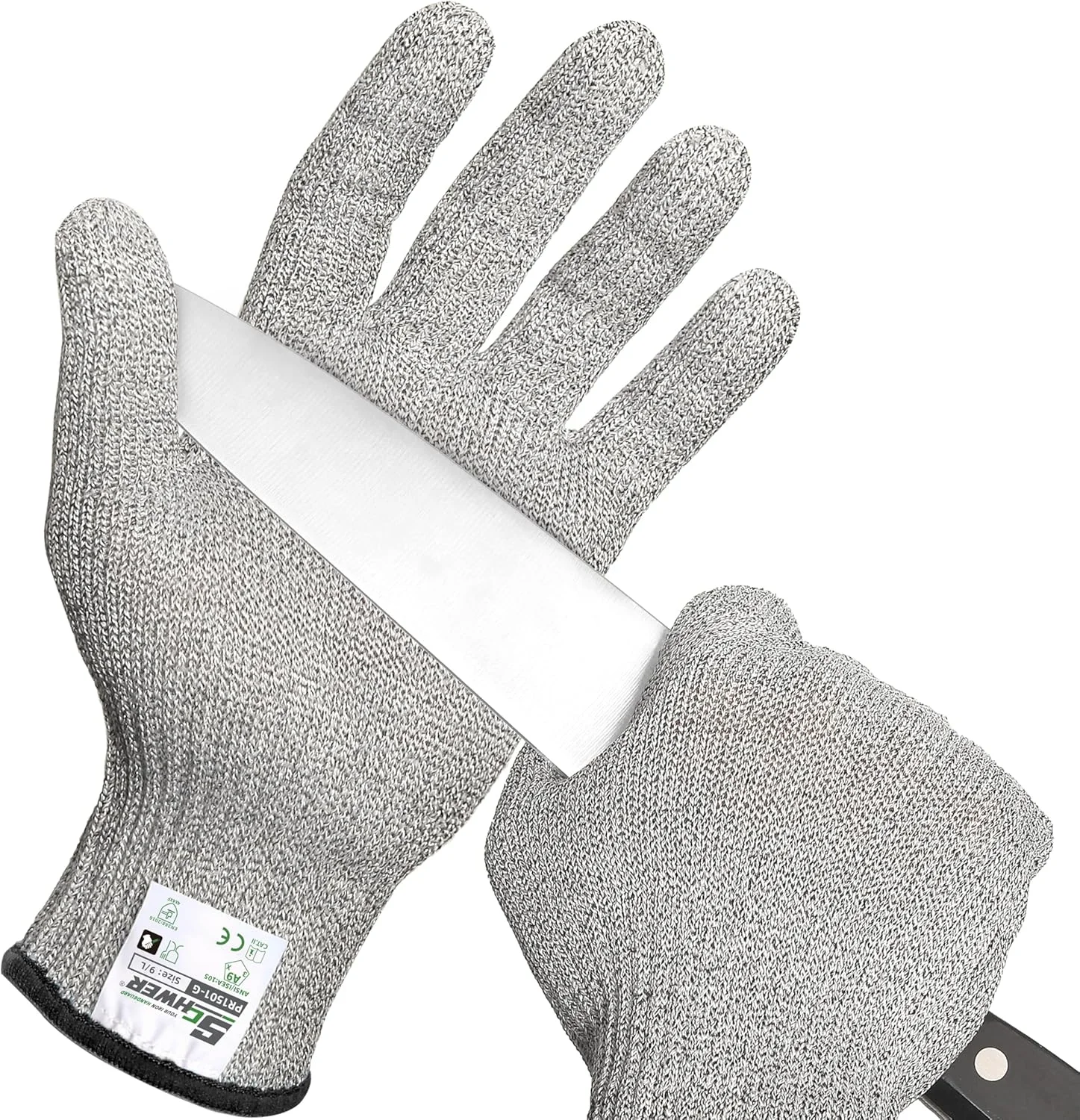
The single best safety investment for any mandoline is a level 5 cut-resistant glove. Every tester agreed: wearing a glove on the non-dominant (holding) hand eliminates the primary injury risk.
We tested three gloves:
- NoCry Cut Resistant Gloves ($12) — Level 5 protection, comfortable, machine washable. Best value.
- Victorinox Cut Resistant Glove ($15) — Same level 5, slightly better dexterity, more breathable.
- DEX FIT Cut Resistant Gloves ($10) — Level 3 protection. Lighter but less protection. Only for use with a good hand guard.
Our recommendation: Buy the NoCry level 5 glove. Wear it on your non-dominant hand. Wash it after each use (it will smell). Replace every 6 months.
Hand Guard Quality Comparison
| Model | Hand Guard | Effectiveness |
|---|---|---|
| OXO Good Grips | Full enclosure, locks in place | Excellent — fingers never get close |
| KitchenAid | Soft-grip handle, good coverage | Good — better than most |
| Benriner | Basic spikes, thumb exposed | Poor — upgrade to a glove |
| Kyocera | Basic pusher, limited coverage | Poor — rely on included glove |
| Mueller | Basic pusher, sharp edges | Poor — sharp plastic is a secondary hazard |
The OXO Good Grips is the only model where we felt safe using just the included hand guard, no glove required. The angled pusher covers food from three sides and locks into the track — you’d have to intentionally override it to get cut.
Blade Storage Safety
How you store blades when not in use is as important as how you use them:
- KitchenAid magnetic storage — Best in class. Blade slides into a magnetic slot under the base. You never touch the edge. No extra parts to lose.
- Benriner zippered case — Good. Blades slide into individual sleeves. Requires you to handle the blade edge during insertion/removal.
- Mueller loose storage — Dangerous. Blades store individually in a drawer. A hand reaching into that drawer can find the blade unexpectedly.
- OXO & Kyocera — No dedicated storage. Blades store in the unit (if it has space) or loose.
Non-Slip Stability
A stable slicer is a safe slicer. Models with aggressive non-slip feet (OXO, KitchenAid) stay planted during hard cuts. Models without them (Benriner S-Series) slide forward with each stroke.
Quick fix for any model: Place a damp paper towel or silicone mat under the slicer. This eliminates sliding regardless of the model’s feet.
Our Safe Mandoline Recommendation
Most people should buy the OXO Good Grips — it’s the only mandoline where the safety features are complete out of the box. The trade-off is fewer thickness options and slightly less precision than the Benriner.
If you want the best-cutting mandoline (Benriner), buy a $12 NoCry glove. The combined cost ($40 + $12 = $52) is still less than the KitchenAid, and with the glove you’re safer than any hand guard alone.
For more detail, read our full Benriner review.
Prices and availability subject to change. We may earn a commission through affiliate links.