 We may earn a commission — learn more
Manual vs Electric Can Opener — Which Should You Buy?
Quick Verdict
Buy a manual can opener if you want something that lasts a decade, costs under $20, and you have average hand strength. Buy an electric can opener if you have arthritis, carpal tunnel, or limited hand strength.
For 90% of people, a good manual opener like the OXO Good Grips is the right choice. Here is why.
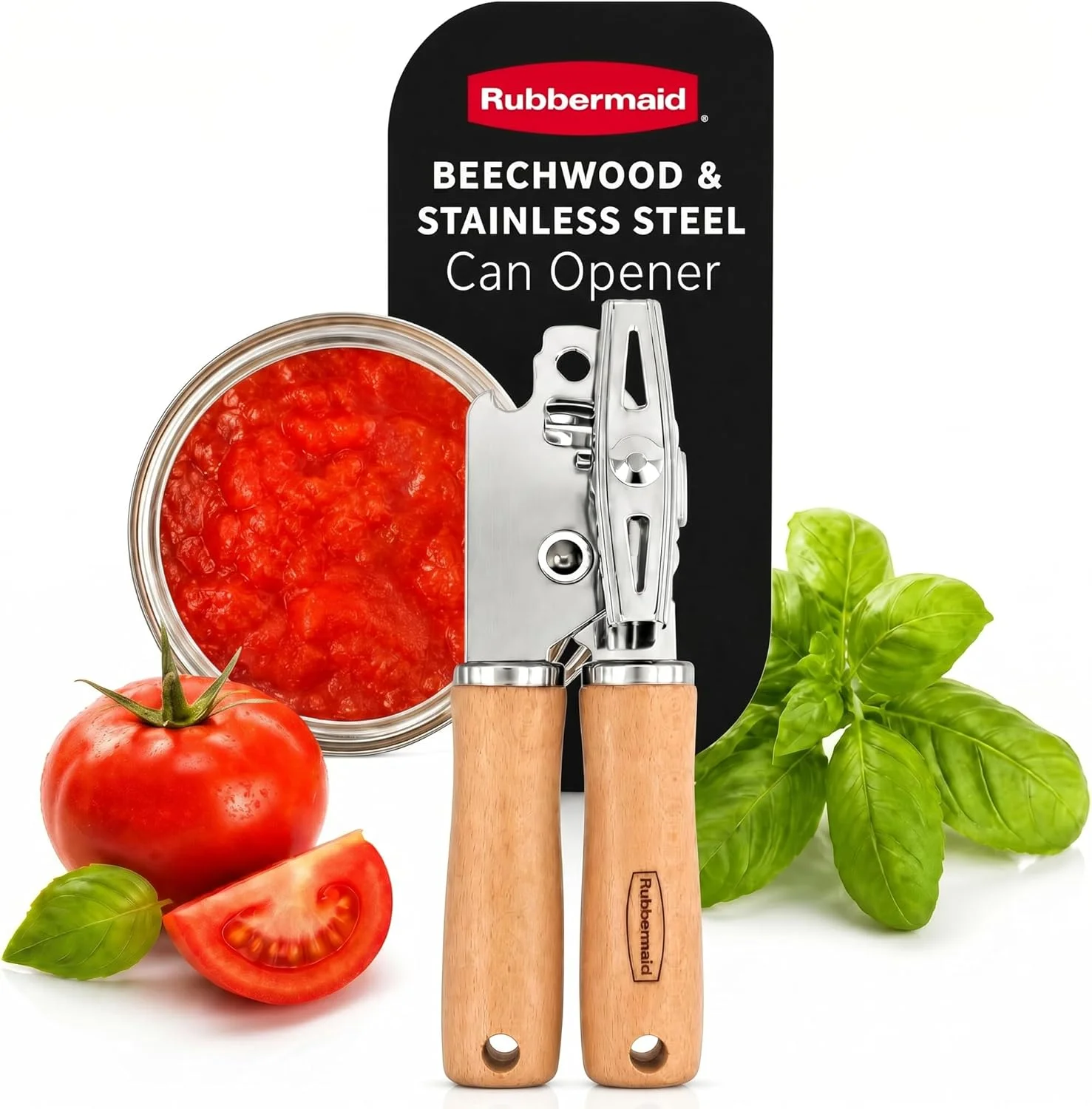
Before you buy, read our full can opener review for model-specific recommendations.
Safety
Winner: Electric
Electric can openers leave the sharp lid attached to the cutting mechanism — you never touch the cutting edge. Many electric models also cut from the side, producing a smooth edge on the can rim.
Manual openers require you to pry the lid off after cutting. The lid is razor-sharp. You also deal with metal shavings from the cutting action. Smooth-edge manual openers (like the KitchenPro) mitigate this but still require more handling than an electric.
Ease of Use
Winner: Electric
Electric wins on convenience — place on can, press button, walk away. The Hamilton Beach Smooth Touch even holds the lid magnetically. This matters most for people with arthritis, carpal tunnel, or limited hand strength.
Manual openers require grip strength and a twisting motion. The OXO Good Grips reduces this strain significantly, but it’s still more effort than pressing a button. That said, a quality manual opener opens a can in 5-10 seconds versus 15-20 for an electric.
Durability
Winner: Manual
Manual openers are simple machines — a cutting wheel, a gear, and two handles. All-metal models like EZ-DUZ-IT last decades. Even mid-range manual openers easily last 5-10 years.
Electric openers have motors, batteries, and plastic housings. The Hamilton Beach Smooth Touch averages 2-3 years of regular use. The cutting wheel wears faster on electrics because of the consistent motor torque.
Cleaning
Winner: Tie
Most manual openers are dishwasher safe or easy to hand wash. The catch: many manuals trap food particles in the gear mechanism, requiring occasional toothpick cleaning.
Electric openers are harder to clean thoroughly because the motor housing cannot get wet. The cutting mechanism is removable on most models but still fiddly. The trade-off is that electrics touch the lid less, so get less food on them.
Cost
Winner: Manual
A quality manual can opener costs $10-20 and lasts 5-10+ years. Annual cost: $1-4.
A quality electric can opener costs $20-30 and lasts 2-4 years. Plus ongoing battery costs ($5-10/year for AAs unless you use rechargeables). Annual cost: $8-15.
Over 10 years, manual costs $10-20 total versus $80-150 for electric (with batteries).
Bottom Line
Buy manual if: You have average hand strength, want something reliable for years, and want the best value. A $12 OXO Good Grips or $15 KitchenPro is the right choice for 90% of people.
Buy electric if: You have arthritis, carpal tunnel, or limited hand strength. The Hamilton Beach Smooth Touch at $25 is the best option. The convenience of one-button operation is genuinely helpful.
Our recommendation: Start with a good manual opener. If you find yourself avoiding it because of hand pain, switch to electric. Most people will never need to upgrade.
Decision Matrix
| If you… | Choose Manual | Choose Electric |
|---|---|---|
| Have average or better hand strength | ✅ Best value for you | ❌ Overpaying for convenience |
| Have arthritis, carpal tunnel, or hand pain | ❌ Will struggle | ✅ Genuinely helpful |
| Want the lowest 10-year cost | ✅ ~$15 total | ❌ ~$100+ with batteries |
| Prioritize durability (10+ year tool) | ✅ All-metal models last decades | ❌ Plastic gears fail in 2-4 years |
| Open 1-2 cans per day | ✅ Manual takes 5-10 seconds | ❌ Electric takes 15-20 seconds |
| Open 10+ cans at once (meal prep) | ❌ Wrist fatigue | ✅ Set and forget |
| Want the safest option for children/elderly | ❌ Sharp lid to remove | ✅ Smooth cut, lid stays attached |
| Prefer a tool that never needs batteries | ✅ No power needed | ❌ Requires batteries or USB charging |
FAQ
Can electric can openers open all can sizes? Most electric openers work on standard 10-15 oz cans. Larger #10 cans (gallon-sized) may not fit in the cutting mechanism. Some models like the Hamilton Beach Smooth Touch handle larger cans, but check the specs. Manual openers work on any can size — there is no can too large or too small.
Do smooth-edge manual openers really work? Yes. Models like the KitchenPro use a cutting wheel that separates the lid from the can without leaving a sharp edge. They require slightly more turns than a traditional manual opener but eliminate the risk of lid cuts. They cost $10-15 versus $5-8 for a traditional model.
Are electric can openers worth it for seniors? Yes — if hand strength or arthritis is the concern. The one-button operation and magnetic lid holder eliminate the two most difficult parts of opening a can: gripping the turning knob and lifting the sharp lid. The Hamilton Beach Smooth Touch at $25 is the best option for seniors.
Why do cheap manual openers fail? Cheap manual openers ($3-5) use thin carbon steel cutting wheels that dull quickly and plastic gears that strip under normal use. A $12 OXO Good Grips or $15 KitchenPro uses hardened stainless steel cutting wheels and metal gears — the difference is night and day.
How do I know when my can opener needs replacing? Manual: when the cutting wheel slips instead of cutting, or when you have to go around the can more than 1.5 rotations to open it. Electric: when the cutting wheel stops turning consistently, or when the motor sounds strained on normal cans. Both usually give you a few weeks of declining performance before total failure.
Can I recycle the lid if I use an electric opener? Yes — electric openers that cut from the side leave the lid attached to the can via a magnetic holder. You lift the lid off after cutting and recycle it as normal (same bin as the can). With a manual opener, the sharp lid goes directly into recycling — just be careful handling it.
Prices and availability subject to change. We may earn a commission through affiliate links.