 We may earn a commission — learn more
Immersion Blender vs Countertop Blender — Which One Do You Need?
Quick Verdict
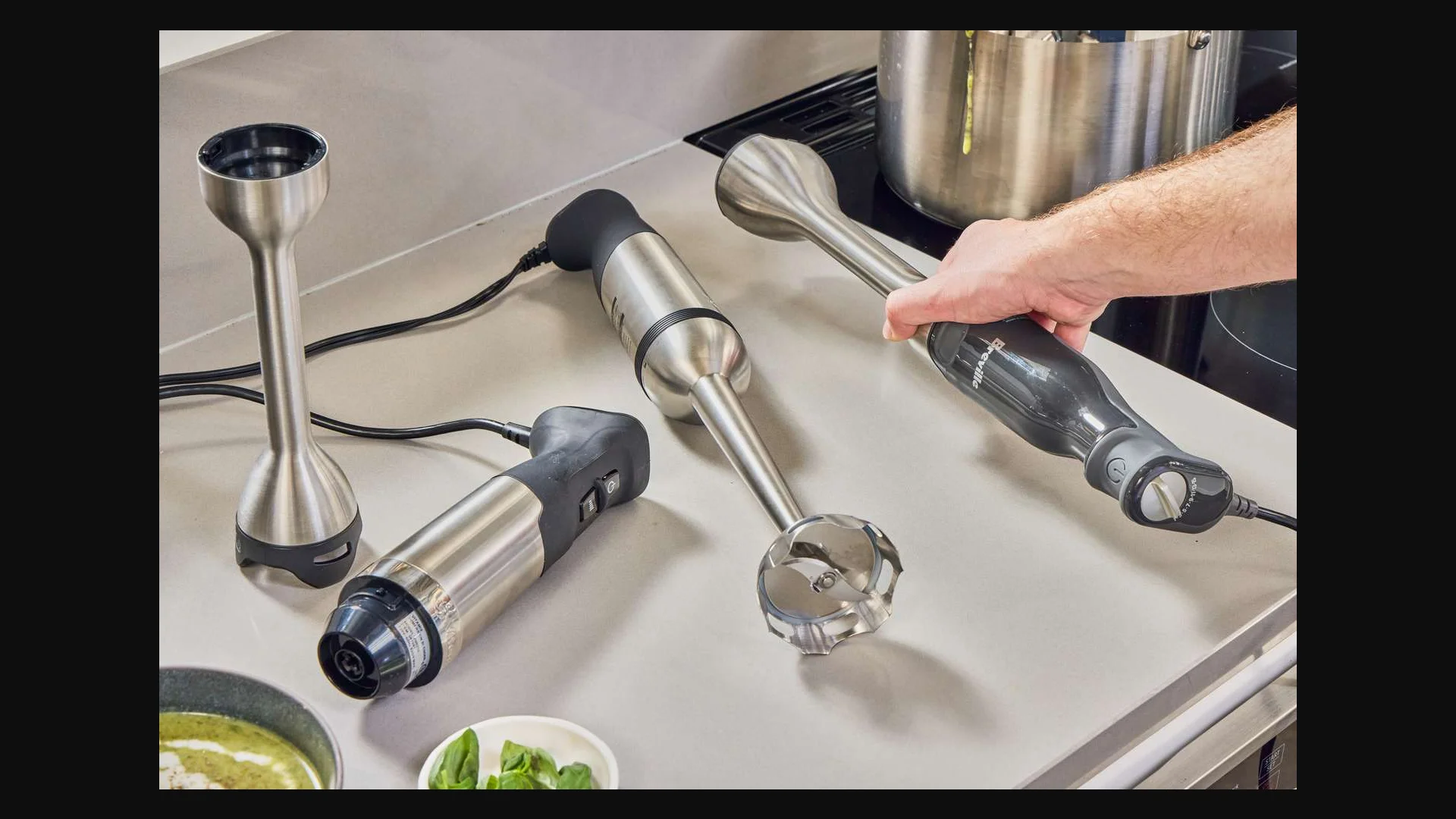
An immersion blender is better if you make soup, emulsify sauces, or blend small batches. A countertop blender is better if you make frozen smoothies daily, crush ice, or blend for 3+ people. Most well-equipped kitchens eventually own both, but if you can only buy one today, the choice depends on what you actually cook.
- Get an immersion blender if: You make soup, mayonnaise, salad dressing, single-serving smoothies, or baby food. You hate cleaning a full blender pitcher for small jobs.
- Get a countertop blender if: You make frozen fruit smoothies, protein shakes, or frozen cocktails. You need to crush ice. You blend large batches for a family.
- Get both if: You cook from scratch regularly and also drink smoothies. These are complementary tools, not replacements.
What Each Does Best
Immersion Blender Strengths
Soup, right in the pot. This is the killer app. You cook a pot of roasted tomato soup, then insert the immersion blender and puree it smooth in 30 seconds. No transferring hot liquid to a blender jar. No venting the lid to release steam. No risk of the lid blowing off and splattering hot soup across your kitchen.
Emulsifications. Mayonnaise, hollandaise, aioli — immersion blenders make these in seconds. The traditional method: put egg, acid, and oil in a tall cup, insert the blender to the bottom, and run it. The emulsion forms immediately as the blender draws oil into the egg. This works better than any countertop blender because the blade is close to the ingredients from the start.
Small batches. Making a single serving of pesto, a quick dressing, or blending 4oz of baby food? An immersion blender works in any container. A countertop blender needs at least 12-16oz minimum fill or it just spins air.
Cleaning. Rinse the shaft under hot water for 5 seconds, or fill a cup with soapy water and run the blender for 10 seconds. Cleaning a countertop blender pitcher involves disassembling the lid, gasket, and blade assembly.
Countertop Blender Strengths
Frozen smoothies. A good countertop blender (Vitamix, Blendtec, Ninja) pulverizes frozen fruit and ice into a smooth, drinkable texture. Immersion blenders cannot do this — they leave chunks and require more liquid, producing a thin result.
Ice crushing. Crushed ice for cocktails, frozen margaritas, or icy slushies requires the power and jar design of a countertop blender. Immersion blades are too small and create a vortex that just spins ice cubes without breaking them.
Large volumes. Blending a pitcher of gazpacho, a batch of margaritas for a party, or a week’s worth of green smoothies? Countertop blender jars hold 32-64oz. Immersion blenders work best in batches under 32oz.
Dry ingredients. Grinding coffee beans, nuts into flour, or hard spices is a countertop blender job (with the right jar). Immersion blender chopper attachments are not powerful enough for dry grinding.
When You Need Both
If you cook from scratch and drink smoothies, you will eventually own both. They store in different places (drawer vs countertop) and serve different purposes.
A typical week for a “both” household:
- Monday: Immersion blender for roasted red pepper soup
- Tuesday: Countertop blender for post-workout frozen smoothie
- Wednesday: Immersion blender for 30-second mayonnaise
- Thursday: Countertop blender for batch of salsa
- Friday: Immersion blender for hollandaise on eggs
- Weekend: Countertop blender for frozen margaritas
My Recommendation
Start with a good immersion blender — it is cheaper ($45-80), takes less space, and handles more daily cooking tasks. See our best immersion blender guide for specific recommendations.
If you find yourself wanting smoothies or crushed ice, add a countertop blender later. The immersion blender will not be wasted — you use both for different jobs.
The order matters: immersion blender first (soup and sauces daily), countertop blender second (smoothies and ice weekly). Most people who buy a countertop blender first end up buying an immersion blender within a year anyway.
Bottom Line
| Immersion Blender | Countertop Blender | |
|---|---|---|
| Best for | Soup, sauces, emulsifications, small batches | Smoothies, ice, large batches, dry grinding |
| Minimum batch | 4oz | 12-16oz |
| Hot blending | Excellent (blend in the pot) | Requires venting, risk of splatter |
| Frozen smoothies | Mediocre | Excellent |
| Cleaning | 5 seconds | 60 seconds (disassemble) |
| Counter space | Drawer | Dedicated spot |
| Price | $45-259 | $50-650 |
| Our pick | Cuisinart CSB-179 ($55) | Vitamix E310 ($350) |
Start with an immersion blender, add a countertop blender if you need smoothies. The immersion blender will be your most-used blending tool.
FAQ
Can an immersion blender crush ice?
No. Immersion blender blades are too small and create a vortex that spins ice cubes around without breaking them. You need the power, blade design, and tall jar of a countertop blender for crushed ice. If frozen drinks are a priority, get a countertop blender first.
What’s the minimum amount an immersion blender can blend?
An immersion blender works with as little as 4oz of liquid, as long as the blade is fully submerged. This makes it ideal for single-serving tasks: one-person smoothies, salad dressings, baby food, or emulsifying a single yolk into mayonnaise. A countertop blender typically needs 12-16oz minimum fill or the ingredients just spin above the blades.
Can an immersion blender make smoothies?
It can make liquid-heavy smoothies (fruit + juice or milk), but not the thick, icy smoothies a countertop blender makes. Frozen fruit and ice create a vortex that the immersion blade can’t break down. For a thin berry-and-yogurt smoothie in a tall cup, it works fine. For a thick frozen green smoothie, a countertop blender is required.
Is an immersion blender good for making nut butter?
No — making nut butter requires sustained high-speed blending for 2-4 minutes to release the natural oils. An immersion blender’s motor isn’t designed for that kind of continuous load, and the small blade can’t circulate the thick paste. Use a high-powered countertop blender (Vitamix, Blendtec) or a food processor for nut butters.
How do I prevent splatter when using an immersion blender?
Always fully submerge the blade before starting, and use a tall, narrow container (the blending cup or a deep pot). Start on low speed and increase gradually. If blending hot soup, insert the blender at a slight angle and pulse before running continuously — this prevents the initial burst from spraying upward.
Does an immersion blender work for protein shakes?
Extremely well. An immersion blender in a tall cup smooths out protein powder clumps in 10-15 seconds without the cleanup of a countertop blender. This is one of the most underrated uses — many immersion blender owners use it daily for protein shakes even if they rarely make soup.
What’s the best immersion blender for most people?
The Cuisinart CSB-179 ($55) is the best value — 300W motor, stainless steel shaft, 4-prong blade, and includes a whisk and chopper attachment. For heavier use, the Breville Control Grip ($80) has an ergonomic handle design and 280W motor with better speed control. The Bamix (from $150) is the professional choice built to last 15+ years.
Can I use an immersion blender in a nonstick pot?
Yes, but with care. Always lift the immersion blender slightly off the bottom of the pot — the blade guard should be 1/4 inch above the nonstick surface. Never scrape the blade guard against the pot while running. The stainless steel blade guard can scratch nonstick coatings if you press down while blending.
See our full best immersion blender review →
Prices and availability subject to change. We may earn a commission through affiliate links.