 We may earn a commission — learn more
Gooseneck vs Standard Spout Kettle — Which Should You Buy?
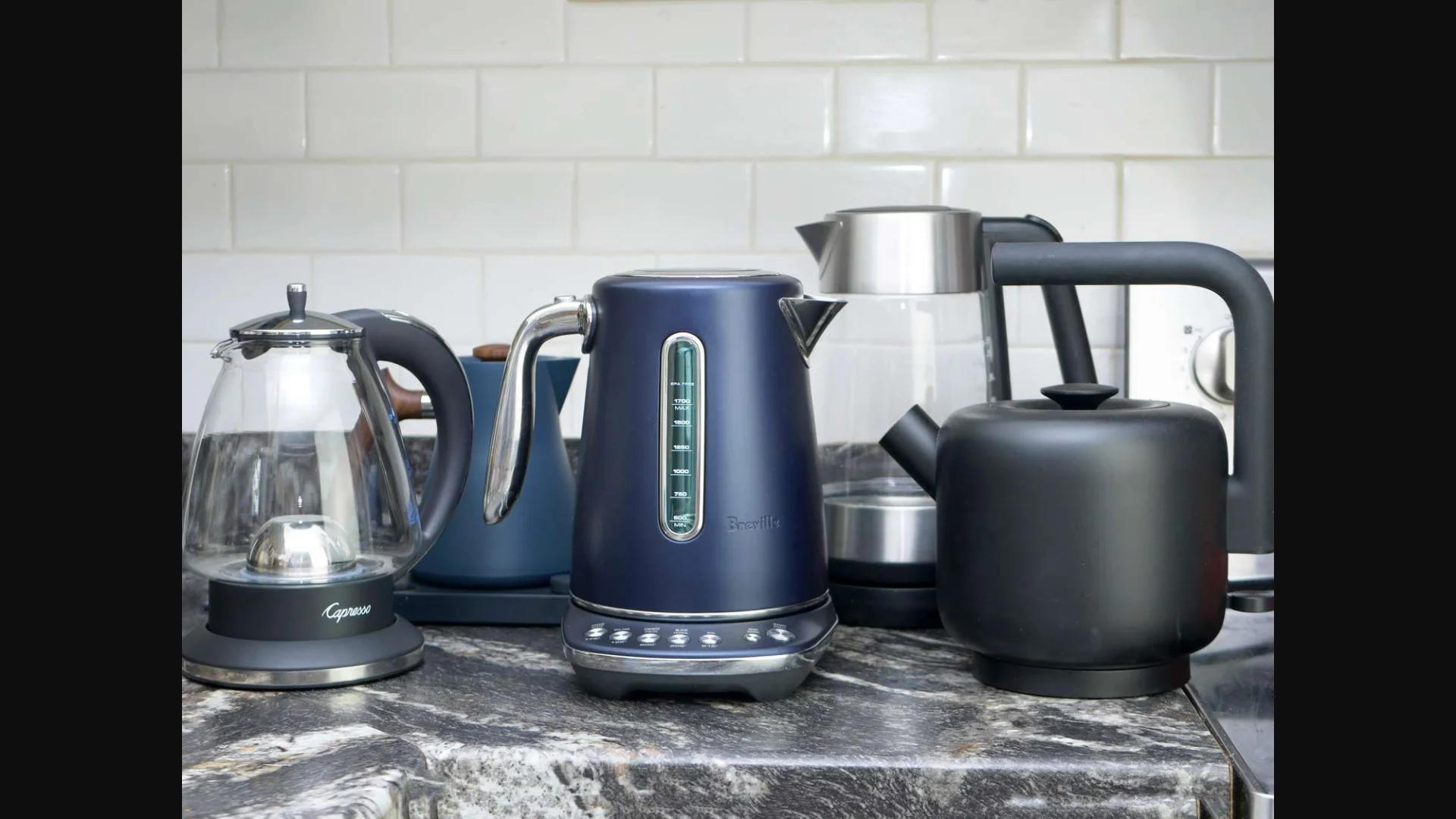
The spout shape of your electric kettle determines what you can brew well. The right choice depends on whether you’re optimizing for pour-over coffee or general tea and kitchen use.
For our full rundown of specific models, read the best electric kettle guide.
Pour Control
Winner: Gooseneck
A gooseneck spout (like the Fellow Stagg EKG or Bonavita 1L) delivers water in a thin, controlled stream. You can pour slowly over coffee grounds in a circle without disturbing the bed. You can hit a small tea strainer without splashing. The flow rate is entirely under your control.
A standard spout (like the Cuisinart CPK-17) pours faster and less precisely. Water exits at a wider angle, making it hard to target small areas. The pour is fine for filling a mug or teapot, but you’ll struggle with pour-over techniques that require a steady, narrow stream.
Our take: Gooseneck is mandatory for pour-over coffee. Standard spout is fine for everything else.
Capacity
Winner: Standard Spout
Standard spout kettles generally hold more water. The Cuisinart CPK-17 holds 1.7L — enough for 6-7 cups. Most gooseneck kettles top out at 0.8-1.0L because the narrow neck limits internal volume. The Fellow Stagg EKG holds 0.9L (about 3 cups). The Bonavita holds 1.0L.
For a household of 2+ tea drinkers, a standard spout means boiling once instead of twice. For a single pour-over session, gooseneck capacity is sufficient.
Temperature Control
Both spout types are available with variable temperature control. The Fellow Stagg EKG, Bonavita 1L, and Cuisinart CPK-17 all offer 1°F precision with keep-warm features. The spout type does not affect temperature accuracy.
Budget gooseneck models sometimes strip temperature features to hit a lower price point — check before buying.
Best Uses
Gooseneck excels with:
- Pour-over coffee (V60, Chemex, Kalita Wave)
- Single-cup tea brewing (targeted pour into a small infuser)
- AeroPress (needs slow, controlled pour for best results)
- Any technique requiring precise water distribution
Standard spout excels with:
- Filling teapots and French presses
- Making multiple cups at once (larger capacity)
- Instant foods (oatmeal, noodles, soup)
- Tea bags in a mug (dunk and go)
- Kitchen tasks (measuring boiling water for recipes)
Our Recommendation
Buy a gooseneck kettle if: You make pour-over coffee daily and want precise flow control. The Fellow Stagg EKG ($165) is the best. The Bonavita 1L ($60) is the best value.
Buy a standard spout kettle if: You drink tea, use a French press, or need a family-sized kettle. The Cuisinart CPK-17 ($70) is our top recommendation.
Buy both if: You drink pour-over coffee every morning and tea throughout the day. Use the gooseneck for coffee and a standard kettle for larger volumes. Two kettles cost under $150 total and cover every scenario.
Decision Matrix: Gooseneck vs Standard Spout by Use Case
| Scenario | Best Kettle Type | Why |
|---|---|---|
| Daily pour-over coffee (V60, Chemex) | Gooseneck | Precise flow control is essential for even extraction |
| French press for 2+ people | Standard spout | 1.7L capacity serves 4-6 cups in one boil |
| Tea with loose leaves in a pot | Standard spout | Easier to fill the pot quickly; gooseneck takes multiple pours |
| Single-cup tea with bag | Either | Both work fine; gooseneck offers slightly more control |
| AeroPress (single serving) | Gooseneck | Slow, controlled pour maximizes flavor extraction |
| Instant noodles or oatmeal | Standard spout | Fast pour, no precision needed |
| Variable temperature for green tea | Either | Available in both types; spout shape doesn’t affect temp accuracy |
| Small kitchen, limited counter space | Gooseneck | Smaller footprint (0.9L vs 1.7L bases are narrower) |
| Household with coffee + tea drinkers | Both | Gooseneck for morning coffee, standard for all-day tea |
| Budget under $50 | Standard spout | Quality goosenecks start at $55 (Bonavita); standard kettles under $30 (Cuisinart) |
FAQ
Does a gooseneck kettle make better coffee?
For pour-over methods (V60, Chemex, Kalita Wave), absolutely. The thin, controlled stream lets you saturate coffee grounds evenly without disturbing the bed. This leads to more consistent extraction and better flavor. For immersion methods (French press, AeroPress), a standard kettle works just as well.
Can I use a gooseneck kettle for tea?
Yes, but the slow pour gets annoying when filling a large teapot. The narrow spout means it takes 2-3x longer to empty a full kettle than a standard spout. For single-cup tea with a small infuser, the precision is actually nice. For a pot of tea for guests, a standard spout is much more practical.
What’s the best gooseneck kettle for the money?
The Bonavita 1L variable temperature gooseneck ($55-60) is the best value. It has 1°F precision, 1-hour keep-warm, and pour control nearly as good as the Fellow Stagg EKG (which costs 3x more). The only downgrade: the build quality feels slightly less premium than the Fellow.
Why are gooseneck kettles more expensive?
Higher manufacturing cost for the narrow spout and the precise flow control mechanism. Quality goosenecks also invest in ergonomic handles designed for the wrist angle of slow pouring. The Fellow Stagg EKG’s premium is mostly design — it looks like a piece of modern art on the counter.
Is a variable temperature kettle worth it?
For coffee and tea enthusiasts, yes. Different brewing temperatures matter: green tea at 175°F, white tea at 185°F, pour-over coffee at 200-205°F. A variable temperature kettle heats to the exact temp and holds it. For instant foods and basic tea bags, a standard boil kettle ($25-35) is sufficient.
How long do electric kettles typically last?
Quality electric kettles last 3-5 years with daily use. The heating element is usually the first thing to fail. Fellow and Bonavita both offer 2-year warranties. Descaling every 1-3 months (depending on water hardness) significantly extends lifespan. Stainless steel interiors last longer than plastic.
Does a gooseneck kettle work for cold brew coffee?
Not directly — gooseneck kettles are for hot water. But you can use one to pour room-temperature water evenly over cold brew grounds if you’re doing the slow-drip method. For immersion cold brew (the common method), you just need any container — no kettle required.
Can I use a gooseneck kettle on a gas stove?
Only if labeled as stovetop-compatible. Most electric goosenecks are corded and cannot be used on a stove. Stovetop gooseneck kettles exist (Hario, Kalita) for pour-over enthusiasts who prefer stovetop heating. They require careful monitoring — the narrow spout makes whistling less effective.
See our full electric kettle review for specific model recommendations, or the best kettle for tea guide if tea is your primary focus.
Prices and availability subject to change. We may earn a commission through affiliate links.