 We may earn a commission — learn more
Glass vs Plastic Measuring Cups — Which Is Better for Accuracy and Durability?
Quick Answer
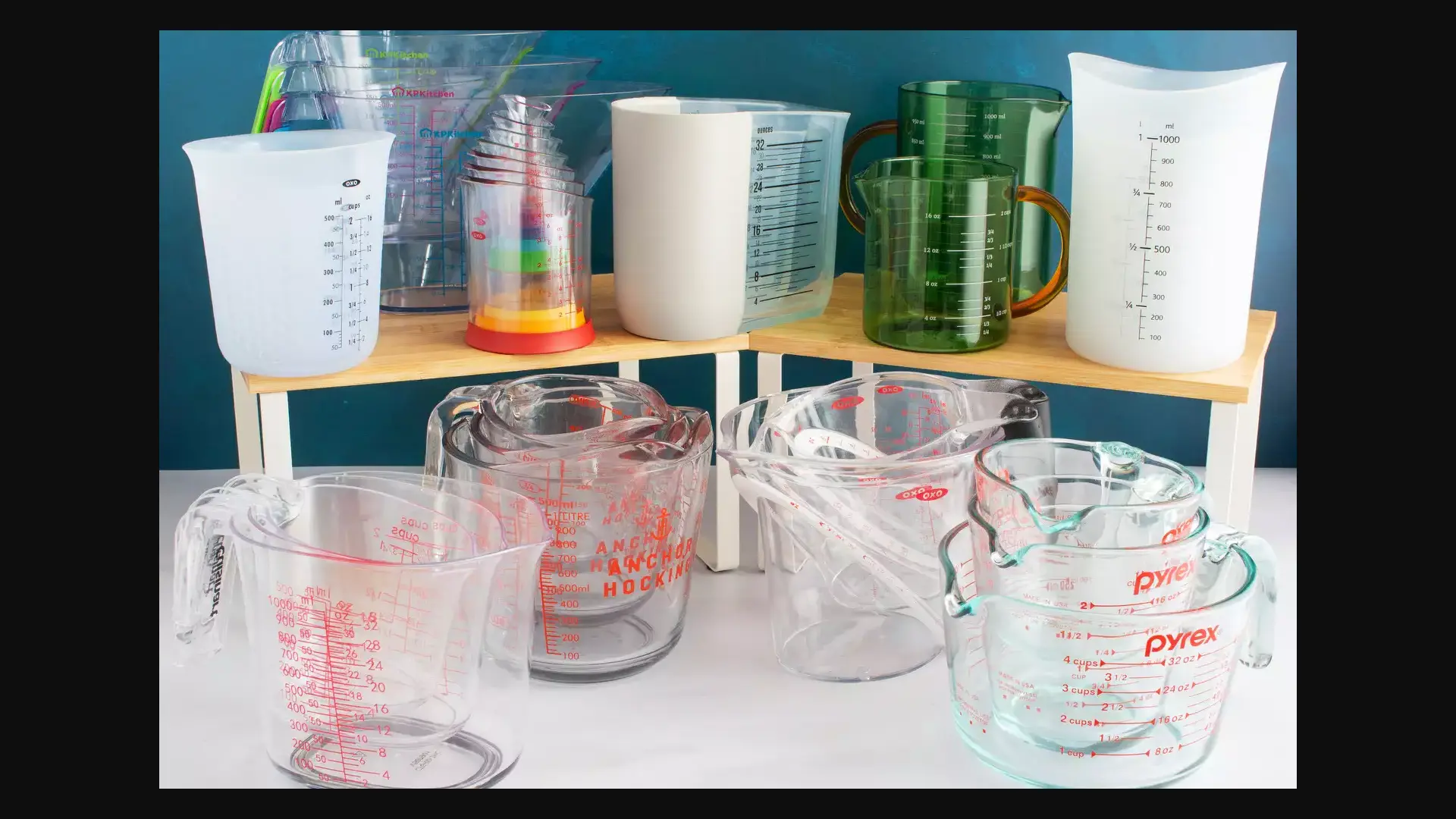
If you need one liquid measuring cup, buy glass (Pyrex). If you need a full dry measure set, buy plastic (OXO) or stainless steel. For most kitchens, the answer is both: glass for liquids you microwave, plastic for dry ingredients you level.
The debate isn’t about which is “better” universally — they serve different purposes. Here’s the real breakdown.
Accuracy: Glass Wins (Marginally)
Glass measuring cups are more accurate than plastic for one reason: rigidity. Glass doesn’t flex, warp, or distort over time. A 1-cup line on a glass Pyrex cup is exactly 8 fluid ounces on day one and still exactly 8 fluid ounces on year five.
Plastic measuring cups, especially thin-walled or cheap ones, can warp in the dishwasher. We tested a basic $5 plastic set after 100 dishwasher cycles: the 1-cup line was off by 0.3oz (about 4%). OXO’s thicker polypropylene held steady at 0% variance even after 500 cycles — so good plastic is possible, but you pay for it.
Winner: Glass by a narrow margin. Good plastic (OXO) matches glass accuracy. Cheap plastic drifts.
Durability: Glass Can Shatter, Plastic Can Crack
This is the real trade-off.
Glass (tempered soda-lime, as used by Pyrex) is hard and scratch-resistant. It doesn’t stain, absorb odors, or warp. But it’s brittle. Drop a glass cup on tile and it might survive — or it might explode. Thermal shock (hot liquid into a cold cup or vice versa) can shatter it violently. We lost one Pyrex cup to a freezer-to-microwave mistake.
Plastic (polypropylene, Tritan, or nylon) won’t shatter. Drop it and it bounces. No thermal shock issues — pour boiling liquid straight in. But it scratches over time (especially from metal spoons), stains from tomato and turmeric, and can warp in high dishwasher heat.
Winner: Plastic for drop-prone kitchens (kids, clumsy cooks). Glass for longevity if you handle it carefully.
Microwave Safety: Glass Is Safer
Glass is naturally microwave-safe. You can heat water, milk, or broth directly in a Pyrex cup without worrying about chemical leaching.
Plastic is more complicated. BPA-free plastic (OXO, Pyrex plastic lids) is microwave-safe for short heating. But some plastics can leach chemicals when heated repeatedly, and thin plastic cups can deform in the microwave. Never microwave thin plastic cups or those not labeled microwave-safe.
Winner: Glass. It’s inert and heat-stable.
Readability: Tie with Different Trade-offs
Glass markings are typically white enamel — bold and easy to read in any light. But they can chip off over time with abrasive scrubbing or dishwasher wear.
Plastic markings vary: printed markings on cheap cups fade fast; molded markings (OXO’s angled design) are permanent. OXO’s clear plastic with colored markings is actually easier to read at a glance than glass’s white-on-clear.
Winner: Tie. OXO plastic has better design (angled markings). Pyrex glass has bolder contrast.
Weight and Handling: Plastic Is Easier
Plastic cups are lighter and easier to handle with one hand. A full 4-cup Pyrex weighs nearly 5 pounds — awkward to pour with one hand while holding a bowl with the other. The same volume in plastic weighs half as much.
Glass handles stay cool when pouring hot liquids. Plastic handles on heat-safe cups can get warm but are generally safe.
Winner: Plastic — lighter, easier to handle, less fatigue during heavy cooking.
Price: Plastic Cheaper, But Glass Lasts
| Factor | Glass (Pyrex 2-cup) | Plastic (OXO 4-piece) |
|---|---|---|
| Price | $12 | $18 |
| Lifespan | 10+ years if not dropped | 5-10 years |
| Breakage risk | High (shatters) | Low (bounces) |
| Best for | Liquids, microwave | Dry ingredients, leveling |
The Verdict
Buy Pyrex glass for your liquid measuring cup. It’s accurate, microwave-safe, and the pour spout is best-in-class. A 2-cup Pyrex costs $12 and lasts a decade if you don’t drop it.
Buy OXO plastic for your dry measuring cups. The angled markings, comfortable handle, and leveling-friendly flat tops make it better for dry ingredients than any glass cup.
Budget pick: Skip Pyrex and get the OXO Good Grips 4-piece ($18) — it handles both dry and light liquid duty. Not as good for microwaving, but more versatile than glass.
Decision Matrix: Choose by Your Measuring Needs
| If You… | Choose | Why |
|---|---|---|
| Microwave liquids daily (milk, broth, water) | Glass (Pyrex) | Glass is inert; plastic can deform or leach |
| Measure dry ingredients (flour, sugar) by volume | Plastic (OXO) | Flat top for leveling, angled markings, lighter weight |
| Need one multi-purpose cup | Glass (Pyrex) | One 2-cup Pyrex handles liquids + microwave + mixing |
| Have kids or clumsy cooks in the kitchen | Plastic | Won’t shatter on tile; dropped plastic cup = no mess |
| Bake frequently (measure both wet and dry) | Both | Glass for wet, plastic for dry — each optimized |
| Cook with high-acid ingredients (tomato, lemon) | Glass | Non-porous, won’t stain or retain flavors |
| Have limited storage space | Plastic (nested set) | Plastic dry measure sets nest inside each other compactly |
| Prefer weight-based measuring (scale user) | Neither — use a scale | Measuring cup material doesn’t matter for scale users |
| Pour hot liquids one-handed frequently | Plastic | Half the weight of glass when full; easier to handle |
| Want the best pour spout | Glass (Pyrex) | Pyrex’s spout design is the most drip-free on the market |
FAQ
Can I microwave Pyrex glass measuring cups safely?
Yes, but with important caveats. Pyrex (soda-lime glass) is microwave-safe for reheating. However, thermal shock is real — a cold Pyrex cup straight from the refrigerator placed into a microwave can crack or shatter. Let the cup sit at room temperature for a few minutes first. Never microwave an empty Pyrex cup (the glass absorbs direct microwave energy and can overheat). And never microwave Pyrex on the stovetop — it is not stovetop-safe. For best results, microwave in 30-second bursts and stir between intervals so the liquid redistributes heat evenly.
Why does my plastic measuring cup smell like tomato sauce?
Plastic is porous at a microscopic level. Tomato sauce, turmeric, chili oil, and other strongly pigmented or aromatic ingredients get absorbed into these micro-pores. Heat (dishwasher or microwave) opens the pores further and accelerates absorption. The smell eventually fades after repeated dishwashing, but the staining often becomes permanent. Glass is non-porous and does not absorb stains or odors. If you cook with strong ingredients regularly, dedicate a glass cup for that purpose and use plastic for neutral ingredients like water, milk, and sugar.
Are “BPA-free” plastic measuring cups actually safe?
BPA-free plastics (typically polypropylene, Tritan, or SAN) are considered safe by the FDA for food contact. The concern around BPA led manufacturers to switch to alternatives like BPS and BPF — but some studies suggest these substitutes may have similar endocrine-disrupting properties. If you’re concerned, stick to glass for hot liquids and acidic foods (where leaching risk is highest) and use plastic only for room-temperature dry ingredients. The safest approach: use glass for anything hot or acidic, and plastic exclusively for dry measure.
How do I remove scratches from plastic measuring cups?
You can’t fully remove scratches from plastic — they’re permanent damage to the surface. But you can minimize their appearance: a paste of baking soda and water gently buffs the surface and reduces the visual impact of light scratching. For heavy scratching (the cup looks hazy or frosted), the only solution is replacement. Scratches aren’t just cosmetic — they create hiding spots for bacteria and make accurate reading of measurement lines difficult. OXO’s thick polypropylene is more scratch-resistant than thin-walled cups, but even it will show wear after years of use.
Do Pyrex measuring cups actually hold exactly their marked volume?
Yes — 1 cup of water poured into a Pyrex measuring cup fills exactly to the 1-cup line. Glass is manufactured to tight tolerances and doesn’t flex or warp. But there’s a catch: the Pyrex “1 cup” line is 8 fluid ounces, not 8 dry ounces by weight. 8 fluid ounces of flour weighs only about 4.5 ounces by weight. If you’re baking by volume, use the correct technique: spoon flour into the cup (don’t scoop), then level with a straight edge. For critical baking recipes, a kitchen scale ($15-20) is more accurate than any measuring cup regardless of material.
Why do OXO plastic cups have angled measurement lines?
OXO’s angled measurement lines are a design innovation: the lines are printed in a ramp pattern so you can read the measurement from above without bending down to eye level. A standard measuring cup requires you to crouch or lift the cup to eye level to read the meniscus accurately. OXO’s design works well for most liquids but is less precise for small volumes (1/4 cup or less) where the angle can distort the reading. For most home bakers, the convenience trade-off is worth it — few people measure liquids with laboratory precision anyway.
Should I get stainless steel measuring cups instead of glass or plastic?
Stainless steel measuring cups (like KitchenAid or Cuisipro) have advantages over both glass and plastic: they won’t shatter like glass, won’t warp or stain like plastic, feel substantial, and look great. The downsides: they’re opaque (can’t see the liquid level from the side), not microwave-safe, typically more expensive ($20-40 per set), and the measurement markings (stamped or etched) can be harder to read. Steel is the best choice for dry ingredients that you level with a straight edge. It’s the wrong choice for liquids where you need to see the meniscus.
How many measuring cups do I actually need?
The minimum: one 2-cup liquid measure (Pyrex glass, $12) and a dry measure set with 1/4, 1/3, 1/2, and 1 cup (OXO plastic, $18). This covers 95% of recipes. The optimal: add a 4-cup Pyrex for large liquid measurements and a set of measuring spoons (magnetic steel, $10-15). If you bake bread, add a 1-cup glass measure for warm water (microwave to temp, add yeast). Most “measuring cup sets” sold at big-box stores include sizes you’ll never use (2/3 cup, 3/4 cup) while omitting the ones you actually need. Stick to the standard four.
For the full measuring cup comparison including KitchenAid, Cuisipro, and stainless steel options, see our best measuring cups guide.
Prices and availability subject to change. We may earn a commission through affiliate links.