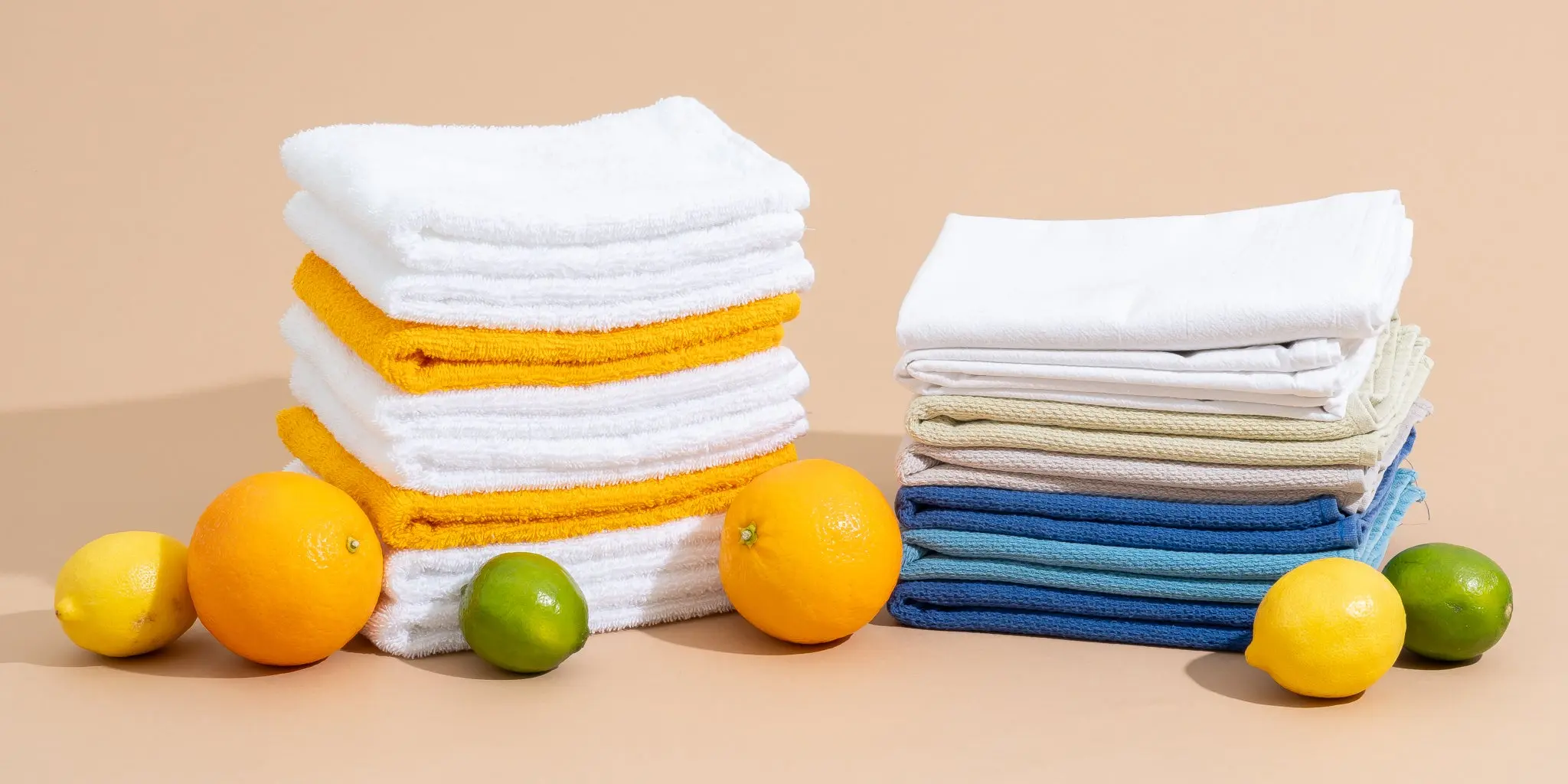
 We may earn a commission — learn more
Flour Sack vs Terry Cloth Towels — Which Should You Buy?
Quick Verdict
Buy flour sack towels if you dry dishes and glassware, hate lint, or want a towel that dries fast and doesn’t smell. Buy terry cloth towels if you dry your hands, handle hot pans, or prefer the plush feel.
Most kitchens should own both. Use flour sack for dishes and glass, terry cloth for hands and heavy wiping.
What a Flour Sack Towel Does Best
Flour sack towels are made from 100% cotton in a loose, flat weave — like a soft sheet. They were originally used in bakeries for covering rising dough, which tells you everything about their texture: smooth, lint-free, and breathable.
Pros:
- Zero lint — safe for wine glasses, crystal, and polished stainless steel
- Fast drying — 2-3 hours vs 5-6 for terry cloth
- More absorbent per square inch — the flat weave has more surface contact
- Versatile — strains yogurt, covers bread, polishes glass, dries dishes
- Less prone to mildew — dries quickly enough to prevent bacterial growth
- Thin — takes up half the drawer space of terry cloth
- Improves with washing — peaks around wash 5 and stays there for years
Cons:
- Thin fabric — you feel heat through them when handling hot pans
- No cushion — uncomfortable for drying hands compared to fluffy terry
- Wrinkle terribly right out of the dryer
- Arrive stiff with manufacturing starch (need 2-3 pre-washes)
- Snag on rough hands, calluses, and drawer pulls
Best for: Drying dishes and glassware, polishing stainless steel, covering dough, straining, any task where lint-free matters. See our best kitchen towels guide for top picks.
What a Terry Cloth Towel Does Better
Terry cloth has looped pile construction — those little loops of cotton that create a thick, plush surface. Same material as your bath towels, just in a smaller format.
Pros:
- More comfortable — the loops create cushion and a soft hand feel
- Better insulation — the thick fabric protects hands from hot pans and pots
- More aggressive wiping — the loops grab at dried-on food and spills
- Holds more water overall — a wet terry towel holds 2x the liquid of flour sack
- Familiar feel — everyone knows how a terry towel works
- Durable — the looped construction resists snags better than flat weave
Cons:
- Heavy lint — sheds fibers aggressively for the first 5-7 washes
- Slow drying — 5-6 hours to air dry, prone to mildew if left damp
- Bulky — takes up significant drawer and hamper space
- Heavy when wet — a soaked towel weighs nearly a pound, awkward for single-hand use
- Loops catch on anything — calluses, zippers, rough counter edges
- Less versatile — can’t strain liquids or cover dough effectively
Best for: Drying hands, handling hot cookware, wiping up large spills, heavy scrubbing. See our best kitchen towels guide for top picks.
Comparison Table
| Feature | Flour Sack | Terry Cloth |
|---|---|---|
| Absorbency rate | Fast — grabs water instantly | Slow — loops need to saturate |
| Total water held | Moderate | High |
| Drying speed | 2-3 hours | 5-6 hours |
| Lint | None | Heavy (first 5-7 washes) |
| Glass polishing | Excellent | Poor |
| Heat protection | Poor | Good |
| Hand feel | Smooth, thin | Plush, soft |
| Drawer space | Minimal | Bulky |
| Durability | Years | Years (loops may snag) |
| Price (per towel) | $1-3 | $1-6 |
| Best for | Dishes, glass, dough | Hands, hot pans, heavy mess |
Bottom Line
Buy flour sack towels (Utopia Kitchen 12-Pack) if you prioritize lint-free drying, fast air-drying, and versatility. They’re the best daily driver for most kitchen work and a 12-pack costs less than $20.
Buy terry cloth towels (Amazon Basics 12-Pack) if you want a dedicated hand towel by the sink, need oven-mitt substitute for quick grabs, or prefer the plush feel. They’re better for comfort and heat protection but worse at everything dish-related.
The ideal setup: 12 flour sack towels for dishes and daily tasks, 4-6 terry cloth towels for hands and heavy wiping. Total investment: ~$25 for a system that covers every kitchen towel need.
Decision Matrix
| If you need to… | Use Flour Sack | Use Terry Cloth |
|---|---|---|
| Dry wine glasses without streaks | ✅ Best tool for the job | ❌ Lint will stick to glass |
| Dry hands after washing | ❌ Thin fabric, uncomfortable | ✅ Plush and absorbent |
| Polish stainless steel appliances | ✅ Lint-free, no streaks | ❌ Leaves lint behind |
| Handle hot pans (oven mitt substitute) | ❌ Feels heat through fabric | ✅ Thick loops protect hands |
| Cover bread dough for proofing | ✅ Traditional bakery use | ❌ Loops stick to dough |
| Strain yogurt or cheese | ✅ Loose weave works as strainer | ❌ Heavy, not food-safe loose fibers |
| Wipe up a kitchen counter spill | ✅ Fast absorption, quick dry | ✅ Holds more liquid overall |
| Buff a cast iron skillet after seasoning | ✅ Thin fabric reaches all surfaces | ❌ Too thick, snags on rough iron |
| Clean a mirror or window | ✅ No lint = no streaks | ❌ Lint and streaks guaranteed |
| Use as a napkin at dinner | ✅ Looks clean, folds neatly | ❌ Too bulky, looks informal |
| Soak up a large water spill on the floor | ❌ Small capacity | ✅ Holds 2x more water |
FAQ
Do I really need both types of kitchen towels? If you cook regularly, yes. Flour sack towels excel at dish drying, glass polishing, and any task where lint-free matters. Terry cloth excels at hand drying and heavy wiping. A kitchen with only terry towels will leave lint on glassware. A kitchen with only flour sack will be uncomfortable for hand drying. Having both costs ~$25 total and covers every scenario.
How many washes before flour sack towels reach peak performance? Flour sack towels arrive stiff from manufacturing starch. After 2-3 hot water washes without fabric softener, they soften significantly. Peak performance comes around wash 5-7 — maximum absorbency, zero lint, and a soft-but-not-fuzzy hand feel. They stay at this level for years if you avoid fabric softener and dryer sheets (which coat the fibers and reduce absorbency).
Why does terry cloth smell musty so quickly? The looped pile construction of terry cloth traps moisture deep in the fibers. When hung in a humid kitchen or folded damp, the interior loops stay wet for hours — long enough for bacteria to multiply and cause that sour smell. Flour sack towels dry in 2-3 hours (too fast for bacterial growth), making them the better choice for any towel that won’t be bone-dry within an hour of use.
Can I use fabric softener on kitchen towels? No. Fabric softener coats cotton fibers with a waxy layer that reduces absorbency by 30-50%. This affects both flour sack and terry cloth towels. For maximum absorbency, wash kitchen towels in hot water with regular detergent and add a cup of white vinegar to the rinse cycle every few washes to remove built-up oils and residue.
How often should I replace kitchen towels? Flour sack towels: 2-3 years of regular use before they start thinning and losing absorbency. Terry cloth towels: 1-2 years before the loops start pulling, edges fray, and absorbency drops. Replace sooner if they develop a musty smell that persists through washing (deep-set bacterial colonization) or if they stop drying glassware streak-free.
Are flour sack towels good for drying nonstick pans? Yes — flour sack towels are excellent for drying nonstick surfaces because the smooth weave won’t scratch the coating. Terry cloth loops can catch on micro-scratches in older nonstick pans. For new nonstick cookware, always use flour sack or a dedicated soft cloth.
Related: Best Kitchen Towels 2026 — Full Review
Prices and availability subject to change. We may earn a commission through affiliate links.