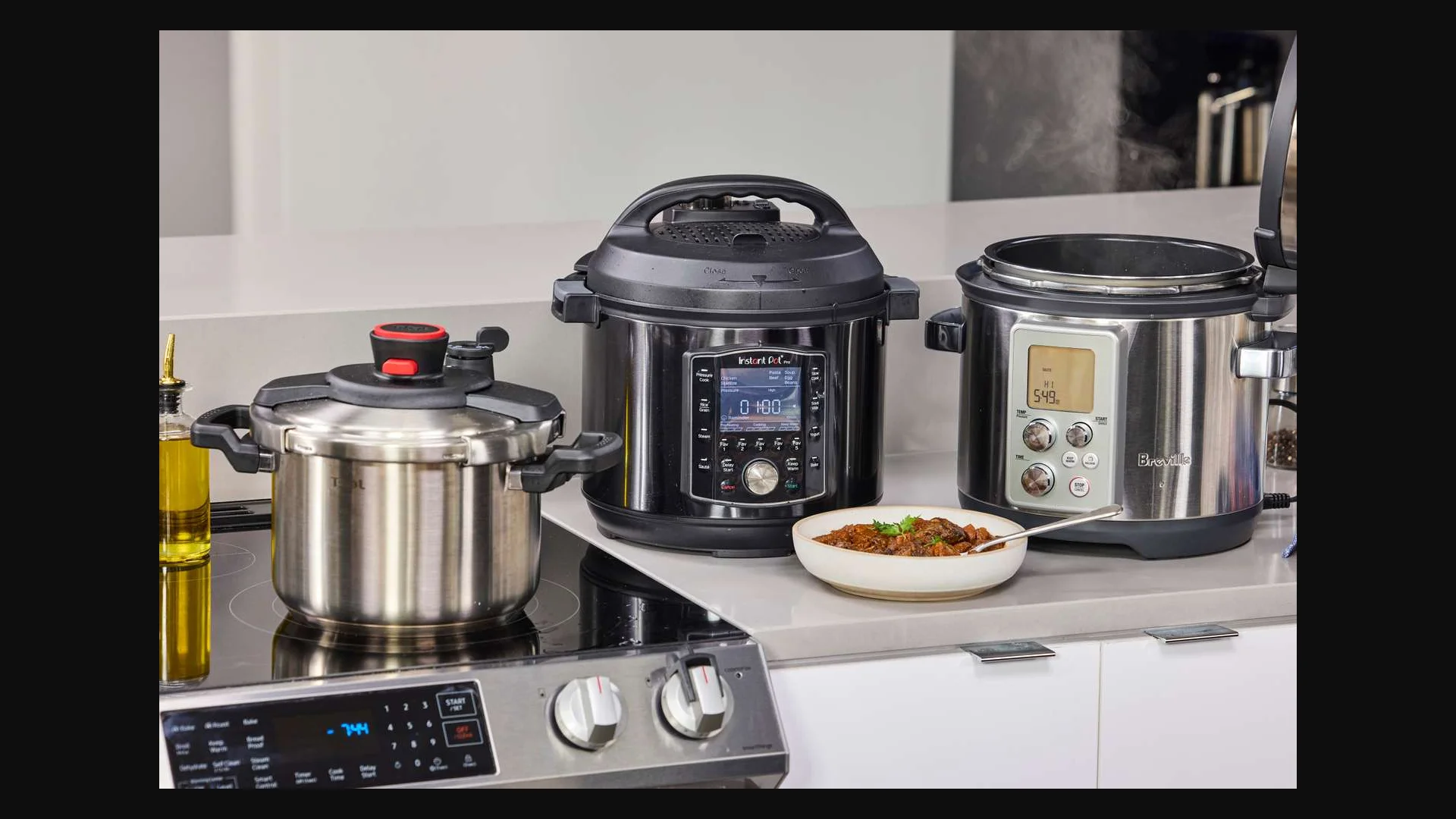
 We may earn a commission — learn more
Electric vs Stovetop Pressure Cooker — Which Should You Buy?
Quick Verdict
Buy an electric pressure cooker if you want set-and-forget convenience and multi-functionality. Buy a stovetop pressure cooker only if you need maximum speed (15 psi) and don’t mind hovering over the pot.
Most home cooks should buy electric. Here’s why.
Electric Pressure Cookers
How they work: A self-contained unit with a heating element, pressure sensor, and microprocessor. You set the time and pressure, and the machine handles the rest.
Pros:
- Set-and-forget — program it and walk away
- Automatic keep-warm when cooking finishes
- Multi-function — saute, steam, slow cook, rice cooker, yogurt maker
- Safer for beginners — lid locks, pressure sensors, overheat protection
- No burner needed — works anywhere with an outlet
Cons:
- Lower pressure (10-12 psi) — slightly slower than stovetop
- Bulky — takes up counter space
- Slower to come to pressure (10-15 min preheat)
- Electronic components can fail
Best for: Meal preppers, families, beginners, anyone who wants dinner with minimal attention. See our best electric pressure cooker guide for top picks.
Stovetop Pressure Cookers
How they work: A heavy pot with a locking lid and pressure regulator that sits on your stove burner. You control the heat level to maintain pressure.
Pros:
- Higher pressure (15 psi) — cooks 20-30% faster than electric
- Simpler construction — fewer parts to break, lasts decades
- No electronics — works on any stove (gas, electric, induction)
- More pressure control — you adjust heat to fine-tune pressure level
- Smaller and lighter than electric units
Cons:
- Requires attention — can’t walk away, must adjust heat to maintain pressure
- Multi-function? No — it’s just a pressure cooker
- Steeper learning curve — managing heat, timing pressure release
- No automatic keep-warm
- Easier to burn food if heat is too high
Best for: Experienced cooks who want fastest cook times, canner enthusiasts, and anyone cooking on induction where stovetop models are particularly efficient.
Comparison Table
| Feature | Electric | Stovetop |
|---|---|---|
| Pressure | 10-12 psi | 15 psi |
| Preheat time | 10-15 min | 5-8 min |
| Walk-away safe | Yes | No |
| Multi-function | Yes (saute, slow cook, rice, yogurt) | No |
| Safety features | Built-in (lid lock, sensors, auto-off) | Manual (pressure regulator, release valve) |
| Best for | Beginners, meal prep, families | Power users, canning, fastest results |
| Lifespan | 5-10 years (electronics) | 20+ years (no electronics) |
| Price | $50-200 | $40-150 |
Bottom Line
Buy electric (Instant Pot Duo Plus or Instant Pot Pro) — unless you have a specific reason to go stovetop.
Buy stovetop if you pressure can (electric models don’t reach high enough pressure for safe canning), you cook on induction and want maximum efficiency, or you want an appliance that will outlast your kitchen renovation.
For 90% of home cooks, electric is the right choice. It’s safer, more versatile, and more convenient. The 3 psi difference means maybe 5-10 minutes extra on a 1-hour recipe — a trade worth making for set-and-forget cooking.
Decision Matrix
| If you… | Choose Electric | Choose Stovetop |
|---|---|---|
| Want set-and-forget convenience | ✅ Set timer and walk away | ❌ Must monitor heat and pressure |
| Are new to pressure cooking | ✅ Safer — lid locks, sensors, auto-off | ❌ Steeper learning curve |
| Need multi-function (saute, slow cook, rice) | ✅ One appliance does it all | ❌ Pressure cooking only |
| Want the fastest possible cook times | ❌ 10-12 psi, slower preheat | ✅ 15 psi, 20-30% faster |
| Pressure can food for shelf storage | ❌ Doesn’t reach safe canning pressure | ✅ Required for safe canning |
| Cook on induction | ✅ Works (but preheat is slow) | ✅ Excellent efficiency on induction |
| Want an appliance that lasts 20+ years | ❌ Electronics fail in 5-10 years | ✅ Simple construction, decades of use |
| Have limited counter space | ❌ Bulky, stays on counter | ✅ Compact, stores in cabinet |
| Meal prep for a family | ✅ Large capacity (6-8 qt) + keep-warm | ✅ Large capacity (6-10 qt) but no keep-warm |
FAQ
Is electric pressure cooker food less flavorful than stovetop? No — the flavor difference is negligible for most recipes. The lower pressure (10-12 psi vs 15 psi) means slightly longer cook times but the same flavor extraction. The one exception is bone broths: stovetop pressure at 15 psi extracts more collagen in the same amount of time. For stews, beans, meats, and vegetables, most people cannot tell the difference in a blind test.
Can I use my electric pressure cooker for canning? No — electric pressure cookers do not reach and maintain the 15 psi required for safe home canning of low-acid foods (vegetables, meats, poultry). Only use a stovetop pressure cooker with a dial gauge or weighted gauge for canning. The USDA explicitly warns against using electric pressure cookers for canning.
Which type is better for cooking beans from dry? Both work well, but the electric’s set-and-forget nature makes it more convenient. Soak beans, add water, set the timer, and walk away for 25-40 minutes (depending on bean type). The stovetop is faster (15-25 minutes at 15 psi) but requires monitoring. For bean dishes where you want a specific texture (al dente for salads, soft for refried), the stovetop gives you more control to stop exactly when ready.
How does the cost compare over 10 years? Electric ($50-200 upfront): typically needs replacement in 5-10 years due to electronics, seal, and sensor wear. Estimated 10-year cost: $100-300 with one replacement. Stovetop ($40-150 upfront): lasts 20+ years with minimal maintenance (just replace the gasket every 3-5 years for ~$10). Estimated 10-year cost: $50-160. Stovetop is cheaper long-term, but the gap is small enough that convenience should drive your decision.
Do electric pressure cookers work at high altitude? Yes — digital pressure sensors in electric models automatically adjust for altitude. The microprocessor maintains the correct pressure regardless of your elevation. Stovetop models require manual adjustment: you must increase the weight or adjust the regulator to account for lower atmospheric pressure at high altitudes. This makes electric models simpler for high-altitude cooking.
Can I reduce the liquid in a stovetop recipe for electric use? No — electric pressure cookers require a minimum amount of liquid (typically 1-2 cups) to reach and maintain pressure because liquid evaporates during the longer preheat phase. Stovetop cookers can use less liquid since the preheat is faster and less water escapes. Always follow your electric cooker’s minimum liquid guidelines to avoid burn errors.
Related: Best Pressure Cooker 2026 — Full Review | Best Pressure Cooker for Beginners
Prices and availability subject to change. We may earn a commission through affiliate links.