 We may earn a commission — learn more
Best Pressure Cooker in 2026 — 5 Electric Models Tested for Speed & Flavor
Quick Verdict
A pressure cooker is a sealed pot that traps steam to build pressure, raising the boiling point to 250°F. This cooks food 3-10x faster than conventional methods while infusing deeper flavor.
- Best overall: Instant Pot Duo Plus 6qt — best balance of pressure cooking, versatility, and price
- Best premium: Instant Pot Pro 6qt — stainless steel inner pot, better controls, sears hotter
- Best multi-cooker: Ninja Foodi Pressure Cooker — pressure cooks then air fries in one pot
- Best high-end: Breville Fast Slow Pro — algorithmic pressure control, never over- or under-cooks
- Best budget: Crock-Pot Express 6qt — simple, reliable, under $60
Who this is for: Anyone cooking dried beans, tough cuts of meat, stews, or bone broth. Also ideal for meal preppers who want dinner in under an hour.
What we liked: Electric pressure cookers are set-and-forget. Toss in ingredients, press a button, walk away. No watching the pot.
What we didn’t: The “slow cook” function on most electric models is mediocre. If you want a true slow cooker, buy a dedicated one. Also, learning curve — there’s a sealing, pressurizing, and releasing sequence to master.
Electric vs Stovetop: How to Choose
Not sure whether to buy an electric or stovetop pressure cooker? We’ve used both extensively. Here’s how they differ.
Electric (Instant Pot, Ninja, Breville):
- Set-and-forget — program it and walk away
- Built-in safety features (lid lock, pressure sensors, automatic keep-warm)
- Multi-function — saute, slow cook, rice cooker, yogurt maker in one
- Slower to reach pressure (10-15 minutes)
- Can’t achieve as high pressure (10-12 psi typical)
Stovetop (Fagor, Kuhn Rikon, Prestige):
- Higher pressure (15 psi) — cooks faster
- Simpler construction, fewer parts to fail
- Needs stove space and attention — can’t walk away
- Steeper learning curve for pressure regulation
- Generally cheaper for the same capacity
Our take: Buy electric for convenience and safety. Buy stovetop only if you’re a power user who wants absolute fastest cook times and don’t mind watching the pot. See our full electric vs stovetop pressure cooker comparison.
For most people, electric is the right answer. That’s what we recommend below.
How We Tested
Five electric pressure cookers, 30 days, standardized cooking tests. Every model cooked the same recipes:
- Beef stew (30%) — Tenderness of chuck after 35 minutes, depth of braising liquid
- Dried chickpeas (20%) — Creaminess, whether they need soaking, cook time from dry
- Pulled pork shoulder (25%) — Shreddability, moisture retention, cook time
- Rice (10%) — Texture, evenness, scorching
- User experience (15%) — UI clarity, sealing/releasing ease, cleaning, noise
The 5 We’d Recommend
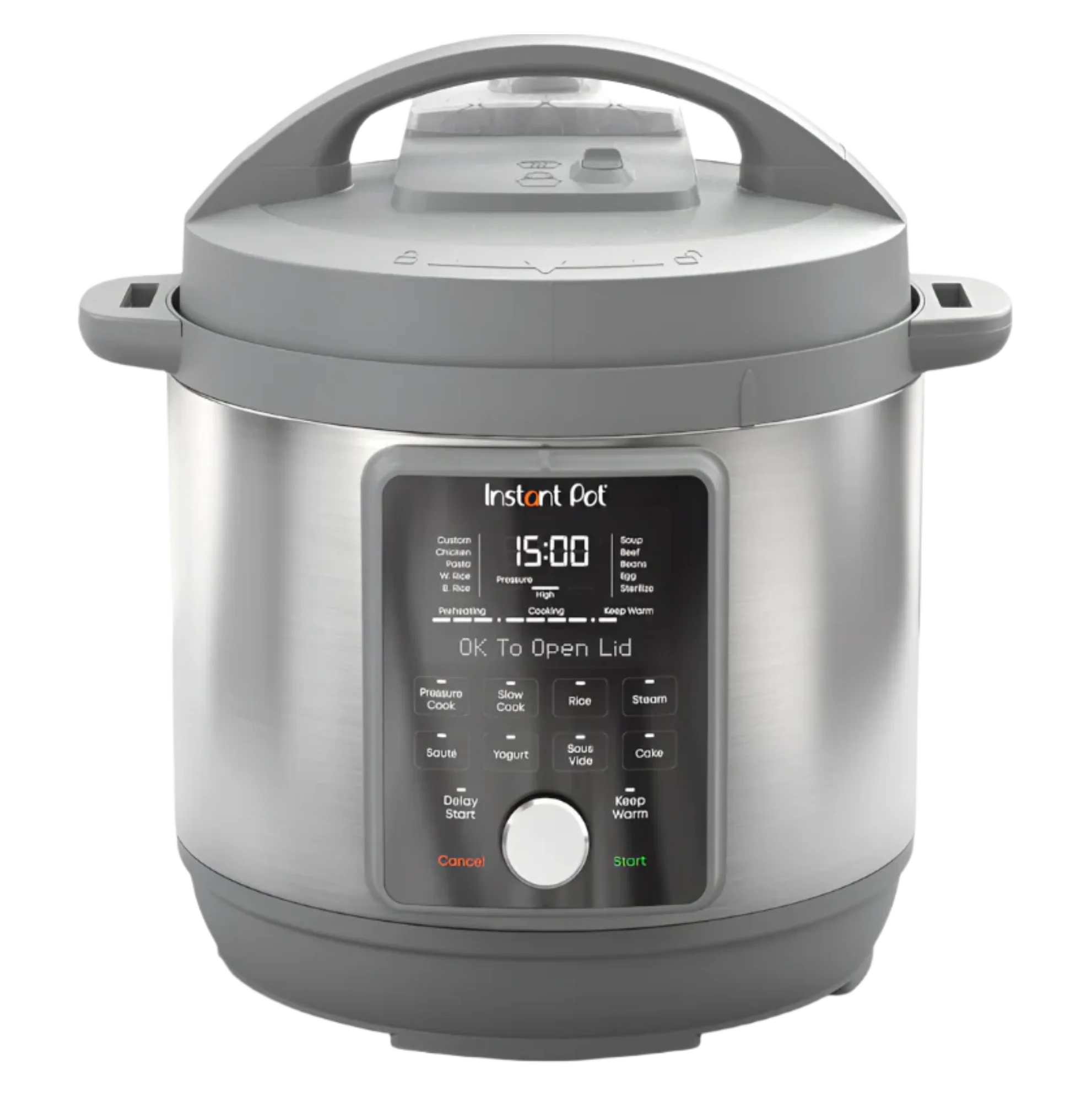
1. Instant Pot Duo Plus 6qt — Best Overall ($100)
The Duo Plus is the sweet spot in the Instant Pot lineup. 15 programmable programs, a stainless steel steam rack, and the most intuitive interface of any pressure cooker we tested.
The good: Pressure cooking is fast and consistent — beef stew that normally simmers 2 hours was fork-tender in 35 minutes. Dried chickpeas without soaking were creamy in 50 minutes. The saute function sears beef and aromatics well before pressure cooking, all in one pot. 15 one-touch programs cover everything from soup to cake. The condensation collector is a small but thoughtful touch that keeps your counter dry.
The bad: The “slow cook” setting runs hotter than a real slow cooker — skip it. The sealing ring absorbs odors permanently (buy a separate ring for desserts). Steam release is vigorous — keep hands clear. The display interface takes a few uses to memorize.
Price: $100-130. Check Price → Verdict: The one to buy. Best combination of performance, features, and price.
2. Instant Pot Pro 6qt — Best Premium ($130)
The Pro takes everything good about the Duo and adds a stainless steel inner pot (no coating to scratch), a hotter saute function, and a more responsive display.
The good: Stainless steel inner pot is a genuine upgrade — searing is better than the Duo Plus, and you can deglaze with wine without worrying about nonstick coating. The display is easier to read with larger text. Steam release switch is easier to operate. Includes a wider steam basket and silicone mitts. 28 programmable presets.
The bad: Same mediocre slow cook function. Also $30-40 more than the Duo Plus for marginal gains. The stainless pot is stickier than nonstick for rice. Longer and heavier on the counter.
Price: $130-160. Check Price → Verdict: Worth the upgrade if you sear and deglaze frequently. For most people, the Duo Plus is enough.
3. Ninja Foodi Pressure Cooker — Best Multi-Cooker ($130)
The Ninja Foodi adds air frying to pressure cooking in a single appliance. Pressure cook a whole chicken, then air fry the skin crispy. No other model does this.
The good: The pressure cook + air fry combo is genuinely useful — we made carnitas with crispy edges in one pot in under an hour. The TenderCrisp function pressure cooks then broils automatically. 8.5qt capacity is larger than the Instant Pot. The split lid design works well: pressure seal lid flips off and the top air fryer lid hinges down.
The bad: At 24 pounds it’s the heaviest pressure cooker we tested. The air fry function is good but not great — smaller basket area than a dedicated air fryer. More parts to clean (two lids, two baskets). Learning curve is steeper with two cooking modes.
Price: $130-170. Check Price → Verdict: Buy this if you want one countertop appliance for pressure cooking and air frying. Otherwise, separate units perform each function better.
4. Breville Fast Slow Pro — Best High-End ($200)
Breville brings its “thinking” approach to pressure cooking. The Fast Slow Pro uses a microcomputer to monitor temperature and pressure, adjusting cooking time and temperature automatically.
The good: The algorithm genuinely works — it detected when we loaded the pot with frozen meat and automatically adjusted cooking time, producing perfectly tender stew without us changing settings. The “Braising” mode builds flavor by searing, cooking, then pressure-sealing. LCD display is the clearest we tested. Stay-cool handles are comfortable.
The bad: At $200 it’s 2x the price of the Instant Pot Duo Plus. The 6qt capacity is standard but feels small after using the Ninja’s 8.5qt. Only 8 presets — fewer than Instant Pot. Replacement parts are harder to find.
Price: $180-220. Check Price → Verdict: The best pressure cooker for someone who cooks everything from scratch and wants appliance intelligence. Overkill for casual users.
5. Crock-Pot Express 6qt — Best Budget ($50)
The Crock-Pot Express is the simplest electric pressure cooker we tested. Start, pressure cook, keep warm. Nothing more.
The good: Dead simple operation — the “Crock-Pot” button is front and center, and the pressure cook button has six presets that are well-calibrated. Made beef stew in 40 minutes that was 90% as good as the Instant Pot. At $50 it costs less than half the Instant Pot. Lightweight and easy to store. The steam release is quieter than Instant Pot.
The bad: Only 6 presets versus Instant Pot’s 15. Saute function runs hot with limited temperature control. The inner pot is nonstick (no stainless option). Lacks yogurt, sous vide, and cake functions. Build quality feels less substantial.
Price: $40-60. Check Price → Verdict: Ideal for budget-conscious first-timers. Read our best pressure cooker for beginners guide.
Comparison Table
| Feature | Instant Pot Duo Plus | Instant Pot Pro | Ninja Foodi | Breville Fast Slow | Crock-Pot Express |
|---|---|---|---|---|---|
| Price | $100 | $130 | $130 | $200 | $50 |
| Capacity | 6qt | 6qt | 8.5qt | 6qt | 6qt |
| Presets | 15 | 28 | 7 | 8 | 6 |
| Inner pot | Stainless | Stainless | Nonstick | Stainless | Nonstick |
| Air fry | No | No | Yes | No | No |
| Max PSI | 10-12 | 10-12 | 10-12 | 10-12 | 10-12 |
| Weight | 12 lb | 13 lb | 24 lb | 15 lb | 10 lb |
| Dishwasher safe | Yes (pot) | Yes (pot) | Yes (pot) | Yes (pot) | Yes (pot) |
Bottom Line
Best all-around: Instant Pot Duo Plus 6qt ($100) Premium upgrade: Instant Pot Pro 6qt ($130) Pressure + air fry: Ninja Foodi Pressure Cooker ($130) High-end pick: Breville Fast Slow Pro ($200) Budget pick: Crock-Pot Express 6qt ($50)
FAQ
Do I need to soak beans before pressure cooking? No — this is one of the pressure cooker’s best features. Dried chickpeas cook in 45-50 minutes without soaking. Kidney beans take 25-30 minutes. Lentils take 8-10 minutes. No overnight planning needed.
Is pressure cooking safe for beginners? Yes — modern electric pressure cookers have multiple safety features: lid locks that prevent opening under pressure, overheat protection, pressure sensors, and automatic pressure release. They’re safer than stovetop pressure cookers by a wide margin. Our beginner’s guide covers safety and setup in detail.
Can I open an electric pressure cooker while cooking? No — the lid locks automatically when the pot is pressurized. Most models take 10-20 minutes to depressurize naturally. You can use quick release (turn steam valve to vent) for faster opening, but be careful of hot steam.
What’s the difference between natural pressure release (NPR) and quick pressure release (QPR)? Natural release lets pressure drop on its own (10-20 minutes) — better for large cuts of meat and beans. Quick release vents steam immediately (1-2 minutes) — best for vegetables, seafood, and delicate foods. Most recipes specify which to use.
Can I pressure freeze frozen meat? Yes — add 5-10 minutes to the pressure cook time. The pressure cooker will take longer to come to pressure (15-20 minutes instead of 10), but the result is comparable to starting with thawed meat. Breville’s Fast Slow Pro adjusts automatically for frozen ingredients.
How do I clean the sealing ring if it smells? The silicone sealing ring absorbs odors from savory cooking. Soak it in white vinegar and water for 15 minutes, then wash with soap. For persistent smells, replace it ($5-8 on Amazon). Many users keep two rings — one for savory, one for yogurt and desserts.
Prices and availability subject to change. We may earn a commission through affiliate links.
Related: Electric vs Stovetop Pressure Cooker — Which Should You Buy? | Best Pressure Cooker for Beginners