 We may earn a commission — learn more
Best Pour Over Coffee Setup in 2026 — 5 Brewers Tested Side-by-Side
Quick Verdict
Pour over coffee gives you more control than any automatic drip machine. The tradeoff is 3-5 minutes of hands-on time per cup. For people who care about flavor, it’s worth every second.
- Best classic: Chemex 8-Cup — iconic design, cleanest cup, easiest to brew consistently
- Best single cup: Hario V60 — most flavor clarity, biggest skill ceiling, cheapest entry
- Best flat bottom: Kalita Wave 185 — hardest to mess up, most forgiving of inconsistent pours
- Best hybrid: AeroPress — fast, versatile, closest to espresso body without a machine
- Best premium: Fellow Stagg X — precision engineering with heat retention built into the design
Who this is for: Anyone who wants better coffee than a drip machine makes, without spending $1,000 on espresso.
What we liked: A $25 Hario V60 with a $60 grinder makes coffee that rivals $200 drip machines. The gear barrier is low — the skill barrier is where the ceiling lives.
What we didn’t: Pour over is slower than automatic drip. The best brewers require technique practice. If you’re not interested in learning a process, get a good electric kettle and a decent drip machine instead.
Pour Over vs Drip
Pour over:
- You control water temperature, pour rate, and brew time
- Cleaner flavor profile — paper filter removes oils and fines
- Single-serve only (most brewers make 1-2 cups)
- 3-5 minutes active time per brew
- Requires a gooseneck kettle for best results
Drip machine:
- Set and forget — press start, walk away
- Batch brewing (4-12 cups)
- Less flavor clarity — basket often has uneven extraction
- Easier to produce mediocre coffee consistently
Our take: Pour over is for people who treat coffee as a ritual. Drip is for people who treat coffee as caffeine delivery. Neither is wrong, but they’re different tools for different priorities.
How We Tested
Five brewers, 30 days, three coffee origins, standardized brew recipes. Every brewer tested with:
- Flavor clarity (30%) — Blind cupping: could tasters distinguish origin characteristics
- Consistency (25%) — Three brews of same coffee, measured TDS and extraction yield variance
- Ease of use (20%) — Learning curve for consistent results
- Cleanup (15%) — Time and effort to clean after brewing
- Build quality (10%) — Materials, durability, heat retention
All brews used the same grinder (Baratza Encore at recommended settings) and same kettle (Fellow Stagg EKG at 205°F). We used Third Wave Water for all tests.
The 5 We’d Recommend
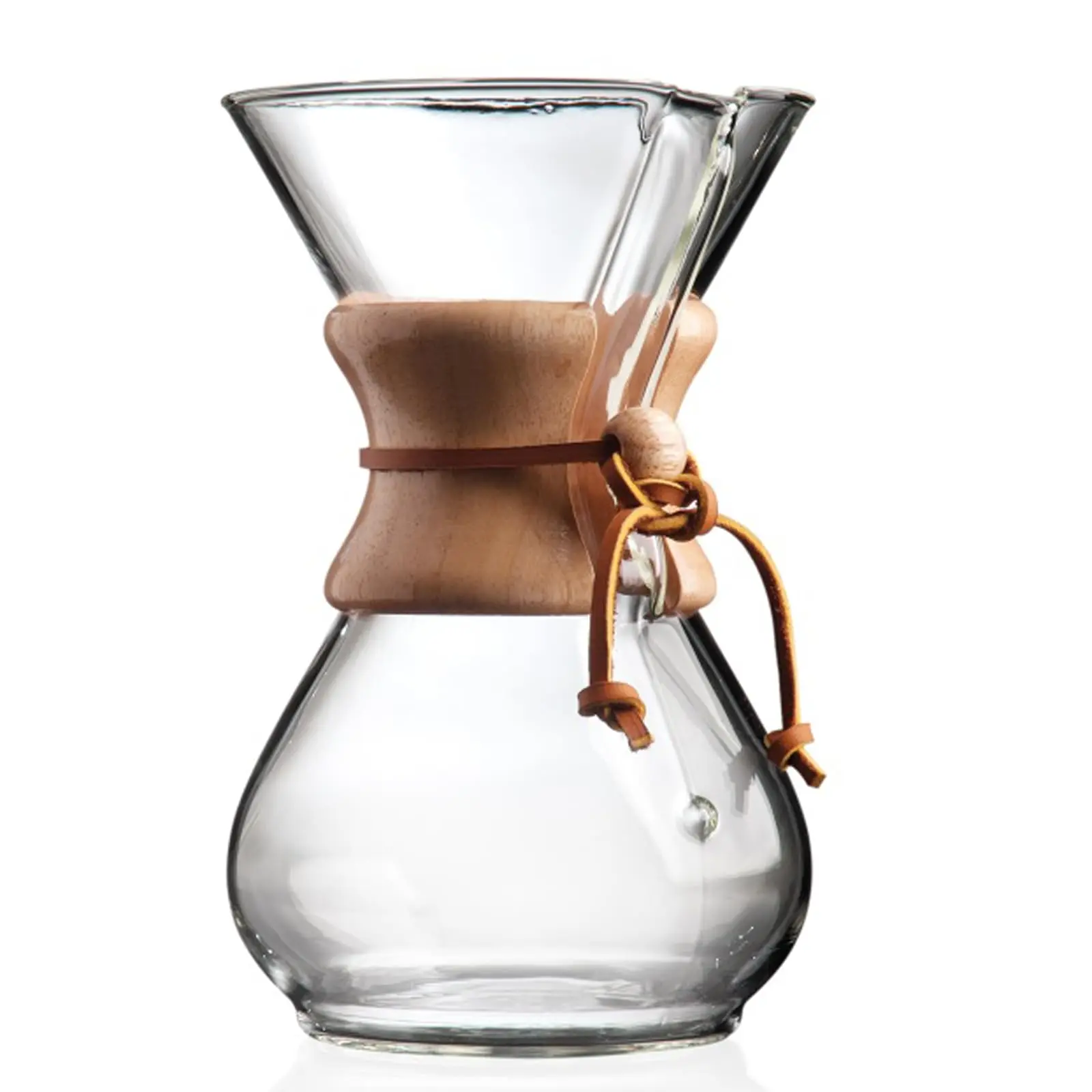
1. Chemex 8-Cup — Best Classic ($45)
The Chemex is the oldest design here (invented 1941) and still produces the cleanest cup of coffee you can make without a laboratory. The thick bonded paper filters remove more oils and fine particles than any other pour over filter.
The good: The flavor is unmistakable — bright, clean, tea-like body with exceptional clarity. Single-origin Ethiopian coffees tasted like stone fruit and jasmine with zero bitterness. The borosilicate glass is beautiful on a counter and doesn’t retain flavors between uses. The wood collar and leather tie are classic. The 8-cup size brews enough for two people or one very caffeinated person. The pour-over dripper shape creates a natural seal with the carafe, so heat loss during brewing is minimal.
The bad: Filters are expensive ($10 for 100, and they’re proprietary — no alternatives fit). The bonded filters also strip some body and mouthfeel — coffee can taste thin if you prefer full-bodied brews. The glass is fragile (one drop and it’s done). The pour over stand takes up counter space. The carafe shape makes it awkward to clean by hand (need a bottle brush).
Price: $40-55. Check Price → Verdict: The best pour over for light-roast single-origin lovers who value clarity over body.
2. Hario V60 — Best Single Cup ($25)
The V60 is the most popular pour over brewer in the world for a reason. The 60° cone and spiral ridges are engineered for optimal water flow. But it demands technique.
The good: Price of entry is $20-25. The ceramic version is heavy and heat-retentive — it doesn’t leach heat from your slurry. Paper filters are cheap ($6 for 200) and widely available. The cone design means you can brew directly into any mug. Flavor potential is the highest of any brewer here when dialed in — the clarity is exceptional, with more body than Chemex. The V60 has a massive online community with recipes for every coffee origin.
The bad: The skill ceiling is real. Inconsistent pours produce uneven extractions easily. The V60 requires a proper gooseneck kettle — a standard kettle will ruin your brew. The single-hole design is prone to stalling if you grind too fine. The ceramic version cracks if dropped. The plastic version ($8) is functional but feels cheap.
Price: $20-30. Check Price → Verdict: Best value in pour over. But only buy this if you’re willing to learn the technique.
3. Kalita Wave 185 — Best Flat Bottom ($35)
The Kalita Wave uses a flat bottom with three small drainage holes and a wave-shaped filter that sits above the bottom of the dripper. This design makes it the most forgiving pour over brewer.
The good: The flat bed means water has to pass through the full coffee bed regardless of your pour pattern — no channeling down the sides like a cone brewer. The three small holes create a natural flow restriction that maintains consistent contact time. Results are more repeatable than the V60. The stainless steel version is virtually indestructible. The 185 size handles 20-30g of coffee easily (1-2 cups).
The bad: Filters are proprietary (about $8 for 50). The flat design produces a slightly less bright cup than the V60 — more body, less clarity. The steel version is lightweight and slides on wet ceramic mugs. The pour over price is higher than V60 for similar flavor quality in skilled hands.
Price: $30-40. Check Price → Verdict: Best pour over for beginners or anyone who wants great coffee without the V60 learning curve.
4. AeroPress — Best Hybrid ($40)
The AeroPress isn’t strictly pour over — it uses immersion plus air pressure to extract coffee. But the flavor profile (clean, bright, full-bodied) and manual process put it in the same category. It’s the most versatile brewer here.
The good: Brew time is 90 seconds start to finish — fastest in this test. It makes concentrated coffee that can be diluted (like Americano) or drunk straight. The micro-filter (paper or reusable steel) produces zero sediment. Cleanup is trivial — push the puck into the trash and rinse. It’s indestructible (BPA-free plastic) and portable. You can brew inverted for longer extraction, or standard for faster. The Aeropress is also the best travel brewer — fits in a backpack.
The bad: Single-serve only (max 8oz concentrated, 12oz diluted). The plastic feels utilitarian, not premium. The rubber plunger seal wears out every 6-12 months ($5 replacement). Temperature drops faster than glass or ceramic brewers. The core workflow involves more parts (plunger, chamber, filter cap, stirrer) than a simple pour over cone.
Price: $35-45. Check Price → Verdict: Best for anyone who wants great coffee fast, or needs a portable solution. More versatile than any single pour over brewer.
5. Fellow Stagg X — Best Premium ($65)
The Stagg X is a precision-engineered pour over that solves the V60’s heat loss problem and the Kalita’s expensive-filter problem simultaneously.
The good: Dual-wall construction (double-wall stainless steel with vacuum insulation) means zero heat loss through the walls — your slurry stays at brewing temperature. The bottom opens wide for easy cleaning — no bottle brushes. The four-hole design (alternating sizes) creates balanced extraction. It accepts standard V60-02 cone filters (cheap and available everywhere). The build quality is exceptional — machined stainless that will outlast you. The top opening is 90mm (roomy for swirling and stirring).
The bad: It’s $60-70 for a single pour over dripper — expensive for what it is. The capacity is 22g max (one large mug or two small cups). The integrated ridges are less aggressive than the V60 — some recipes struggle with flow rate. The bottom opening gasket can leak if not seated perfectly.
Price: $60-70. Check Price → Verdict: Best for pour over enthusiasts who want maximum heat retention and premium build. Overkill for casual users.
Comparison Table
| Feature | Chemex 8-Cup | Hario V60 | Kalita Wave 185 | AeroPress | Fellow Stagg X |
|---|---|---|---|---|---|
| Price | $45 | $25 | $35 | $40 | $65 |
| Type | Cone + carafe | Cone | Flat bottom | Immersion + pressure | Double-wall cone |
| Capacity | 4-8 cups | 1-2 cups | 1-2 cups | 1 cup (8-12oz) | 1-2 cups |
| Filter cost (per 100) | $10 (proprietary) | $3 | $16 (proprietary) | $4 | $3 (uses V60-02) |
| Brew time | 4 min | 3 min | 3:30 min | 1:30 min | 3:30 min |
| Clarity | Excellent | Excellent | Very good | Good | Very good |
| Body | Light | Medium | Medium-full | Full | Medium |
| Skill required | Low-medium | High | Low | Low | Medium |
| Cleanup ease | Moderate | Easy | Easy | Trivial | Easy |
| Durability | Fragile | Moderate | Very good | Excellent | Excellent |
What We Skipped
- Clever Dripper: Immersion + pour over hybrid, similar to AeroPress but uses cone filters. Good brewer but overlaps too much with Kalita Wave and AeroPress in this roundup.
- Bee House Dripper: Solid entry-level pour over with two small holes for flow regulation. Too similar to V60 with less flexibility.
- Melitta single-serve: The original pour over (1908). Functional but dated design. V60 outperforms it at the same price.
Bottom Line
Best classic (multiple cups): Chemex 8-Cup ($45) Best single cup (high ceiling): Hario V60 ($25) Best for beginners: Kalita Wave 185 ($35) Best fast/premium hybrid: AeroPress ($40) Best premium: Fellow Stagg X ($65)
For more context, see our best coffee grinder guide (you need a good grinder for pour over) and the gooseneck vs standard kettle comparison. If you’re deciding between two top brewers, our Chemex vs Hario V60 comparison breaks down the flavor and workflow differences.
FAQ
Is pour over coffee better than drip? It depends on your priorities. Pour over gives you more control and cleaner flavor. Drip machines are faster and brew larger batches. A good pour over with fresh beans beats a cheap drip machine. A $200 drip machine (like the Technivorm Moccamaster) matches pour over quality with less effort.
What equipment do I need for pour over? Minimum: a dripper (any of the above), paper filters, a gooseneck kettle, and a burr grinder. Optional but recommended: a scale (0.1g precision) and a timer. Pre-ground coffee works but fresh-ground beans make a much bigger difference than which dripper you buy.
What grind size for pour over? Medium-fine (like table salt) for Hario V60 and Kalita Wave. Medium-coarse (like kosher salt) for Chemex. Medium-fine for AeroPress (though recipes vary). A Baratza Encore at setting 12-15 covers most pour over methods. Read our coffee grinder guide for details.
What coffee-to-water ratio should I use? Standard pour over ratio is 60g coffee per 1L water (roughly 15g coffee for a 250ml cup). Adjust to taste: increase ratio for stronger coffee, decrease for lighter. Weigh your beans and water — volume measurements (tablespoons and cups) are inconsistent.
How do I clean a pour over brewer? Rinse with hot water immediately after use. For glass and ceramic (Chemex, V60 ceramic), wash with mild dish soap every few days. For stainless steel (Kalita Wave, Stagg X), dishwasher-safe. The Chemex carafe needs a bottle brush. Never use abrasive scrubbers on any brewer.
Can I use a regular kettle for pour over? Technically yes, practically no. A standard spout pours too fast and too wide — you’ll wash coffee up the walls of the dripper and miss spots. A gooseneck kettle is essential for consistent pour over results. The Fellow Stagg EKG is the best, but $30 goosenecks work well.
Prices and availability subject to change. We may earn a commission through affiliate links.