 We may earn a commission — learn more
Best Kitchen Towels in 2026 — Cloth, Paper & Swedish Dishcloths Compared
Quick Verdict
Kitchen towels are the most-used tool in your kitchen — you grab one a dozen times per meal. The right towel absorbs fast, dries quickly, and doesn’t leave lint on your wine glasses. The wrong one stays damp, sheds fibers, and needs replacing every three months.
- Best overall: Williams Sonoma Classic Stripe Kitchen Towels — most absorbent cotton, zero lint, gets softer with washing
- Best value: Utopia Kitchen Flour Sack Towels — $1.30 per towel, 100% cotton, works for everything
- Best Swedish dishcloths: Paperless Kitchen Swedish Dishcloths — replaces 15 rolls of paper towels per cloth
- Best linen: Linen Tales Natural Linen Towels — quickest drying, naturally antibacterial
- Best budget: Amazon Basics Cotton Terry Kitchen Towels — $12 for 12, surprisingly good
Who this is for: Anyone who cooks at home and hates damp, smelly kitchen towels.
What we liked: A good kitchen towel is the cheapest upgrade you can make. Flour sack towels outperform most “premium” options at a fraction of the price.
What we didn’t: Most kitchen towels arrive with manufacturing residues that reduce absorbency until the third or fourth wash. Terry cloth towels shed lint for the first 5-10 washes.
Cloth vs Paper vs Swedish: How to Choose
100% Cotton Cloth (Williams Sonoma, Utopia Kitchen, Amazon Basics):
- Most versatile — drying dishes, wiping counters, handling hot pans
- Reusable hundreds of times
- Requires washing — build up a stash of 10-15 for a week between laundry
- Best absorbency-to-cost ratio
Paper Towels:
- Zero cleanup — use once, throw away
- Most expensive long-term — $50-100/year for a typical household
- Best for raw meat spills, greasy messes, one-off jobs
- Terrible for the environment
Swedish Dishcloths (Paperless Kitchen):
- Hybrid between cloth and paper — reusable but compostable
- Absorb 15x their weight
- Dry stiff — no mildew smell
- Each cloth replaces 15 rolls of paper towels
- Weaker for heavy scrubbing
Linen (Linen Tales):
- Quickest drying — hours vs overnight for cotton
- Naturally antibacterial — resists odors
- Most expensive — $15-25 per towel
- Gets softer for years
Our take: Own a mix. Use flour sack towels for daily drying and wiping. Keep Swedish dishcloths at the sink for quick counter wipes. Have paper towels for raw meat and grease.
How We Tested
Five towel types, 30 days, standardized tests. Every towel was tested new, after 5 washes, and after 20 washes:
- Absorbency (30%) — Milliters of water absorbed per second
- Drying speed (25%) — Hours to air-dry after wringing
- Lint test (20%) — Fibers left on wet glass after drying
- Durability (15%) — Edge fraying, color fade after 20 washes
- Feel (10%) — Softness, texture, hand feel when new and after washing
The 5 We’d Recommend
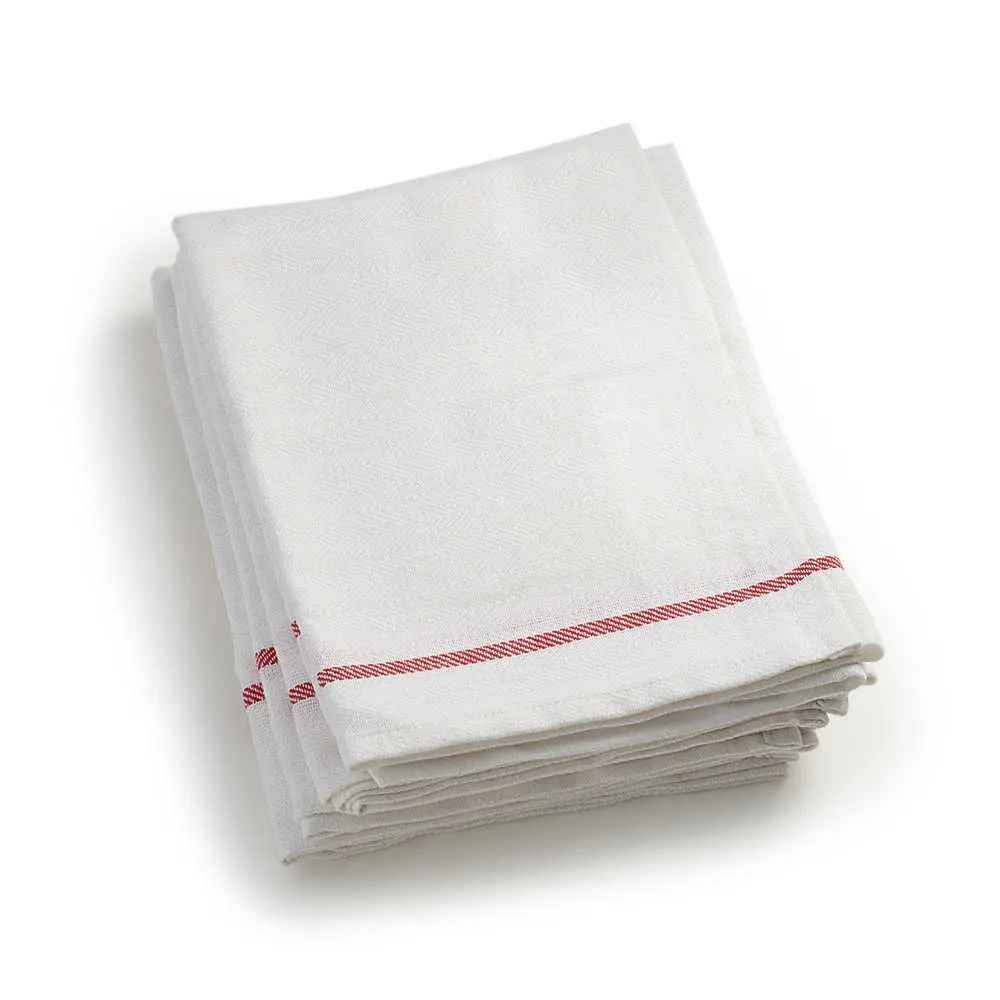
1. Williams Sonoma Classic Stripe Kitchen Towels — Best Overall ($25)
These are the towels you see in professional kitchens that look like they cost $50. Turkish cotton basketweave construction — dense loops that grab water without dragging. The 30x20 inch size is generous without being clumsy.
The good: Absorbency is exceptional — one pass dries a dinner plate. Zero lint even on the first use (unusual for cotton towels). The basketweave texture scrubs dried food off counters without needing a separate sponge. Edge stitching is reinforced — after 20 washes, zero fraying. The loop for hanging is substantial and hasn’t stretched. Turkish cotton gets softer with every wash without losing absorbency.
The bad: $25 for a set of 4 — pricey for towels you’ll use 20 times a day. The white shows stains immediately (bleach is safe but you’ll be using it). The basketweave snags on rough edges — watch for sharp counter corners and drawer pulls. Not as fast-drying as linen — takes 4-6 hours to air dry.
Price: $22-28. Check Price → Verdict: The best kitchen towel money can buy. Buy two sets and rotate.
2. Utopia Kitchen Flour Sack Towels — Best Value ($1.30/ea)
Flour sack towels are the unsung heroes of the kitchen. These are 28x28 inches of 100% cotton in a loose, flat weave that dries faster than terry cloth and leaves no lint. A 12-pack costs less than a single “premium” towel.
The good: Absorbency improves dramatically after washing — the first wash removes manufacturing starch and the second wash opens the cotton fibers. By wash 5, these outperform towels costing 5x more. The large size (28x28) folds into a perfect hand towel or unfolds to cover a loaf of rising bread. They dry in 2-3 hours — fast enough that they don’t develop that sour towel smell. Zero lint after the first wash. Multipurpose — drying dishes, polishing glass, straining homemade yogurt, covering dough, wiping counters.
The bad: The fabric arrives stiff with starch — you need 2-3 washes before they reach peak performance. The loose weave snags on rough hands and calluses. Thin enough that you can feel heat through them — not great for handling hot pans. They wrinkle terribly right out of the dryer (cosmetic only). The white shows every stain.
Price: $15-18 (12-pack). Check Price → Verdict: The best value in kitchen towels. Buy a 12-pack, wash them 3 times before first use, and you’ll never go back to terry cloth.
3. Paperless Kitchen Swedish Dishcloths — Best Swedish Dishcloth ($12)
Swedish dishcloths are 70% cellulose and 30% cotton — they look and feel like stiff cardboard when dry, then transform into a soft, absorbent sponge when wet. Each cloth replaces 15 rolls of paper towels and lasts 6-9 months.
The good: Absorbs 15x its weight — one cloth soaks up a full cup of spilled milk. Dries completely stiff in 1-2 hours, which means no bacterial growth and no smell. Compostable at end of life. Works on stainless steel without streaks. Can go in the dishwasher for sanitizing (top rack). Takes up virtually no drawer space. Excellent for quick counter wipes between meal prep steps.
The bad: Useless for drying dishes — they don’t buff or polish. Not strong enough for scrubbing stuck-on food (use a sponge). The texture feels strange to some users — like a cross between paper and rubber. They start to smell after 2-3 months if you don’t microwave or dishwasher-sanitize them weekly. The colored versions can bleed onto light surfaces when wet.
Price: $10-14 for a 10-pack. Check Price → Verdict: Keep a stack at the sink for counter wipes. They won’t replace your cotton towels for dishes, but they’ll cut your paper towel usage by 80%.
4. Linen Tales Natural Linen Towels — Best Linen ($18/ea)
Linen is the fastest-drying natural fiber — these towels air dry in 1-2 hours compared to 4-6 for cotton. Made from 100% European flax, stonewashed for softness, with a 215 gsm weight that’s substantial without being heavy.
The good: Drying speed is unmatched — hang a damp linen towel and it’s dry before your next meal. Naturally antibacterial linen fibers resist odors even after weeks of use. Gets softer with every wash without losing structure. The 18x26 inch size is elegant and functional. Stonewashing gives them a lived-in softness from day one. Linen fibers are 5x stronger than cotton — these will outlast cotton towels 3:1. The subtle texture looks beautiful hanging on a hook.
The bad: $18 per towel is expensive — a functional kitchen needs 6-10 towels. Absorbency is good but not great — you’ll use 2 passes vs 1 with cotton for fully drying dishes. The initial feel is rough compared to cotton (softens significantly after 3-4 washes). Not great for polishing glass or stainless — the texture can leave fine streaks. Wrinkles are part of the look but some find it untidy.
Price: $16-20 each. Check Price → Verdict: The best choice for the environmentally conscious cook who hates smelly kitchen towels. Worth the premium if you line-dry your towels.
5. Amazon Basics Cotton Terry Kitchen Towels — Best Budget ($12/12pk)
Amazon Basics’ 12-pack of cotton terry hand towels is a surprisingly solid product for $1 per towel. 100% cotton looped-terry weave, 16x26 inches, double-stitched hems. They’re not fancy but they work.
The good: Price — at $1 per towel, you can buy a month’s supply for the cost of two “premium” towels. The terry weave is genuinely absorbent — not as good as the Williams Sonoma but better than most towels in this price range. Double-stitched hems resist fraying. The 16x26 inch size is a standard hand towel — fits most towel bars. OEKO-TEX certified. Machine washable without shrinkage (tested at 20 washes). Soft enough for face use.
The bad: They shed lint aggressively for the first 5-7 washes — dry your wine glasses with a flour sack towel, not these. The terry loops catch on anything rough (calluses, zippers, drawer pulls). Heavy when wet — a soaked towel weighs nearly a pound. Takes 5-6 hours to air dry — if you use one and toss it in the hamper, it’ll mildew before laundry day. The gray color hides stains but also looks dingy after a few washes.
Price: $10-14 (12-pack). Check Price → Verdict: The price is unbeatable. Buy these for heavy use and keep the good towels for glassware and display.
Comparison Table
| Feature | Williams Sonoma | Utopia Kitchen | Paperless Kitchen | Linen Tales | Amazon Basics |
|---|---|---|---|---|---|
| Price | $25 (4-pack) | $16 (12-pack) | $12 (10-pack) | $18 each | $12 (12-pack) |
| Cost per towel | $6.25 | $1.33 | $1.20 | $18.00 | $1.00 |
| Material | Turkish cotton | Cotton flour sack | Cellulose/cotton | 100% linen | Cotton terry |
| Absorbency | Excellent | Very good | Excellent (liquid) | Good | Good |
| Drying speed | 4-6 hours | 2-3 hours | 1-2 hours | 1-2 hours | 5-6 hours |
| Lint (initial) | None | None after 1 wash | None | Very low | Heavy (5-7 washes) |
| Lint (after 20 washes) | None | None | None | None | Low |
| Dish drying | Best | Excellent | Poor | Good | Good |
| Counter wiping | Best | Excellent | Best | Excellent | Good |
| Glass polishing | Excellent | Excellent | Poor | Fair | Poor (initial) |
| Durability | Excellent | Good | 6-9 months | Excellent | Good |
Bottom Line
Best overall: Williams Sonoma Classic Stripe Kitchen Towels ($25) Best value: Utopia Kitchen Flour Sack Towels ($16/12pk) Best Swedish dishcloths: Paperless Kitchen Swedish Dishcloths ($12) Best linen: Linen Tales Natural Linen Towels ($18) Best budget: Amazon Basics Cotton Terry Kitchen Towels ($12/12pk)
Recommended setup: Buy 12 Utopia Kitchen flour sack towels for daily use ($16), 10 Paperless Kitchen Swedish dishcloths for counter wipes ($12), and 1 set of Williams Sonoma for glassware and guest-visible use ($25). Total: $53 for a kitchen towel system that lasts a year+.
FAQ
How many kitchen towels do I need? For a typical household that cooks 5-7 nights per week, you need 12-15 towels to go a full week between laundry. Breakdown: 5 for drying dishes, 5 for wiping counters, 3 for hands, 2 for backup. Owning fewer means running out mid-week and reusing damp towels (which breeds bacteria).
How often should I wash kitchen towels? Every 2-3 days minimum. Damp cotton is a breeding ground for bacteria. The easiest system is to have enough towels to last a week and run a load of towels on hot with bleach once a week. If a towel smells sour, it’s already growing bacteria — wash immediately.
What’s the best material for kitchen towels? Flour sack cotton (flat weave) is the best all-around: fast-drying, lint-free, versatile. Linen is best if you have a mildew problem (it dries fastest). Terry cloth is comfortable but slow-drying and prone to lint. Swedish dishcloths are best for counter wiping but not dish drying.
Are flour sack towels better than terry cloth? For most kitchen tasks, yes. Flour sack towels dry faster, leave no lint, and are more versatile (straining, covering dough, polishing glass). Terry cloth is more comfortable for drying hands and better for handling hot pans. See our Flour Sack vs Terry Cloth guide for details.
How do I get stains out of kitchen towels? Hot water wash with oxygen bleach (OxiClean) and a scoop of dishwasher detergent. For grease stains, rub dish soap directly into the stain before washing. Never use fabric softener — it coats the fibers and destroys absorbency. Skip the dryer sheets for the same reason.
Should I use fabric softener on kitchen towels? No. Fabric softener coats cotton fibers with a waxy layer that repels water. Your towels will feel soft but won’t absorb anything. Same for dryer sheets. If your towels feel rough, run a wash cycle with a cup of white vinegar (no detergent) to strip buildup.
Related: Flour Sack vs Terry Cloth Towels — Full Comparison
Prices and availability subject to change. We may earn a commission through affiliate links.