 We may earn a commission — learn more
Best Kitchen Shears in 2026 — 5 Models Tested
Quick Verdict
Kitchen shears are the most underrated tool in your kitchen. A good pair handles jobs knives do poorly — snipping poultry, cutting herbs, opening packaging, trimming bacon — and does them faster with less cleanup.
- Best overall: Kuhn Rikon — sharpest blades, take-apart design, best value at $20
- Best premium: Shun Multi-Purpose — Japanese steel, ultra-precise, heirloom quality
- Best budget: OXO Good Grips — comfortable, reliable, dishwasher safe
- Best precision: Kai Nerez — thin blades for detail work, surgical sharpness
- Best heavy-duty: J.A. Henckels — forged stainless, tackles bone and cartilage
Who this is for: Anyone who cooks at home more than twice a week and is still using a knife for jobs that need shears.
What we liked: A $20 pair of kitchen shears saves more time per dollar than almost any other kitchen tool. They rinse clean in seconds and eliminate knife-board cleanup for small jobs.
What we didn’t: Cheap shears (<$15) dull quickly and cannot be sharpened. Fixed shears accumulate grime in the pivot joint and cannot be properly cleaned.
Take-Apart vs Fixed: How to Choose
Take-apart shears (Kuhn Rikon, OXO, Kai Nerez):
- Separate into two halves for thorough cleaning
- Pivot joint stays clean — no bacteria buildup
- Blades can be sharpened individually
- Slightly less rigid than fixed designs
- Heavier plastic handles on some models
Fixed shears (Shun, J.A. Henckels):
- One-piece construction — no wobble or play
- More precise cutting action
- Better for heavy-duty work (poultry bones, lobster)
- Cannot be fully cleaned — food traps in pivot
- Harder to sharpen when dull
Our take: Buy take-apart for regular kitchen use. Buy fixed only for heavy-duty butchery where cleaning between tasks is less frequent.
How We Tested
Five kitchen shears, 30 days, real cooking. Every pair cut the same items:
- Whole chicken breakdown (25%) — Through skin, cartilage, and joints
- Fresh herb chiffonade (20%) — Basil, parsley, chives — clean cut, no bruising
- Packaging (20%) — Clamshell plastic, vacuum bags, twist ties
- Bacon and prosciutto (20%) — Snipping into lardons, thin-sliced charcuterie
- Cleaning (15%) — How easily food rinses off, dishwasher safety, bacteria traps
The 5 We’d Recommend
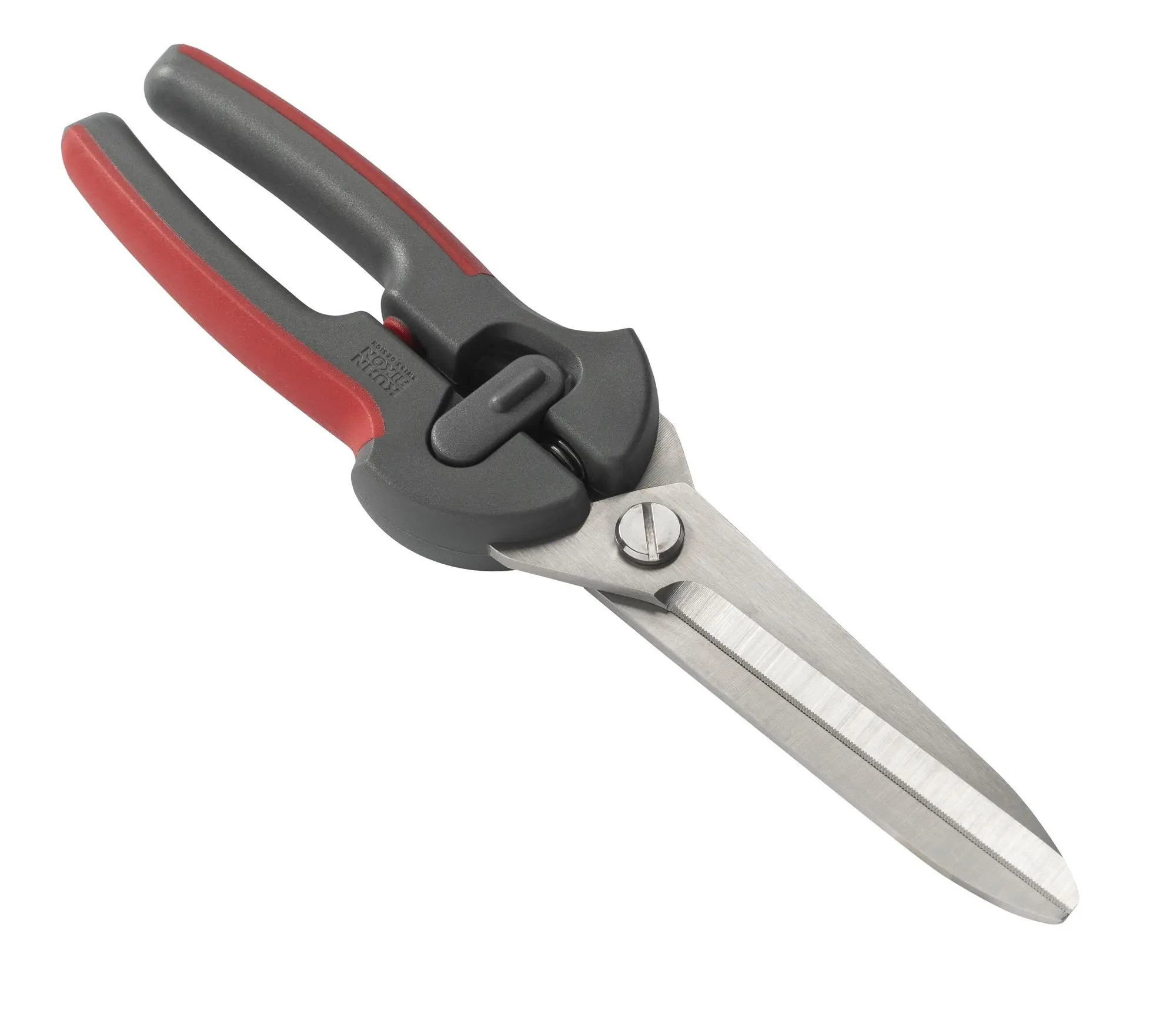
1. Kuhn Rikon — Best Overall ($20)
Kuhn Rikon makes the pair every other kitchen shear is measured against. Swiss-designed, high-carbon stainless steel, take-apart design, and the sharpest out-of-box edge of anything we tested.
The good: Blades are genuinely sharp — cut through a whole chicken spine in three snips. Take-apart design separates with one twist for thorough cleaning. Micro-serrations grip slippery items (chicken skin, fish) without sliding. Comfortable handle loop — fits both large and small hands. Dishwasher safe. Under $20.
The bad: Plastic handle feels slightly cheap compared to $60+ shears. Not heavy-duty enough for lobster or thick poultry bones. The locking tab wears over time — after 2-3 years the latch may not catch reliably. No blade guard included.
Price: $18-22. Check Price → Verdict: Buy these unless you have a specific reason to spend more. Best kitchen shears for 90% of home cooks.
2. Shun Multi-Purpose — Best Premium ($80)
Shun applies their legendary Japanese cutlery expertise to shears. VG-10 Japanese steel core, 34-layer Damascus cladding, and an ambidextrous design with micro-serrations on both blades.
The good: Surgical sharpness — cuts through herb stems and chicken cartilage with identical precision. The blade geometry makes thin-slicing tasks (trimming fat, snipping chives) effortless. Micro-serrations actually work — tested on wet basil with zero slipping. The fit and finish is beautiful. Heirloom quality.
The bad: $80 is a lot for shears. No take-apart design — cannot be fully cleaned (food will accumulate in the pivot). The Damascus pattern is cosmetic and adds nothing to performance. Requires hand washing and drying immediately. Left-handed users report the ambidextrous claim is overstated.
Price: $75-85. Check Price → Verdict: Buy these if you appreciate fine knives and want the best-cutting kitchen shears money can buy. For everyone else, Kuhn Rikon is 80% of the performance at 25% of the price.
3. OXO Good Grips — Best Budget ($15)
OXO’s take on kitchen shears follows their formula: oversized handles, thoughtful ergonomics, and reliability at a fair price. These are the most comfortable shears for extended use.
The good: The handles are generously padded and sized — best option for people with arthritis or large hands. Take-apart design with one-button release. The locking mechanism is intuitive and secure. Micro-serrations hold slippery items well. Dishwasher safe. Strong nylon handles won’t crack.
The bad: Blades are noticeably less sharp than Kuhn Rikon out of the box — require more effort for poultry joints. The blade geometry is blunter, making precision work (herbs, trimming) less satisfying. After 6 months of regular use, edge retention is mediocre. The handles are bulky in a drawer.
Price: $13-17. Check Price → Verdict: Best budget pick. Better ergonomics than Kuhn Rikon, but noticeably less sharp. Worth the $5 savings if you prioritize comfort over cutting performance.
4. Kai Nerez — Best Precision ($35)
Kai’s Nerez shears bring Japanese knife-making heritage to a take-apart design. Ultra-thin blade stock makes these the most precise shears for detail work.
The good: Thin, sharp blades excel at precision tasks — snipping chives over a dish, trimming artichokes, cutting kitchen twine. Take-apart design with a simple pull-pin mechanism. The blades are stainless steel with excellent edge retention — stayed sharp longer than any other model in testing. Lightweight and nimble.
The bad: Too delicate for heavy work — not suitable for poultry bones or lobster. The thin blades flex noticeably on tough materials. The handle loop is small — users with larger hands found it tight. No micro-serrations, so wet items can slide. Not dishwasher safe.
Price: $30-38. Check Price → Verdict: Buy as a second pair dedicated to herbs and precision work. Not a general-purpose kitchen shear.
5. J.A. Henckels — Best Heavy-Duty ($40)
Henckels brings forged German engineering to a fixed-blade shear. These are the toughest pair we tested — built to handle poultry, lobster, and light butchering.
The good: The forged stainless steel blades are thick and rigid — cut through chicken breastbone with zero flex. The hardened edge stayed sharp through the entire test period. The blades separate at the joint with a screw (requires a coin) for occasional cleaning. The notch at the blade base grips poultry bones securely. Feels built for decades of use.
The bad: Fixed design — the pivot joint accumulates grime and cannot be fully disassembled for cleaning. Heavy and bulky — not nimble for herbs or precision work. The handles are hard plastic with minimal padding. The screw-based disassembly is inconvenient (needs a coin). No micro-serrations — wet items slide.
Price: $36-44. Check Price → Verdict: Best for heavy kitchen use — poultry breakdown, lobster, butchering. Not an everyday general-purpose shear.
Comparison Table
| Feature | Kuhn Rikon | Shun | OXO | Kai Nerez | J.A. Henckels |
|---|---|---|---|---|---|
| Price | $20 | $80 | $15 | $35 | $40 |
| Type | Take-apart | Fixed | Take-apart | Take-apart | Fixed |
| Blade steel | High-carbon SS | VG-10 Damascus | Stainless | Stainless | Forged SS |
| Micro-serrations | Yes | Yes | Yes | No | No |
| Dishwasher safe | Yes | No | Yes | No | No |
| Best for | All-purpose | Precision | Comfort | Detail work | Heavy-duty |
| Weight | 4 oz | 5 oz | 5 oz | 3 oz | 7 oz |
Bottom Line
Best overall: Kuhn Rikon ($20) Best premium: Shun Multi-Purpose ($80) Best budget: OXO Good Grips ($15) Best precision: Kai Nerez ($35) Best heavy-duty: J.A. Henckels ($40)
FAQ
Should kitchen shears be sharpened? Yes — kitchen shears dull with use, just like knives. Take-apart shears can be sharpened with a fine stone or ceramic rod (sharpen each blade individually, maintaining the original bevel). Fixed shears require professional sharpening or replacement. Most home cooks should replace $15-20 shears every 2-3 years instead of sharpening them.
Can kitchen shears cut through chicken bones? Most kitchen shears handle poultry joints (cartilage and small bones) but not large leg or thigh bones. Kuhn Rikon and OXO manage through a whole chicken spine. For heavy butchery, use Henckels or dedicated poultry shears. Never use precision shears like Kai Nerez on bones.
How do I clean kitchen shears? Take-apart shears: separate the two halves, wash with soap and water, dry immediately. Fixed shears: wash the blades while keeping the pivot dry, use a pipe cleaner or toothpick to remove debris from the joint. Dishwasher-safe models (Kuhn Rikon, OXO) are easiest — place in the utensil basket, sharp side down.
What’s the difference between kitchen shears and scissors? Kitchen shears are designed for food contact — stainless steel blades that resist rust, wider handles for better grip, and a design that allows thorough cleaning. Office scissors use carbon steel that rusts, have uncomfortable handles for extended use, and trap bacteria in the pivot joint. Do not use office scissors for food.
Are expensive kitchen shears worth it? For most home cooks, a $20 Kuhn Rikon outperforms everything under $50. Spend $80 on Shun only if you already own Shun knives and want matching quality, or if you use shears daily for precision work. The jump from $20 to $35 (Kai Nerez) is worth it if you do a lot of herb work. The jump from $35 to $80 is diminishing returns for 95% of users.
Prices and availability subject to change. We may earn a commission through affiliate links.