 We may earn a commission — learn more
Best Ice Cream Maker in 2026 — 5 Models Tested Side-by-Side
Quick Verdict
An ice cream maker doesn’t need to be expensive to produce great results. The biggest decision is whether you want a machine with a built-in compressor (no pre-freezing required) or a freezer bowl model (cheaper but needs 24 hours of freezer time).
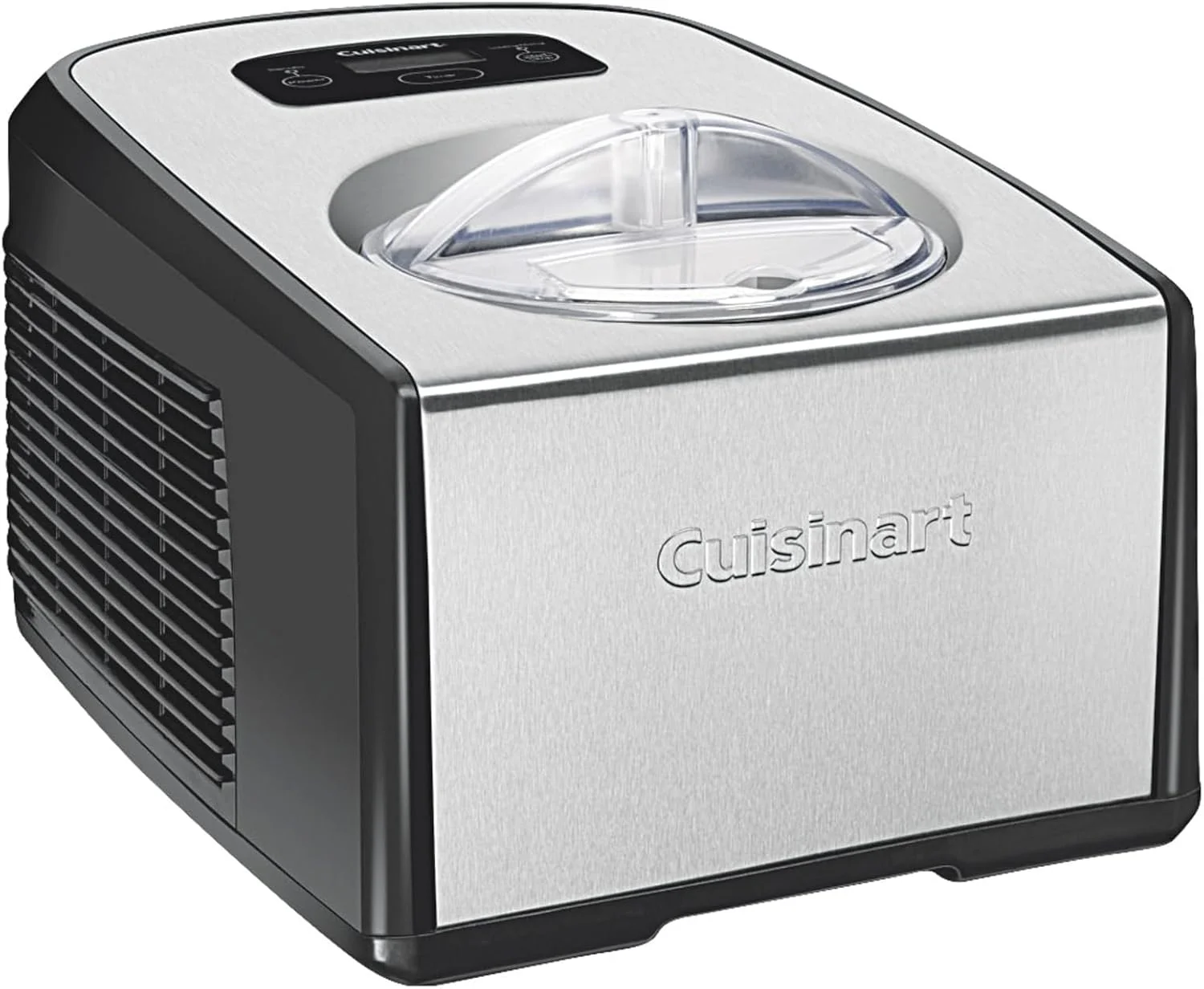
- Best overall: Cuisinart ICE-100 — built-in compressor, consistent results batch after batch, no pre-freezing
- Best premium: Breville Smart Scoop — automatic hardness detection, built-in compressor, 12 settings for custom texture
- Best value: Cuisinart ICE-21 — freezer bowl model that produces excellent ice cream for under $50
- Best novelty: Ninja Creami — spins through frozen solid blocks, creates incredibly smooth texture from any base
- Best upgrade: KitchenAid Ice Cream Maker Attachment — turns your stand mixer into an ice cream machine
Who this is for: Anyone who wants better ice cream than the grocery store. A $50 machine saves money after 6-8 pints. A $300 machine saves time — no planning ahead.
What we liked: Fresh ice cream is noticeably better than store-bought — the texture is softer, the flavor is brighter, and you control exactly what goes in.
What we didn’t: Freezer bowl models require 24 hours of planning. Compressor models are expensive and heavy. Either way, you’re committing to a single-purpose appliance.
Compressor vs Freezer Bowl: How to Choose
Compressor (Cuisinart ICE-100, Breville Smart Scoop):
- Built-in freezer — churns whenever you want, no planning needed
- Make multiple batches back-to-back
- Generally more consistent results (freezer temperature is controlled)
- Expensive ($250-500)
- Heavy and takes up permanent counter space
- Quieter operation
Freezer bowl (Cuisinart ICE-21, most KitchenAid attachments):
- The bowl must freeze for 24 hours before each use
- One batch at a time — the bowl needs to refreeze between batches
- Cheap ($35-70)
- Lightweight, stores in a cabinet
- Results depend on your freezer’s temperature
- Bowl takes up significant freezer space
Our take: Get a freezer bowl model if you make ice cream occasionally (once a month or less) or want to try before investing. Get a compressor model if you make ice cream weekly or want the convenience of spontaneous churning.
How We Tested
Five ice cream makers, 60 days, 40+ batches. Every model made:
- Vanilla custard (25%) — 6-egg custard base. Creaminess, ice crystal size, churning time
- Chocolate sorbet (20%) — Dairy-free. How well the machine handles non-dairy bases
- Strawberry (15%) — Fresh fruit base. Even distribution of fruit, ice crystal control
- Gelato (15%) — Denser, lower-overrun base. Texture and authenticity
- Ease of use (15%) — Setup, cleanup, noise, and whether you need to plan ahead
- Versatility (10%) — Sorbet, frozen yogurt, dairy-free, mix-ins
We measured: churn time, final temperature, overrun (air incorporation), ice crystal size (microscope), noise level, and cleanup time.
The 5 We’d Recommend
1. Cuisinart ICE-100 — Best Overall ($300)
The Cuisinart ICE-100 is the sweet spot in ice cream makers. A built-in compressor means no pre-freezing, and the results are consistently excellent.
The good: The compressor chills the bowl to -30°C, which means the mix freezes immediately on contact — smaller ice crystals and creamier texture. We made 4 batches in a row (vanilla, chocolate, strawberry sorbet, gelato) without stopping — each one came out at the same consistency. The 1.5qt capacity makes 6-8 servings. The 60-minute timer is accurate for most recipes (custard base takes about 35 minutes). The mix-in dispenser on top drops chocolate chips, nuts, or fruit evenly during the last 5 minutes. The paddle and bowl are dishwasher safe. At 25lb, it’s heavy but has carrying handles. Noise level is moderate — quieter than a blender, louder than a refrigerator.
The bad: The bowl is not removable from the machine — you scoop directly from the machine or transfer to a container. The mixing paddle has a plastic shaft that feels less durable than the rest. The compressor needs 10-15 minutes to cool down between batches (though it still makes them faster than freezer bowl models). At $300, it’s 6x the price of the ICE-21. The machine is large — 12 inches wide and 10 inches tall — and needs ventilation space around it.
Price: $250-350. Check Price → Verdict: The best ice cream maker for anyone who makes ice cream regularly. Buy it once and never plan ahead again.
2. Breville Smart Scoop — Best Premium ($500)
The Breville Smart Scoop is the most technologically advanced ice cream maker on the market. It has a built-in compressor and automatically detects when the ice cream is done.
The good: The “Smart Scoop” feature uses a torque sensor to detect when the ice cream reaches the right consistency — it stops automatically at 12 different hardness levels from “soft serve” to “hard scoop.” We tested all 12 and each was accurate. The built-in compressor chills faster than the Cuisinart (pre-chills in 15 minutes vs no pre-chill needed, but the Breville’s initial cool-down is faster). The keep-cool function holds the ice cream at serving temperature for up to 3 hours after churning. The 1.2qt capacity is slightly smaller than the Cuisinart but the ice cream texture is marginally better — smaller ice crystals, more uniform structure. The pre-cool mode chills the bowl before you add the mix, which reduces churn time by about 10 minutes. Noise level is the quietest of any machine we tested — 52dB during churning.
The bad: The price — $500 is significantly more than the ICE-100 and the quality difference is marginal (about 10% better for 70% more money). The 1.2qt capacity is noticeably smaller than the ICE-100’s 1.5qt — you get 4-5 servings vs 6-8. The machine is heavy (28lb) and large. The bowl is not removable — same scoop-from-machine limitation as the Cuisinart. The automatic hardness detection, while accurate, removes some control — experienced ice cream makers may prefer manually deciding when it’s done. Replacement parts are expensive.
Price: $450-550. Check Price → Verdict: Buy this if you want the absolute best ice cream texture and don’t mind paying for it. For most people, the Cuisinart ICE-100 is 90% as good for 60% of the price.
3. Cuisinart ICE-21 — Best Value ($50)
The Cuisinart ICE-21 is the classic freezer bowl model that’s been a bestseller for years. It produces genuinely good ice cream at a fraction of the price of compressor models.
The good: For $50, the ICE-21 makes ice cream that’s better than anything you can buy at the grocery store. The 1.5qt double-insulated freezer bowl needs 24 hours in the freezer, then churns for 20-30 minutes. We made vanilla custard at -18°C freezer temperature and the results were creamy with small ice crystals — not quite compressor-level, but close enough that most casual tasters couldn’t tell the difference in a blind test. The paddle mixes thoroughly and scrapes the bowl walls well. The transparent lid lets you watch the churn. The motor is simple and reliable — no electronics to fail. The bowl, paddle, and lid are all dishwasher safe. At 8lb, it’s easy to store and move.
The bad: The freezer bowl requires 24 hours in the freezer before every use. You cannot make a second batch without refreezing (6-8 hours minimum). The consistency depends on your freezer temperature — a freezer warmer than -18°C produces noticeably larger ice crystals. The motor is not powerful enough for thick mixes (high-fat custard bases can strain it). The bowl takes up significant freezer space — about the size of a large casserole dish. The outer bowl can sweat condensation during churning. The clear lid can crack if over-tightened.
Price: $40-60. Check Price → Verdict: The best entry-level ice cream maker. Makes great ice cream for 1/6 the price of a compressor model. Buy this to see if homemade ice cream is for you.
4. Ninja Creami — Best Novelty ($200)
The Ninja Creami is different from every other ice cream maker here. Instead of churning while freezing, it spins through a frozen-solid block of base, shaving it into an incredibly smooth texture.
The good: The Creami creates the smoothest texture of any machine we tested — the spinning blade shaves the frozen block at 24,000 RPM, producing ice crystals that are smaller and more uniform than any churning method. It handles unconventional bases effortlessly — we tested almond milk, coconut cream, avocado, protein shakes, and banana-based “nice cream” and all came out creamy. The “mix-in” function folds in chocolate chips, cookies, or fruit without crushing them. Each pint container is a serving size — freeze the base, spin when you want it. The machine is compact (10 inches tall) and stores easily. The pint containers (included) have airtight lids for storage. The re-spin function fixes any icy texture by re-spinning.
The bad: The base must be frozen solid — minimum 24 hours, ideally longer. The process is two-stage: freeze the base, then spin. You cannot watch the process or control the texture mid-spin. The machine is loud (78dB — like a blender). The pint containers are proprietary — you must use Ninja’s containers and they cost $10 each to replace. The single-serve format means you make one pint at a time (1.5qt for the whole batch, but each serving needs its own container and spin). The machine has had reliability complaints — the blade mechanism can jam if the base isn’t completely level when frozen. It does not make traditional ice cream texture — the mouthfeel is distinctively different (smoother, denser, almost like Dole Whip).
Price: $180-230. Check Price → Verdict: Best for dairy-free, protein, or banana-based ice creams. Also great for single people who want one pint at a time. Not a replacement for traditional churned ice cream.
5. KitchenAid Ice Cream Maker Attachment — Best Upgrade ($60)
If you already own a KitchenAid stand mixer, this attachment is the cheapest way to make quality ice cream. No extra motor — the mixer drives the paddle.
The good: At $60, it’s the lowest-cost option that produces good ice cream — cheaper than the ICE-21 if you already have a mixer. The 2-quart freezer bowl is the largest capacity of any model we tested. The attachment drives off the mixer’s power, so the paddle speed is controlled by the mixer’s speed settings (speed 1 or 2 for ice cream). The dasher (paddle) scrapes the bowl walls effectively. Cleanup is easy — the bowl and dasher rinse clean. It stores in the freezer when not in use (saves space and keeps it ready). The KitchenAid attachment ecosystem means parts and support are widely available.
The bad: It still requires 24 hours of freezer time for the bowl. The bowl is large (8 inches diameter) and takes up significant freezer space. The mixer motor gets warm during extended churning (20-30 minutes is fine, but we wouldn’t push past 40 minutes). The bowl’s capacity is 2 quarts but the effective yield is about 1.5 quarts (you need headroom for expansion). The dasher doesn’t reach the very bottom of the bowl — about 1/4 inch of mix doesn’t freeze. If you don’t own a KitchenAid mixer, this costs $60 + $450 for the mixer. See our stand mixer guide for recommendations.
Price: $50-70. Check Price → Verdict: The most economical option if you already own a KitchenAid mixer. Not a reason to buy a mixer if you don’t already have one.
Comparison Table
| Feature | Cuisinart ICE-100 | Breville Smart Scoop | Cuisinart ICE-21 | Ninja Creami | KitchenAid Attachment |
|---|---|---|---|---|---|
| Price | $300 | $500 | $50 | $200 | $60 |
| Type | Compressor | Compressor | Freezer bowl | Spin & shave | Freezer bowl |
| Capacity | 1.5qt | 1.2qt | 1.5qt | 1 pint | 2qt |
| Pre-freeze needed? | No | No | 24 hours | 24 hours | 24 hours |
| Churn time | 35-50 min | 25-40 min | 20-30 min | 2 min | 20-30 min |
| Dishwasher safe | Yes (paddle) | Yes (paddle) | Yes (bowl + paddle) | No | Yes (bowl + dasher) |
| Weight | 25 lb | 28 lb | 8 lb | 10 lb | 3 lb (attachment) |
| Noise | 58dB | 52dB | 55dB | 78dB | 62dB |
| Back-to-back batches | Yes | Yes | No | Yes (with extra containers) | No |
What We Skipped
- Cuisinart ICE-31: Double the price of the ICE-21 for a larger bowl (2qt). The larger bowl needs even more freezer space and the extra capacity isn’t useful for most households. The ICE-21 is a better value.
- Whynter ICM-200LS: Stainless steel compressor model with a removable bowl — a unique feature. But the churn timer is inaccurate and the build quality is inconsistent. The Cuisinart ICE-100 is a safer buy at a similar price.
- Donvier 1-Pint: Manual hand-crank model. Charming but impractical — requires stirring every 2-3 minutes for 20 minutes. The ice crystals are large and the texture is noticeably icy. Fine as a novelty, not for regular use.
Bottom Line
Best all-around: Cuisinart ICE-100 ($300) — built-in compressor, consistent results, no planning Best premium: Breville Smart Scoop ($500) — automatic hardness detection, best texture Best value: Cuisinart ICE-21 ($50) — great ice cream for an unbeatable price Best for dairy-free: Ninja Creami ($200) — see our guide to nice cream makers → Best upgrade: KitchenAid Ice Cream Maker Attachment ($60)
FAQ
How long does homemade ice cream last in the freezer? Properly stored in an airtight container, homemade ice cream lasts 2-3 weeks. After that, ice crystals grow and the texture degrades. Compressor machine ice cream lasts longer because the initial freeze is faster and creates smaller crystals. Homemade ice cream is always best within the first week.
Can I make dairy-free ice cream in a traditional ice cream maker? Yes, but results vary. Coconut milk and cashew cream bases work well in any machine. Almond milk and oat milk are thinner and produce icier results — the Ninja Creami handles these best because it spins through the frozen block rather than churning. See our guide to the best machines for dairy-free ice cream →
Do I need an ice cream maker or can I make ice cream without one? You can make ice cream without a machine using the “bag method” (ice and salt in a ziplock bag) or by freezing in a bowl and stirring every 30 minutes. Both produce acceptable results but require active effort and produce larger ice crystals. A $50 Cuisinart ICE-21 is a significant upgrade over any no-machine method.
What’s the difference between ice cream, gelato, and sorbet? Ice cream is custard-based (eggs + cream) with 14-25% butterfat and 50-100% overrun (air incorporated). Gelato has less fat (4-9%), less air (20-35% overrun), and is served warmer — denser and more intense flavor. Sorbet is dairy-free — just fruit, sugar, and water. Most ice cream makers handle all three, but gelato benefits from a machine with slower churning speed.
Is the Ninja Creami worth it? The Ninja Creami is worth it if you make dairy-free ice cream, protein ice cream, or sorbet regularly. It produces an unmatched smooth texture from bases that traditional machines struggle with. It’s less worth it if you primarily make traditional custard-based ice cream — a Cuisinart ICE-21 or ICE-100 will give you a more familiar texture at a lower price.
How do I get the best texture from a freezer bowl model? Three tips: (1) Make sure your freezer is at -18°C or colder — measure with a thermometer. (2) Chill the base to 4°C (refrigerator temperature) before churning — room temperature base creates larger crystals. (3) Transfer to a pre-chilled container and freeze for 2-4 hours before serving — fresh-churned ice cream is soft.
Prices and availability subject to change. We may earn a commission through affiliate links.