 We may earn a commission — learn more
Best Heat-Resistant Oven Mitts — Temperature Ratings and Buying Guide
Not all oven mitts are built for heat. A mitt rated for “500°F” might mean “safe for brief contact at 500°F” or “safe for continuous use at 500°F” — and most manufacturers don’t clarify which. Here’s what those numbers actually mean and which mitts can handle real heat.
How Temperature Ratings Work
Oven mitt temperature ratings are not regulated. Here’s how to read them:
Continuous rating — The mitt can hold a pan at this temperature indefinitely without heat reaching your hand. ThermoWorks silicone mitts (tested to 500°F continuous) fall in this category. Most mitts don’t provide continuous ratings.
Contact rating — The mitt can handle brief contact (10-15 seconds) at this temperature. This is the most common rating you’ll see. A mitt rated “500°F” typically means contact rating, not continuous.
Max exposure rating — The absolute temperature the material can withstand before degrading or melting. This is usually 200-300°F above the safe working range. A silicone mitt with a 500°F contact rating might have a 700°F max exposure rating.
Our rule of thumb: If a mitt costs under $15 and doesn’t specify continuous rating, assume it’s safe for 350°F contact only.
Heat Resistance by Material
Silicone: 500°F Continuous, 700°F+ Max
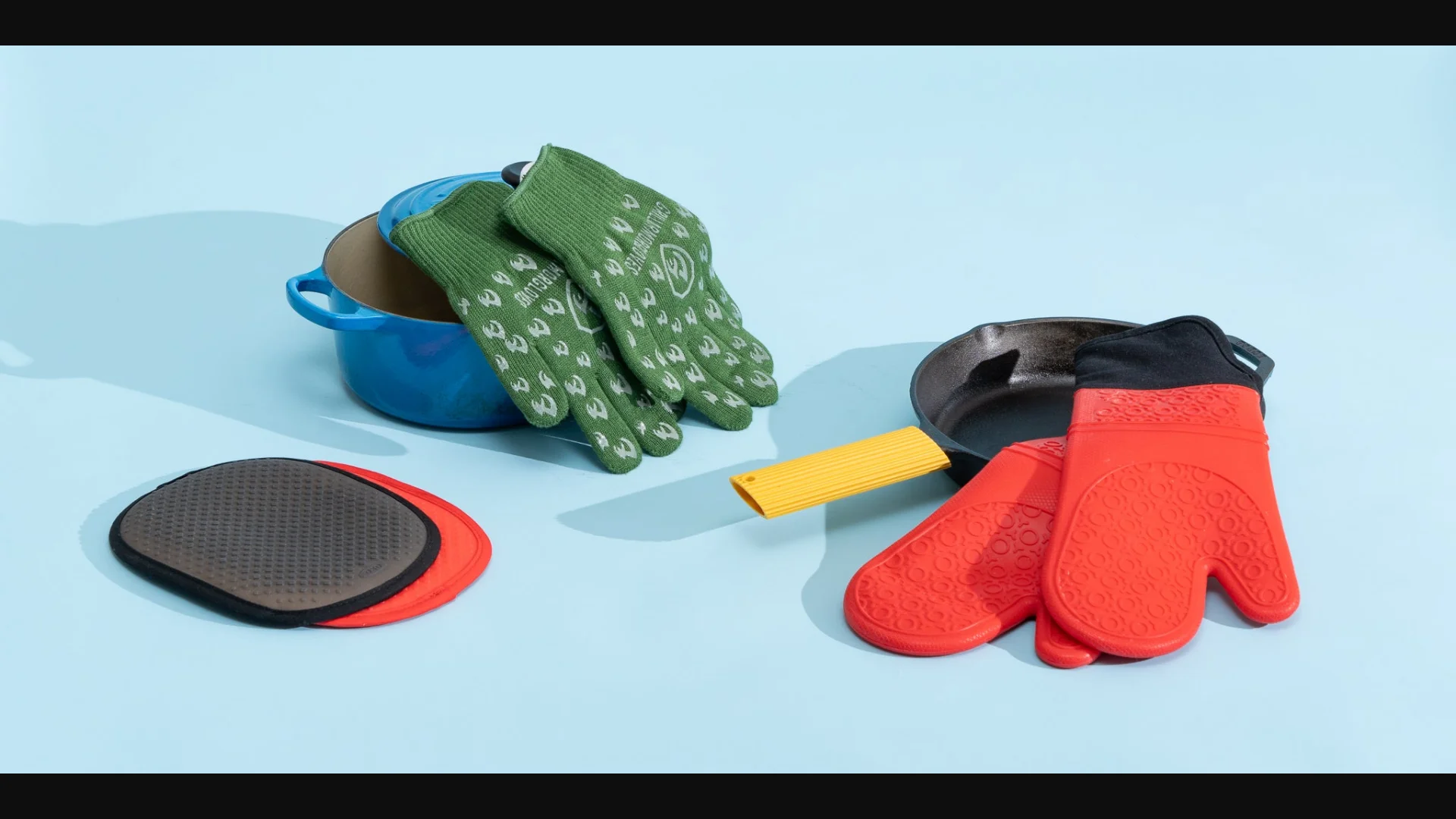
Food-grade silicone is the best all-around oven mitt material. It withstands 500°F continuously without degradation and can handle brief exposure up to 700°F. It’s waterproof, stainproof, and provides excellent grip. The downside: thin or cheap silicone (under 3mm) can transfer heat faster than thick silicone (4-5mm).
Our top pick: ThermoWorks Silicone Oven Mitts ($25) — 5mm silicone bonded to a cotton terry liner, rated for continuous 500°F use.
Aramid / Kevlar Blends: 800°F+ Continuous
Professional kitchen mitts and some premium home mitts use aramid fibers (brand names include Kevlar and Nomex). These materials are flame-resistant, not just heat-resistant — they won’t melt, ignite, or degrade at standard oven temperatures. They’re also thin enough to allow excellent dexterity.
The trade-off: they’re expensive ($30-60), not waterproof, and hard to clean. Most home cooks don’t need this level of protection.
Leather: 900°F+ Continuous
Full-grain cowhide leather is exceptionally heat-resistant and arguably the most durable oven mitt material. It handles direct contact with hot metal (cast iron, grill grates) without scorching. The leather fibers are naturally flame-resistant and will char before they burn.
Our top pick: Firesae Leather Mitts ($45) — 2.5mm cowhide with wool felt lining, rated for 932°F continuous.
Important: Leather loses its heat resistance when wet. Steam or moisture causes leather to conduct heat directly to your hand. Never use leather mitts to handle wet or steaming cookware.
Cotton / Terry Cloth: 400°F Maximum
Standard cotton oven mitts are safe for 350°F baking but degrade quickly above 400°F. At 450°F+, cotton fibers begin to scorch (brown and become brittle). At 500°F+, cotton can eventually ignite with sustained contact.
Cotton mitts are fine for occasional baking. For any high-heat cooking (450°F+ roasting, broiling, pizza), use silicone or leather.
When to Replace Your Oven Mitts
Silicone mitts wear visibly — look for cracks, sticky spots, or areas where the silicone has thinned. Damaged silicone conducts heat instantly at those weak points.
Fabric mitts should be replaced when you see scorch marks, thin patches, or any melted synthetic fibers. If the interior lining feels compressed or thin, replace them. A simple test: hold a 400°F pan for 10 seconds. If it’s uncomfortably warm, the mitt needs replacement.
Leather mitts last the longest. Replace when the leather cracks, the interior lining is compressed, or the mitt no longer feels adequately protective. With proper care (periodic conditioning, keeping them dry), good leather mitts can last 5+ years.
For more detail on our top picks, see our full best oven mitts in 2026 review.
Prices and availability subject to change. We may earn a commission through affiliate links.