 We may earn a commission — learn more
Best Garlic Press in 2026 — 5 Presses Tested for Speed, Cleanup & Garlic Quality
Quick Verdict
A great garlic press does one job and does it fast — one-handed crush, no peeling required, and easy cleanup. A bad one leaves you picking garlic out of crevices and squeezing with both hands.
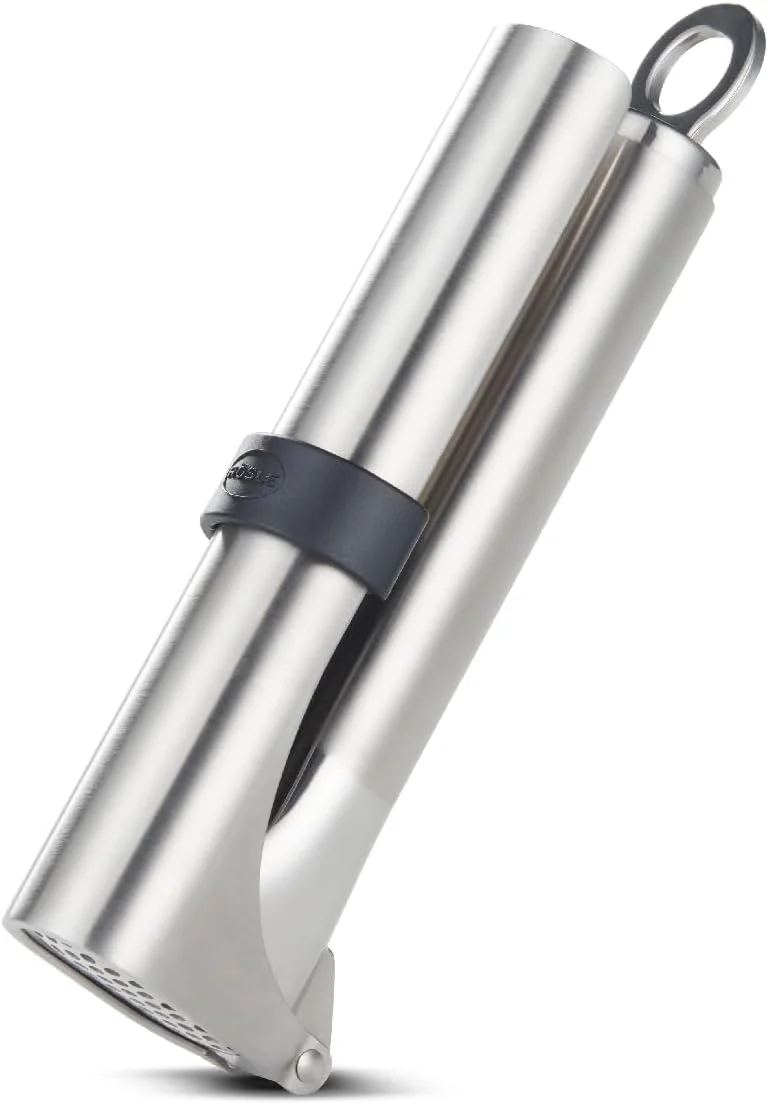
- Best overall: Rösle Garlic Press — German engineering, stainless steel, one-handed crushing, and the easiest to clean
- Best value: OXO Good Grips Garlic Press — comfortable, reliable, and half the price of Rösle
- Best self-cleaning: Dreamfarm Garject — the built-in ejector actually works
- Premium choice: Kuhn Rikon Epicurean — Swiss-made, professional build, crushes without tearing
- Best traditional: Zyliss Susi — classic swivel-action design that’s been a kitchen staple for decades
Who this is for: Anyone who cooks with garlic and doesn’t want to spend 3 minutes mincing 6 cloves. Handle enough garlic that a pre-minced jar feels wrong. Skeptical about garlic presses — including “I can just use a knife” people.
What we liked: The best garlic presses are genuinely faster than knife-mincing, produce more garlic juice (which means more flavor), and require no peeling.
What we didn’t: Cheap presses bend, clog, and you spend more time cleaning them than you saved. A $15 press is worse than a knife. Spend $25-50.
Press vs Minced vs Paste: How Garlic Forms Compare
Pressed garlic uses a mechanical press to crush the clove through small holes. The result is a coarse paste with maximum juice release. The pressing action ruptures more cell walls than knife-mincing, releasing more allicin (the compound responsible for garlic’s pungency).
Minced garlic is cut with a knife. You control the size. Less juice loss than pressing, but more uneven. Takes 30-60 seconds per clove depending on your knife skills.
Garlic paste is made by smashing and grinding with salt. Maximum flavor release, but the messiest method. Worth it when you need garlic to dissolve into a sauce.
Our take: Pressed and paste are the best for maximizing flavor. Knife-mincing looks professional but delivers less garlic punch per clove. See our full garlic press vs mincer comparison for details.
How We Tested
Five garlic presses, 100 cloves of garlic, three standardized tests:
- Speed (30%) — Time to process 6 cloves, from picking up the press to finished
- Cleanup (30%) — Time and effort to remove all garlic residue
- Garlic quality (25%) — Consistency of crush, juice extraction, and whether garlic is smashed vs pressed
- Build quality (15%) — Materials, flex under pressure, and expected lifespan
The 5 We Tested
1. Rösle Garlic Press — Best Overall ($45)
The Rösle is a forged stainless steel block. It’s heavier than any other press we tested (8.5 oz) and that weight works entirely in its favor.
The good: One-handed squeeze works smoothly — 6 cloves in 10 seconds. The curved design fits your palm naturally. Holes are precisely sized to crush without making paste. The self-cleaning spring mechanism in the hinged end is brilliant: press the handle back past the stopping point and a small pin pushes through every hole, ejecting the garlic skin and residue. Cleanup took 8 seconds with a quick rinse and one pin-push. The steel won’t stain or retain odors.
The bad: Expensive at $45. The stainless body has no cushioning — if your hands are small or weak, the metal edge digs in. The spring mechanism adds complexity that could theoretically break (though we couldn’t make it fail in testing). Not dishwasher-safe — the self-cleaning pin needs manual rinsing.
Price: $45. Check Price → Verdict: Best garlic press money can buy. Worth every dollar if you cook with garlic regularly.
2. OXO Good Grips Garlic Press — Best Value ($20)
The OXO is the pragmatic choice. It does everything well at half the price of the Rösle.
The good: The soft-grip handles make this the most comfortable press to squeeze, especially for larger hands. The stainless steel presser head doesn’t flex. The curved design fits over a bowl or sauté pan nicely. Cleans reasonably well with the included rubber cleaning mat — 30 seconds with a thorough scrub. Produces consistent, juicy garlic that’s between coarse and fine.
The bad: No self-cleaning mechanism — you must pick out trapped garlic with the included tool or a toothpick. The plastic body handles. Two-handed operation — you need both hands to squeeze, unlike the Rösle. After 50+ cloves, we noticed slight wear on the hinge pin.
Price: $20. Check Price → Verdict: The smart buy. 90% of the Rösle’s performance for 45% of the price.
3. Kuhn Rikon Epicurean Garlic Press — Premium Swiss ($35)
The Epicurean is Swiss-made with a forged alloy body and a clever two-sided pressing plate.
The good: Two interchangeable pressing plates — one for standard crush, one for a finer puree-like result. The lever mechanism requires the least hand strength of any press we tested. Fits in a drawer easily. The spring-action handle returns automatically. Build quality is excellent — forged aluminum with a brushed finish that won’t rust.
The bad: Cleaning is tedious — the fine plate clogs almost immediately and requires a brush to clean every hole. No self-cleaning mechanism. The aluminum body can react with acidic foods (though garlic alone won’t cause issues). At $35, it’s not cheap enough to be a bargain, and the Rösle is only $10 more and cleans itself.
Price: $35. Check Price → Verdict: Excellent build and the fine plate is genuinely useful for certain recipes. But the cleaning pain makes the Rösle a better spend.
4. Zyliss Susi Garlic Press — Classic Design ($18)
The Zyliss Susi uses a rotating swivel action: you press the clove through the holes by rotating the top lever in a circle.
The good: The swivel mechanism produces the most consistent result — every clove is crushed identically. It’s comfortable to use, with a soft-grip non-slip base. The dishwasher-safe construction (yes, really) means zero cleanup effort. The plastic body means it won’t rust or corrode. At $18, it’s the cheapest press we’d actually recommend.
The bad: The plastic construction flexes under heavy pressure — pressing 3+ large cloves can strain the mechanism. The swivel action is actually slower than a direct squeeze (6 cloves in 18 seconds vs 10 for Rösle). Doesn’t handle small cloves well — they slip sideways in the chamber. We found garlic bits accumulating in the hinge area.
Price: $18. Check Price → Verdict: If you want dishwasher-safe convenience and mostly press large cloves, this is solid. Otherwise spend $2 more for the OXO.
5. Dreamfarm Garject — Best Self-Cleaning ($25)
The Dreamfarm Garject has a built-in silicone ejector that pushes the garlic skin out of the holes as you open the press.
The good: The self-cleaning mechanism genuinely works — open the handles and a silicone pad pushes the remaining garlic skin out in one piece. 12-second cleanup from start to finish. The plastic body is lightweight at 4 oz. The non-slip handle is comfortable. The angled head lets you press directly into a bowl or pan. The suction-base mounting system is unique — it sticks to any smooth surface and you push down on it rather than squeezing.
The bad: The suction base requires a perfectly smooth counter — it falls off textured tile or wooden boards. The plastic construction flexes noticeably with large cloves. The pressing mechanism produces a slightly wetter, more paste-like result than metal presses. The self-cleaning pad needs to be cleaned itself occasionally or it gets smelly.
Price: $25. Check Price → Verdict: The easiest-cleaning press we tested. Buy this if self-cleaning is your top priority. Otherwise the OXO is better value.
Comparison Table
| Feature | Rösle | OXO | Kuhn Rikon | Zyliss Susi | Dreamfarm Garject |
|---|---|---|---|---|---|
| Price | $45 | $20 | $35 | $18 | $25 |
| Material | Stainless steel | Stainless + plastic | Forged aluminum | Plastic | Plastic |
| Weight | 8.5 oz | 7 oz | 6 oz | 5 oz | 4 oz |
| 6 cloves time | 10 sec | 14 sec | 12 sec | 18 sec | 16 sec |
| Cleanup time | 8 sec | 30 sec | 45 sec | 15 sec | 12 sec |
| Self-cleaning | Yes (pin) | No (tool) | No | Dishwasher | Yes (ejector) |
| One-handed | Yes | No | No | No | Yes (base mount) |
| Dishwasher safe | No | No | No | Yes | No |
| Comfort | Good (no grip) | Excellent | Very good | Good | Very good |
| Warranty | 5 years | Lifetime | 5 years | 3 years | 2 years |
Bottom Line
Best all-around: Rösle Garlic Press ($45) — the self-cleaning pin and one-handed operation make it the fastest and most satisfying press. Best value: OXO Good Grips Garlic Press ($20) — reliable, comfortable, and 90% of the Rösle performance. Self-cleaning: Dreamfarm Garject ($25) — the silicone ejector works, though the suction base can be finicky. Dishwasher safe: Zyliss Susi ($18) — the only press you can throw in the dishwasher, but plastic construction limits durability. For fine crush: Kuhn Rikon Epicurean ($35) — the fine plate is unique, but cleaning is a chore.
FAQ
Are garlic presses worth it? Yes — if you use garlic more than twice a week. A good press saves 10-15 seconds per clove versus knife-mincing and releases more flavorful garlic juice. The savings add up fast: 10 cloves per week at 12 seconds each saves 2 minutes per week, or about 1.5 hours per year.
Do you need to peel garlic before pressing? Not with a good press. The Rösle, OXO, and Kuhn Rikon all crush through the skin. The skin stays in the press chamber while the garlic goes through the holes. The Dreamfarm and Zyliss handle unpeeled cloves but work better if you peel larger cloves.
How do you clean a garlic press? Rinse immediately after use — dried garlic is much harder to remove. For presses with self-cleaning mechanisms (Rösle, Dreamfarm), activate the ejector before rinsing. For others, use the included cleaning tool, a toothpick, or a stiff brush. Never use steel wool on non-stick or aluminum surfaces.
What’s the difference between a garlic press and a garlic crusher? Same thing. They’re different names for the same tool. Some manufacturers call it a press (compression through holes), others a crusher (lever action). Functionally identical.
Can you press ginger in a garlic press? Yes, but expect more cleanup. Ginger is more fibrous than garlic — it tends to leave stringy residue that’s harder to push out of the holes. The Rösle handles ginger best due to its self-cleaning pin.
Is a garlic press better than a knife? For speed and flavor intensity, yes. A press processes a clove in 2-3 seconds (unpeeled) versus 8-15 seconds for knife-mincing. Pressed garlic also releases more juice and allicin, giving a stronger garlic flavor. A knife gives you more control over cut size and leaves less mess in the tool.
Related: Garlic Press vs Mincer — Which is Better?
Prices and availability subject to change. We may earn a commission through affiliate links.