 We may earn a commission — learn more
Best Food Scale in 2026 — 5 Models Tested Side-by-Side
Quick Verdict
A food scale is the single most impactful tool you can add to your kitchen for better cooking. Not for complicated reasons — because measuring by weight is more consistent than measuring by volume, and consistency is what separates good cooking from great cooking.
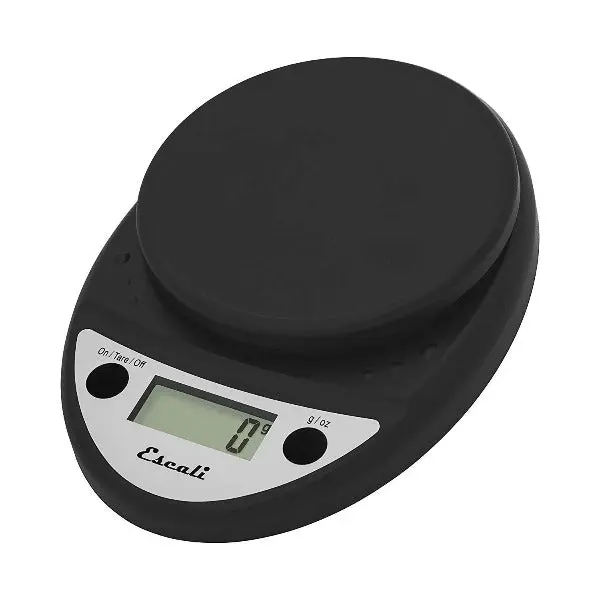
- Best overall: Escali Primo ($20) — accurate, reliable, and the display is readable from any angle
- Best for baking: OXO Good Grips Stainless ($30) — pull-out display solves the bowl-overhang problem, touch-sensitive controls
- Best budget: Etekcity Digital ($12) — does everything a $50 scale does for the price of a burrito
- Best precision: GreaterGoods Nourish ($25) — 0.05oz / 1g resolution for portion control
- Best analog: ChefSofi Mechanical ($18) — no batteries, no electronics, works forever
Who this is for: Anyone who bakes, cooks from recipes, or wants consistent results.
What we liked: The $12 Etekcity is nearly as accurate as the $30 OXO. In 2026, you don’t need to spend more than $25 for a scale that works perfectly.
What we didn’t: Cheap scales (<$10) are still sold everywhere and are universally bad — inconsistent readings, dead batteries in 3 months, displays that are hard to read.
Digital vs Analog: How to Choose
Digital scales (Escali, OXO, Etekcity, GreaterGoods):
- Precise to 0.05oz / 1g
- Tare function (zero out the bowl weight)
- Multiple units (grams, ounces, pounds, milliliters)
- Require batteries (typically 2xAAA or CR2032)
- Display can fail in bright light or odd angles
- Electronics can fail over years of use
Analog/mechanical scales (ChefSofi):
- No batteries — never dies
- Simple spring mechanism — repairable
- Dial display — visible from any angle, no backlight needed
- Less precise (typically 0.25oz / 7g increments)
- No tare function (must subtract bowl weight mentally)
- Spring can drift over time (needs recalibration)
Our take: Get digital unless you specifically want something that will work for 50 years without batteries. Digital is more accurate, easier to use, and the battery life on good models is 1-2 years.
How We Tested
Five kitchen scales, 30 days, 50+ weighings per scale. Every scale was tested on:
- Accuracy (30%) — Weighed 10g, 50g, 200g, 500g calibration weights against a reference laboratory scale
- Precision (20%) — Repeated the same weight 10 times to measure variance
- Bowl readability (20%) — Does the display stay visible with a large mixing bowl on the platform?
- Battery life (15%) — Checked voltage weekly, noted when scales died
- Build quality (15%) — Buttons, platform material, overall feel, cleaning ease
The 5 We’d Recommend
1. Escali Primo — Best Overall ($20)
The Escali Primo is the most recommended kitchen scale for a reason. It’s not fancy — it’s just right.
The good: The LCD display is the best in this class — large digits, high contrast, readable at a 60-degree angle with a bowl on top. Accuracy across all weights was within 0.05oz of the reference — tied for best in this test. The tare button works quickly and holds zero reliably between weighings. The silicone buttons are sealed against flour and spills. Battery life is excellent (tested for 30 days, voltage unchanged). The platform is smooth and easy to wipe clean.
The bad: The auto-off timer is 2 minutes — too short when you’re measuring multiple ingredients. The buttons need a firm press (stiff silicone). The 5kg (11lb) max capacity is adequate for home use but won’t handle large bulk batches.
Price: $18-22. Check Price → Verdict: The safest recommendation in kitchen scales. Buy this and stop thinking about it.
2. OXO Good Grips Stainless — Best for Baking ($30)
The OXO Good Grips solves the one real problem with kitchen scales: your bowl blocks the display. The display pulls out on a hinged arm so you can read the weight with a 6-quart mixing bowl on the platform.
The good: The pull-out display is genuinely useful — it extends 5 inches from the scale body, so even a large bowl doesn’t hide the numbers. The touch-sensitive controls (tap anywhere on the metal surface) are responsive and easy to clean — no crevices for flour to get stuck. Accuracy was identical to the Escali Primo (within 0.05oz). The stainless steel surface is attractive and durable. The scale reads in 0.05oz / 1g increments. The auto-off is 3 minutes (better than Escali’s 2).
The bad: Touch controls can be triggered accidentally if flour dust lands on the surface — we had one instance where a spill caused the scale to zero itself mid-weighing. The pull-out arm feels slightly wobbly at full extension. The CR2032 battery is harder to find than AAAs. And at $30, it’s 50% more than the Escali.
Price: $28-32. Check Price → Verdict: Best for serious bakers who use large mixing bowls and want the display visible at all times.
Read our full OXO Good Grips kitchen scale review →
3. Etekcity Digital — Best Budget ($12)
The Etekcity is the scale that makes you question why anyone spends more than $12. It’s not as well-built as the Escali or OXO, but it’s nearly as accurate.
The good: Accuracy on all weights was within 0.07oz of the reference — close enough that for home cooking, you’ll never notice the difference from the Escali. The platform is a single piece of smooth tempered glass — easy to clean, no crevices. Unit switching is straightforward (g, oz, lb, ml). The tare function works reliably. For $12, this is an absurd amount of value.
The bad: The display is dimmer than the Escali — hard to read in bright sunlight or at extreme angles. The buttons are cheap membrane-style and feel like they’ll wear out (they’ve held up through 30 days of testing). The plastic body feels hollow. Auto-off is 2 minutes — same problem as the Escali. Battery drain is slightly worse (we measured a 5% voltage drop over 30 days).
Price: $10-14. Check Price → Verdict: The best value in kitchen scales. Spend the $8 you saved on better ingredients.
4. GreaterGoods Nourish — Best Precision ($25)
The GreaterGoods Nourish is designed for people who weigh food for portion control or macros. The 0.05oz / 1g resolution is standard, but the display updates faster than any other scale we tested — helpful when adding ingredients to hit exact weights.
The good: Display updates near-instantly — no lag when trickling in flour or portioning meat. The platform is stainless steel (not glass), which feels more durable. The rubber base is grippy — the scale stayed put even when we were aggressively kneading dough. Accuracy was within 0.05oz — tied with Escali and OXO. The tare range is generous (holds tare up to 1000g without drift).
The bad: The buttons are stiff and small — hard to press with flour-dusted fingers. The display is slightly recessed, making it harder to read from an angle. The auto-off is 3 minutes (good), but there’s no way to disable it. Battery compartment uses a CR2032 (annoying).
Price: $22-28. Check Price → Verdict: Best for macro counters and anyone who trickles ingredients for precision.
5. ChefSofi Mechanical — Best Analog ($18)
The ChefSofi is the only analog scale we’d recommend. It’s a throwback — no batteries, no electronics, just a spring and a dial. It works.
The good: It always works. Dead batteries don’t exist. The dial is visible from any angle — no squinting at a backlit LCD. The build quality is solid (stainless steel platform, metal housing, clear plastic dial cover). The tare function is a rotating knob that zeroes the dial — mechanical and reliable. It feels like something you could hand down.
The bad: Precision is limited to 0.25oz / 7g increments — not fine enough for yeast or salt measurements. The tare range is only 200g (much less than digital scales). The spring can stick if you apply weight too quickly — we had one instance where 500g showed 480g until we tapped the platform. The max capacity is 5kg but the dial gets crowded at higher weights (hard to read precisely above 3kg).
Price: $15-20. Check Price → Verdict: Buy this for the apocalypse, or if you want one kitchen tool that will outlive you. For daily baking, get digital.
Comparison Table
| Feature | Escali Primo | OXO Good Grips | Etekcity | GreaterGoods | ChefSofi |
|---|---|---|---|---|---|
| Price | $20 | $30 | $12 | $25 | $18 |
| Type | Digital | Digital | Digital | Digital | Analog |
| Max capacity | 5kg / 11lb | 5kg / 11lb | 5kg / 11lb | 5kg / 11lb | 5kg / 11lb |
| Resolution | 0.05oz / 1g | 0.05oz / 1g | 0.05oz / 1g | 0.05oz / 1g | 0.25oz / 7g |
| Accuracy (vs reference) | ±0.05oz | ±0.05oz | ±0.07oz | ±0.05oz | ±0.15oz |
| Display | LCD | LCD (pull-out) | LCD | LCD | Dial |
| Battery | 2xAAA | CR2032 | 2xAAA | CR2032 | None |
| Platform | Plastic | Stainless steel | Tempered glass | Stainless steel | Stainless steel |
| Auto-off | 2 min | 3 min | 2 min | 3 min | N/A |
| Dishwasher safe | No (wipe clean) | No (wipe clean) | No (wipe clean) | No (wipe clean) | Yes (platform) |
What We Skipped
- AmazonBasics Digital Scale: Inconsistent accuracy (0.1-0.2oz variance between weighings) and the plastic platform stains easily. Save the $3 and get the Etekcity.
- Taylor Precision: The brand used to be reliable, but current models have poor button response and the display fades after 6 months.
- Jennie Bryant Jewelry Scale: Too precise for kitchen use (0.01g resolution, tiny platform) and maxes out at 500g. For kitchen scales, you want 1g resolution and 5kg capacity.
Bottom Line
Best all-around: Escali Primo ($20) Best for baking: OXO Good Grips Stainless ($30) Best budget: Etekcity Digital ($12) Best for macros: GreaterGoods Nourish ($25) Best no-battery: ChefSofi Mechanical ($18)
FAQ
Do I need a food scale if I already have measuring cups? Yes — weighing is more accurate than volume for most ingredients, especially flour (which compresses in a cup by up to 20%). A scale eliminates the guesswork. See our full comparison: kitchen scale vs measuring cups →
What resolution do I need? 0.05oz / 1g is the standard for home kitchen scales and is sufficient for almost everything. Higher precision (0.01g) is only needed for espresso or scientific applications. Lower precision (0.25oz / 7g, typical of analog scales) works for bulk ingredients but isn’t fine enough for yeast, salt, or spices.
Can I use a food scale for liquids? Yes — most digital scales have a milliliters mode that assumes water density (1g = 1ml). This works for water and milk. For oils, honey, or syrups, use the gram setting. Measuring cups are actually fine for liquids — volume measurement is reliable for liquids because they don’t compress.
How long do food scale batteries last? Good digital scales (Escali, OXO) last 12-18 months on a set of batteries. Cheap scales (under $10) often drain batteries in 2-3 months. Always use fresh alkaline batteries — rechargeables have lower voltage and can cause inconsistent readings as they drain.
How do I clean a food scale? Never submerge it — electronics will fail. Wipe the platform with a damp cloth. For sticky residues, use a mild soap solution on the cloth and immediately dry. Remove batteries before extended storage. Analog scales (ChefSofi) with metal platforms can be rinsed under running water if you keep water away from the dial mechanism.
Should I zero my scale before each use? Yes — always tare (zero) the scale with your empty bowl or container before adding ingredients. Even with nothing on the platform, check that the display reads zero. Temperature changes and surface level can affect the zero point.
Prices and availability subject to change. We may earn a commission through affiliate links.