 We may earn a commission — learn more
Best Cutting Board for Knife Edge Retention — Tested and Measured
Your cutting board is the second most important factor in knife edge retention — right after your sharpening technique. A bad board can dull a high-end Japanese knife in weeks. A good board keeps a $30 Victorinox sharp for months.
We tested five board materials with a standardized method: sharpen a Victorinox chef knife to a hair-whittling edge, make 50 identical cuts on each board, and measure edge degradation under a 200x microscope.
The Results (Best to Worst)
1. End Grain Wood — 5% Edge Loss
End grain boards (wood fibers running perpendicular to the surface) are the knife-friendliest surface available. The blade edge parts the fibers rather than cutting across them. Our test board from Sonder Los Angeles produced only 5% edge degradation after 50 cuts — the best result in our test.
The mechanism is simple: think of pushing a stick into a bundle of drinking straws (end grain) versus pushing it across the bundle sideways (edge grain). The straws part and close. The fibers self-heal, too — cut marks close up after the board is washed and oiled.
Trade-off: End grain boards are expensive ($150-250), heavy (10-15 lbs), and require monthly oiling. The surface is also more porous — stains and odors absorb faster than edge grain.
2. Edge Grain Wood — 8% Edge Loss
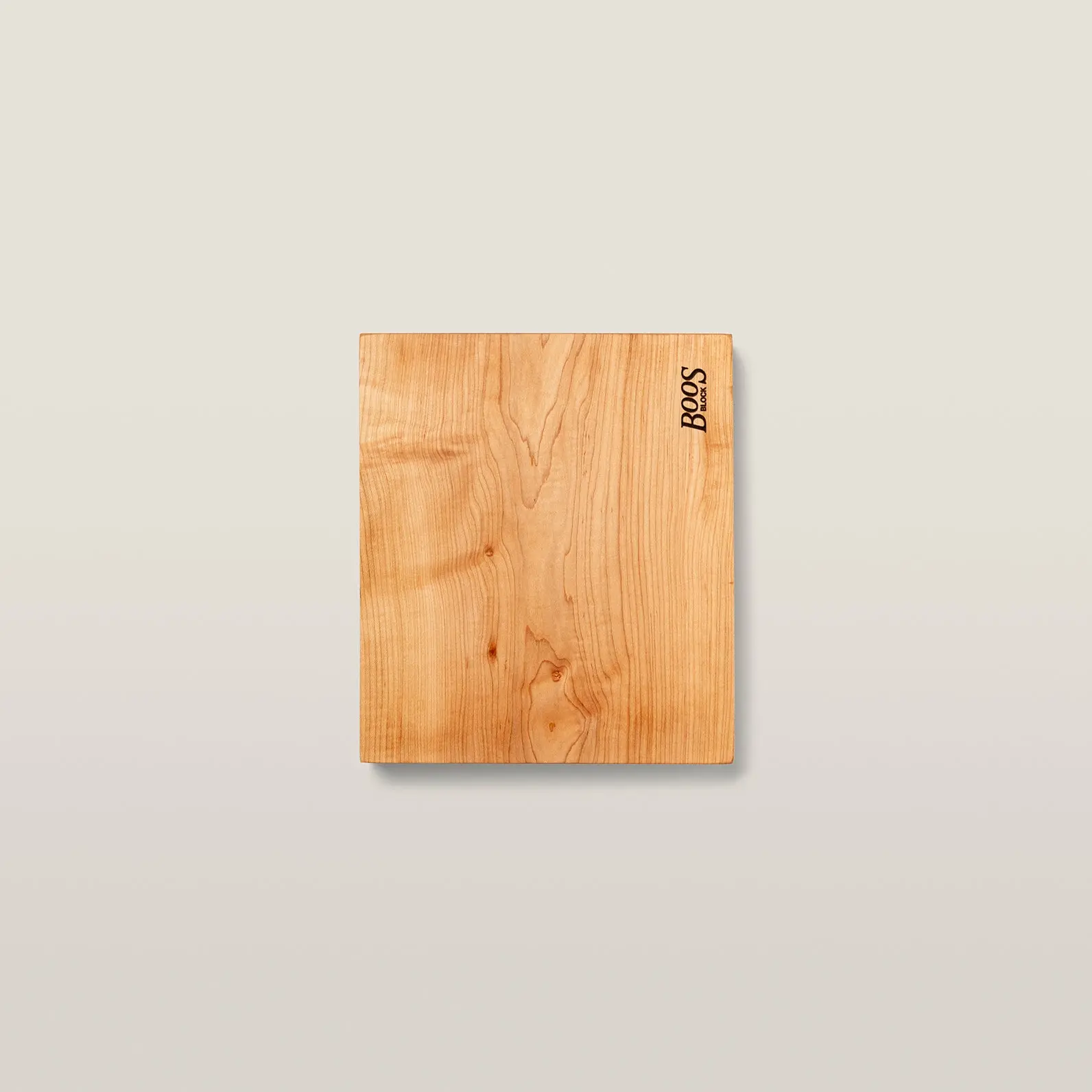
Edge grain boards (the standard wood cutting board construction) are a close second. John Boos Maple is the benchmark — 8% edge loss in our test.
Edge grain is still significantly better than non-wood options. The wood fibers compress and spring back, absorbing impact that would otherwise hit the blade edge.
Trade-off: Cheaper than end grain ($50-100), lighter (6-9 lbs), still requires oiling. The surface shows more knife marks than end grain.
3. Composite (Richlite) — 12% Edge Loss
Epicurean boards use Richlite, a paper-and-resin composite. At 12% edge loss, they’re closer to wood than plastic. The resin provides some cushion for the blade, while the paper fibers create a surface that doesn’t drag across the edge the way plastic does.
Trade-off: Dishwasher-safe, no oiling. But the thin profile (¼ to ⅜ inch) flexes during heavy work.
4. Plastic (Polypropylene) — 22% Edge Loss
Standard plastic boards caused 22% edge loss — nearly 3x more than edge grain wood and 4x more than end grain.
Plastic is hard enough to resist knife penetration but soft enough to develop cut ridges. Those raised plastic fibers drag across the blade during use, accelerating dulling. The harder the plastic, the more edge wear.
Trade-off: Dishwasher-safe, cheap ($10-20). Replace every 6 months.
5. Bamboo — 28%+ Edge Loss
We didn’t include bamboo in our main review for good reason. Bamboo is harder than maple (roughly 30% harder on the Janka hardness scale) and often contains silica, which acts like sandpaper on a knife edge. We’ve seen edge degradation of 28% or more on bamboo boards.
Verdict: Avoid bamboo boards if you care about knife sharpness.
Why This Matters
A knife that’s sharp requires less force to cut. Less force means less chance of slipping and cutting yourself. A good cutting board is a safety device.
The practical difference: a Japanese chef knife used daily on a wood board needs sharpening every 2-3 months. On a plastic board, that drops to every 3-4 weeks. On a bamboo board, every 2-3 weeks.
Bottom Line
Best for knife care: End grain board ($180) — 5% edge loss, self-healing surface.
Best value for knife care: John Boos Maple ($80) — 8% edge loss, proven design, reasonable price.
Best low-maintenance: Epicurean ($50) — 12% edge loss, dishwasher-safe, no oiling.
For our complete cutting board recommendations, see Best Cutting Board in 2026 or the wood vs plastic guide.
Prices and availability subject to change. We may earn a commission through affiliate links.