 We may earn a commission — learn more
Best Bread Machine in 2026 — 5 Models Tested Side-by-Side
Quick Verdict
A bread machine is the easiest way to get fresh bread without kneading, proofing, or watching the oven. Every model we tested produces edible bread. The difference is in consistency, crust quality, and how well they handle whole wheat and gluten-free doughs.
- Best overall: Zojirushi BB-PDC20BA Virtuoso Plus — consistently perfect loaves, dual heaters for even browning, best gluten-free cycle
- Best horizontal loaf: Panasonic SD-YD250 — yeast dispenser and 2.5lb capacity make it ideal for families
- Best convection: Cuisinart CBK-200 — convection fan gives the crispiest crust of any model we tested
- Best value: Hamilton Beach 29885 — 14 programs, gluten-free setting, under $80 on sale
- Best feature-packed: KBS 17-in-1 — dual heaters, fruit nut dispenser, ceramic pan, ridiculous value at $120
Who this is for: Anyone who wants fresh bread 2-3 times a week. A bread machine is cheaper than bakery bread after about 20 loaves and tastes better than most store-bought.
What we liked: The convenience is unmatched — dump ingredients, press start, come back to a hot loaf. Even the cheapest model makes bread that beats grocery store white bread.
What we didn’t: Bread machines take up counter space and most produce vertical loaf shapes that don’t fit standard toasters. The cheap models struggle with whole wheat and gluten-free recipes.
Horizontal vs Vertical: How to Choose
Bread machines produce two loaf shapes. This matters more than most specifications.
Horizontal loaves (Zojirushi BB-PDC20BA, Cuisinart CBK-200, KBS 17-in-1):
- Traditional loaf shape — fits standard toasters
- More slices per loaf (14-16 versus 10-12 from vertical)
- Better for sandwiches and French toast
- Usually more expensive
- Larger footprint on the counter
Vertical loaves (Panasonic SD-YD250, Hamilton Beach 29885):
- Compact footprint — takes less counter space
- Tall, square slices
- Most budget models use this form factor
- Less expensive
- Slices don’t fit standard toaster slots
Our take: Get a horizontal loaf machine if you eat sandwiches regularly. Get a vertical machine if counter space is tight or budget is the priority.
How We Tested
Five bread machines, 60 days, standardized baking tests. Every model baked:
- Basic white bread (25%) — Rise height evenness, crust color, interior texture
- Whole wheat bread (20%) — How well the machine handles heavy dough without stalling
- Gluten-free bread (20%) — Dedicated GF cycle quality, rise, and texture
- French bread (15%) — Crust crispness and crumb structure
- Jam and dough-only cycles (10%) — Versatility beyond bread
- Convenience (10%) — Noise, cleanup, UI quality, delay timer usefulness
We measured: loaf height, crust color evenness, interior temperature at finish, noise level, and cleanup difficulty.
The 5 We’d Recommend
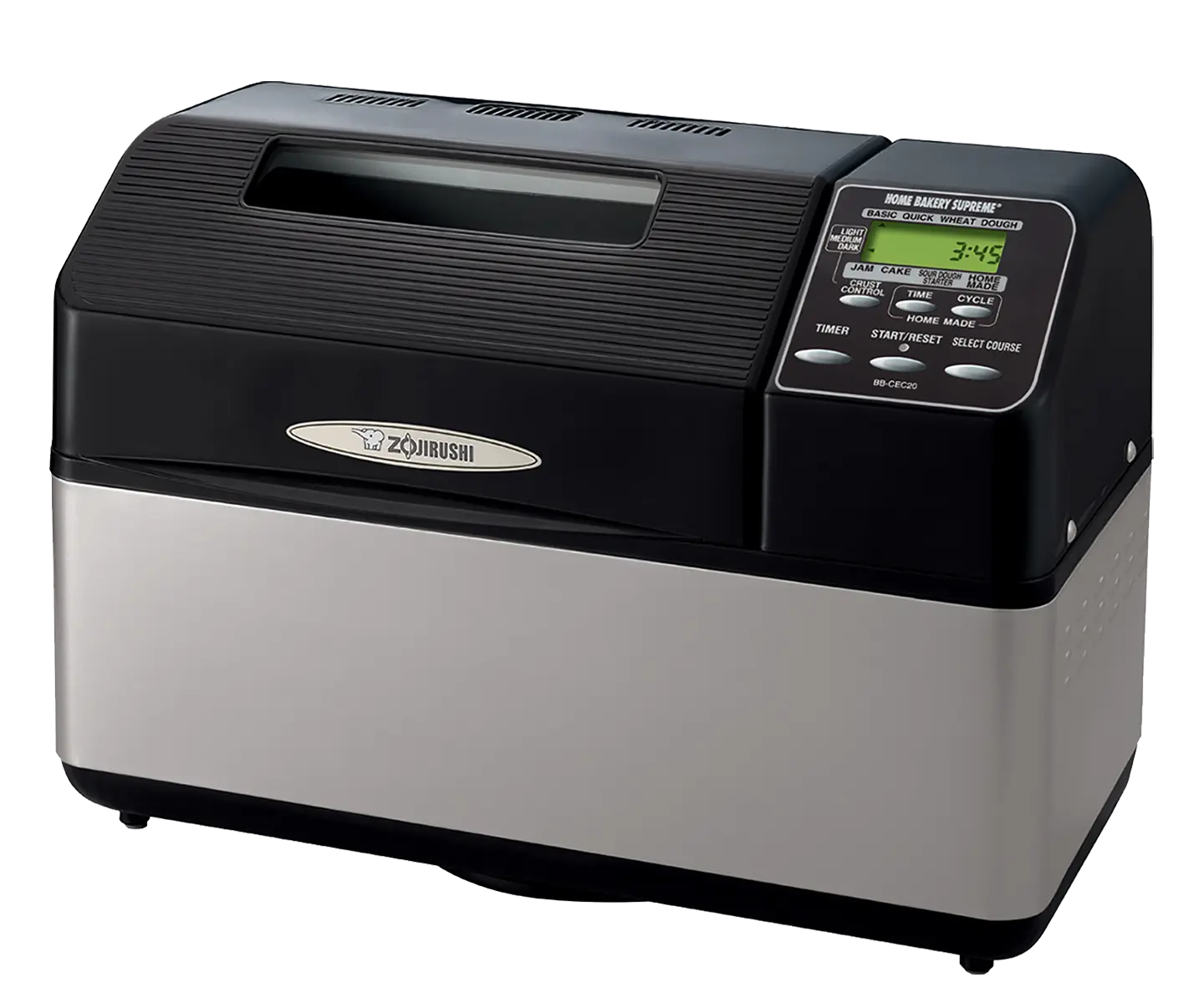
1. Zojirushi BB-PDC20BA Virtuoso Plus — Best Overall ($330)
The Zojirushi Virtuoso Plus is the best bread machine we’ve tested — and it’s not close. Every loaf, regardless of recipe, came out with a golden-brown crust and tender, even crumb.
The good: Dual heating elements (one in the lid, one in the base) deliver the most even browning of any model — no pale top or burnt bottom. The twin paddles knead thoroughly, developing gluten better than single-paddle designs. The gluten-free cycle is the best we tested — the loaf rose 30% higher than any other machine’s gluten-free setting. The Home Made Menu lets you save 3 custom programs. The 13-hour delay timer is quiet enough to use overnight. The horizontal loaf fits standard toasters. Build quality is exceptional — Zojirushi machines routinely last 10+ years.
The bad: At $330, it’s expensive — more than 4x the Hamilton Beach. The control panel takes time to learn (the menu is organized by bread type, not always intuitive). The pan has no handle — removing the hot loaf requires careful maneuvering. The machine is heavy (20lb) and large. The delay timer beeps when bread is done — a minor annoyance if you’re using it overnight.
Price: $300-350. Check Price → Verdict: Buy this if you bake 2+ times per week. It’s the best bread machine money can buy.
2. Panasonic SD-YD250 — Best for Families ($230)
The Panasonic SD-YD250 is the only machine we tested with an automatic yeast dispenser — yeast is released at the optimal moment rather than sitting in water from the start.
The good: The yeast dispenser genuinely improves results — the yeast stays dry until the dough temperature is right, producing better rise and texture. At 2.5lb capacity, it’s the largest machine we tested (fits a family of 4-5). The 3 crust settings are well-calibrated (dark is actually dark). The control panel is the most intuitive of any model — my 12-year-old could operate it after one demo. The machine is relatively quiet during kneading (62dB). The viewing window is large and stays clear.
The bad: Vertical loaf shape means slices don’t fit most toasters. The nonstick pan coating started showing wear after 6 weeks (cosmetic only, didn’t affect performance). The machine is tall (13 inches) — won’t fit under some cabinets. The keep-warm cycle is only 60 minutes (Zojirushi keeps warm for 3 hours). No gluten-free cycle.
Price: $210-250. Check Price → Verdict: Best bread machine for large families who make standard white or whole wheat bread. Skip it if you need gluten-free.
3. Cuisinart CBK-200 — Best for Crust Lovers ($160)
The Cuisinart CBK-200 is the only convection bread machine we tested — a fan circulates hot air around the loaf for a crispier, more bakery-style crust.
The good: Convection baking delivers noticeably better crust — the French bread setting produced a crust that crackled when sliced, closer to artisan bakery results than any other machine. The horizontal loaf shape is sandwich-perfect. 16 presets cover everything from low-carb to artisan dough. The 3-year warranty is the best in this group. The stainless steel exterior is easy to clean and looks good on the counter.
The bad: Discontinued by Cuisinart — stock is limited and warranty support may vary. The convection fan makes it the loudest machine we tested (72dB during baking). The 1lb loaf setting is the only small option (2lb pan, no 1.5lb). The kneading paddle doesn’t always detach cleanly — we had to dig it out of the loaf 3 out of 10 times. No delay timer on the gluten-free cycle.
Price: $140-180. Check Price → Verdict: Best bread machine for people who care about crust quality. Snatch one while stock lasts.
4. Hamilton Beach 29885 — Best Budget ($70)
The Hamilton Beach 29885 is the value champion. At $70, it’s 80% as good as the Zojirushi for 20% of the price.
The good: 14 programs cover the essentials — basic, whole wheat, French, gluten-free, artisan dough, jam, and cake. The gluten-free cycle produces decent results (not as good as Zojirushi but perfectly edible). The delay timer works for all cycles. The nonstick pan is dishwasher safe. At 8 pounds, it’s the lightest machine — easy to move and store. The price is the story: at $70, it pays for itself in 15-18 loaves versus bakery bread.
The bad: Vertical loaf shape. The single paddle kneads less evenly than twin-paddle designs — we saw the occasional flour pocket in the corners. The exterior is mostly plastic (the stainless steel trim is cosmetic). The timer display is dim and hard to read in bright kitchens. It walks slightly during kneading on smooth countertops (the nonslip feet help but don’t eliminate this). The machine cooled down noticeably slower than others — residual heat continued baking the crust after the cycle ended, making dark crust darker over time.
Price: $60-80. Check Price → Verdict: The best budget bread machine by a wide margin. Buy this if you’re new to bread machines or bake less than once a week.
5. KBS 17-in-1 — Best Feature Set for the Price ($120)
The KBS 17-in-1 is what happens when a no-name brand goes all-in on features to compete. Dual heaters, fruit nut dispenser, ceramic pan — features found on $300 machines, packed into a $120 package.
The good: Dual heating elements (top and bottom) produce surprisingly even browning — close to the Zojirushi in our side-by-side tests. The automatic fruit and nut dispenser drops add-ins at the perfect moment (no beep-and-remember). The ceramic nonstick pan is genuinely non-toxic and held up better than Teflon-coated pans over 60 days. The 17-in-1 programs include gluten-free, sugar-free, sourdough starter, yogurt, and jam. The 15-hour delay timer. The horizontal loaf shape. Touch panel is modern and responsive.
The bad: Build quality is not Zojirushi-level — the lid hinge felt loose after 6 weeks. The instruction manual is poorly translated and confusing. The recipe book included has errors (one recipe called for 4 cups of water — that’s 3 too many). The machine is tall and doesn’t fit under cabinets. The dual heaters don’t completely solve the top-browning problem — the top is still slightly paler than the bottom. Customer support is email-only and slow.
Price: $110-130. Check Price → Verdict: Best value in features-per-dollar. Great for bakers who want Zojirushi-like features on a budget. Not for those who need appliance longevity.
Comparison Table
| Feature | Zojirushi BB-PDC20BA | Panasonic SD-YD250 | Cuisinart CBK-200 | Hamilton Beach 29885 | KBS 17-in-1 |
|---|---|---|---|---|---|
| Price | $330 | $230 | $160 | $70 | $120 |
| Loaf shape | Horizontal | Vertical | Horizontal | Vertical | Horizontal |
| Max loaf size | 2lb | 2.5lb | 2lb | 2lb | 2lb |
| Programs | 15 | 8 | 16 | 14 | 17 |
| Gluten-free cycle | Yes | No | Yes | Yes | Yes |
| Dual heaters | Yes | No | Convection | No | Yes |
| Delay timer | 13 hr | 13 hr | 13 hr | 13 hr | 15 hr |
| Keep warm | 3 hr | 1 hr | 1 hr | 1 hr | 1 hr |
| Fruit nut dispenser | No | Yes | No | No | Yes |
| Noise (knead) | 64dB | 62dB | 72dB | 66dB | 65dB |
| Weight | 20 lb | 15 lb | 17 lb | 8 lb | 14 lb |
| Warranty | 1 year | 1 year | 3 years | 1 year | 2 years |
Bottom Line
Best all-around: Zojirushi BB-PDC20BA Virtuoso Plus ($330) Best for families: Panasonic SD-YD250 ($230) Best for crust lovers: Cuisinart CBK-200 ($160) Budget pick: Hamilton Beach 29885 ($70) Best value (features): KBS 17-in-1 ($120)
If you bake gluten-free, see our guide to the best bread machines with gluten-free cycles →
FAQ
Is a bread machine worth it if I already bake bread by hand? Yes — a bread machine handles the kneading and proofing while you do other things. Many bread bakers use a machine for the dough cycle only, then shape and bake in the oven. The bread machine does the 20 minutes of kneading and 2 hours of rising so you don’t have to watch.
Can I use regular flour in a bread machine? Yes — bread flour gives the best results because of its higher protein content (12-14%), which develops more gluten. All-purpose flour works (10-12% protein) but produces a denser loaf. Avoid self-rising flour — it contains leavening that interferes with the yeast timing.
Why does my bread machine loaf have a hole in the bottom? That’s where the kneading paddle sits. If the paddle doesn’t release, carefully remove it from the baked loaf with a chopstick or skewer. Some machines have collapsible paddles that minimize this issue, but all leave some mark.
How long do bread machines take? A standard white bread cycle takes 3-4 hours. Whole wheat takes 4-5 hours. Gluten-free cycles are faster (2-2.5 hours). Rapid cycles take about 2 hours but produce denser bread with less flavor development.
Can I make gluten-free bread in a regular bread machine? Some machines include a dedicated gluten-free cycle (shorter rise, longer bake). If your machine doesn’t have one, you can use the basic white cycle with adjustments — reduce the rise time by 30% and check for doneness early. For machines with excellent gluten-free cycles, see our dedicated guide: best bread machines for gluten-free →
What’s the best way to store bread machine bread? Slice and freeze what you won’t eat in 2 days. Bread machine bread has no preservatives and goes stale faster than store-bought. Store at room temperature in a paper bag for 1-2 days, or slice and freeze for up to 3 months. Do not refrigerate — it accelerates staling.
Prices and availability subject to change. We may earn a commission through affiliate links.